Outdoor lighting ideas 2026 focus on more than illumination — they redefine how exterior spaces are experienced after dark. In the coming year, outdoor lighting becomes a design statement, blending architecture, landscape, and art into a cohesive nighttime environment. Designers are moving beyond traditional fixtures toward sculptural forms, integrated lighting systems, and expressive installations that transform gardens, patios, walkways, and façades into visually striking scenes.
Modern outdoor lighting in 2026 emphasizes clean lines, artistic silhouettes, and thoughtful placement that enhances both form and function. From subtle architectural accents to bold statement pieces, lighting is used to highlight textures, create depth, and guide movement through outdoor spaces. Innovative materials, refined finishes, and smart technology allow lighting to adapt seamlessly to different moods and occasions, while maintaining a strong visual identity. This article explores stylish, unique, and forward-thinking outdoor lighting ideas that reflect the creative direction of exterior design in 2026.
1. Sculptural Outdoor Lighting As Garden Art
I see sculptural outdoor lighting in 2026 as a natural extension of garden design, where light fixtures act as permanent art objects during the day and atmospheric lighting after dark. These installations are designed to stand independently within the landscape, creating focal points that enhance lawns, gravel paths, and planting zones while providing soft, controlled illumination that improves nighttime navigation without overwhelming the space.
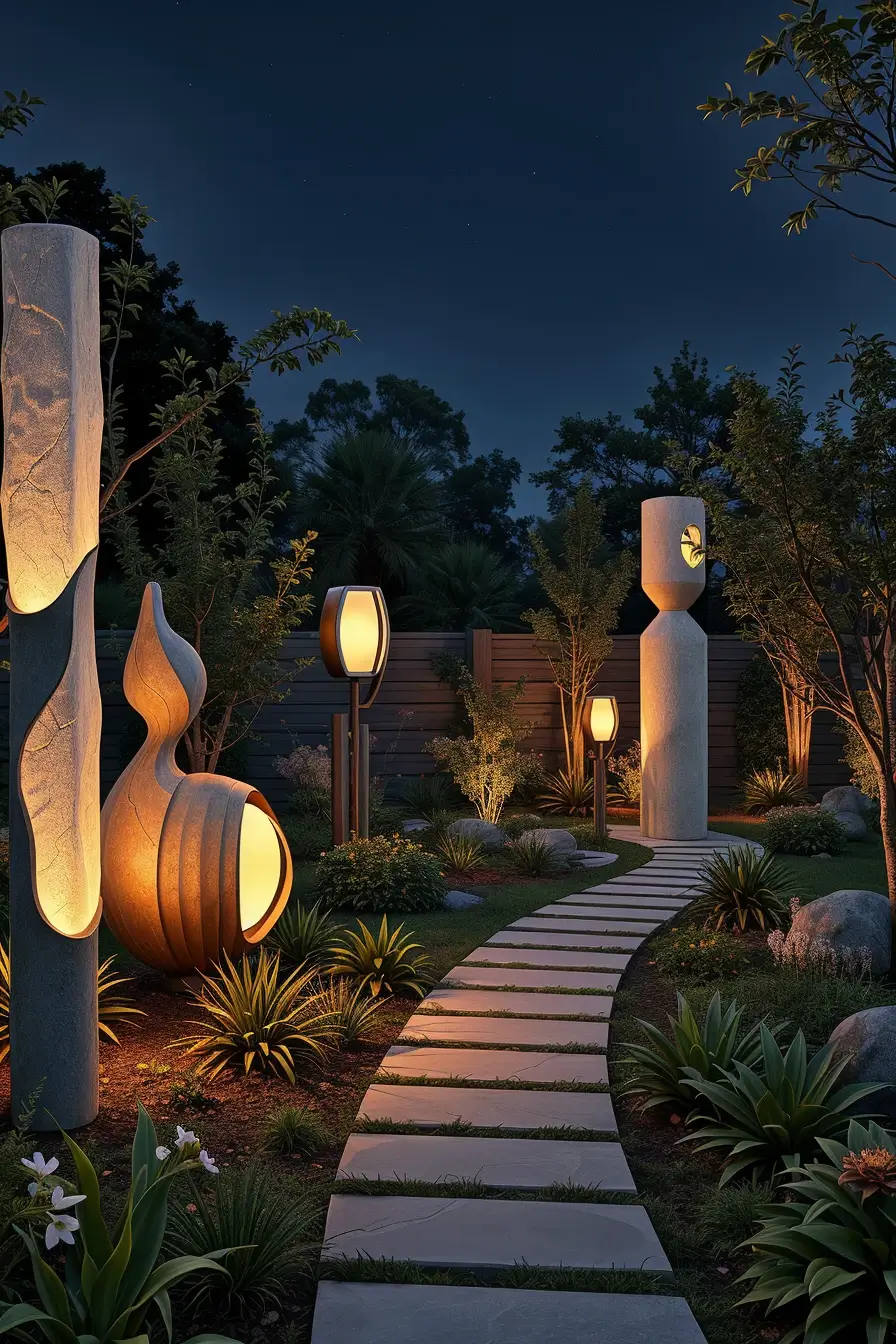
From my professional perspective, these sculptural fixtures often feature stone-like finishes, cast metal forms, or abstract silhouettes placed among greenery, near water features, or along open garden axes. I include them because they blur the line between lighting and landscape sculpture, allowing the garden to feel curated and intentional even when the lights are off.
In my experience, designers such as those featured in Architectural Digest emphasize that outdoor lighting should be visible and meaningful in daylight as well as at night. I fully agree, as sculptural lighting adds year-round value and prevents gardens from feeling visually empty once plants go dormant.
What I would add to this section is careful planning of sightlines from indoor spaces, ensuring that sculptural lights are positioned where they can be appreciated from inside the home as part of the overall visual composition.
2. Architectural Outdoor Lighting That Shapes Space
I approach architectural outdoor lighting as a tool to define space rather than simply illuminate it. In 2026, lighting is used to emphasize structural elements such as walls, pergolas, columns, and overhangs, subtly shaping how outdoor areas are perceived and used after dark.
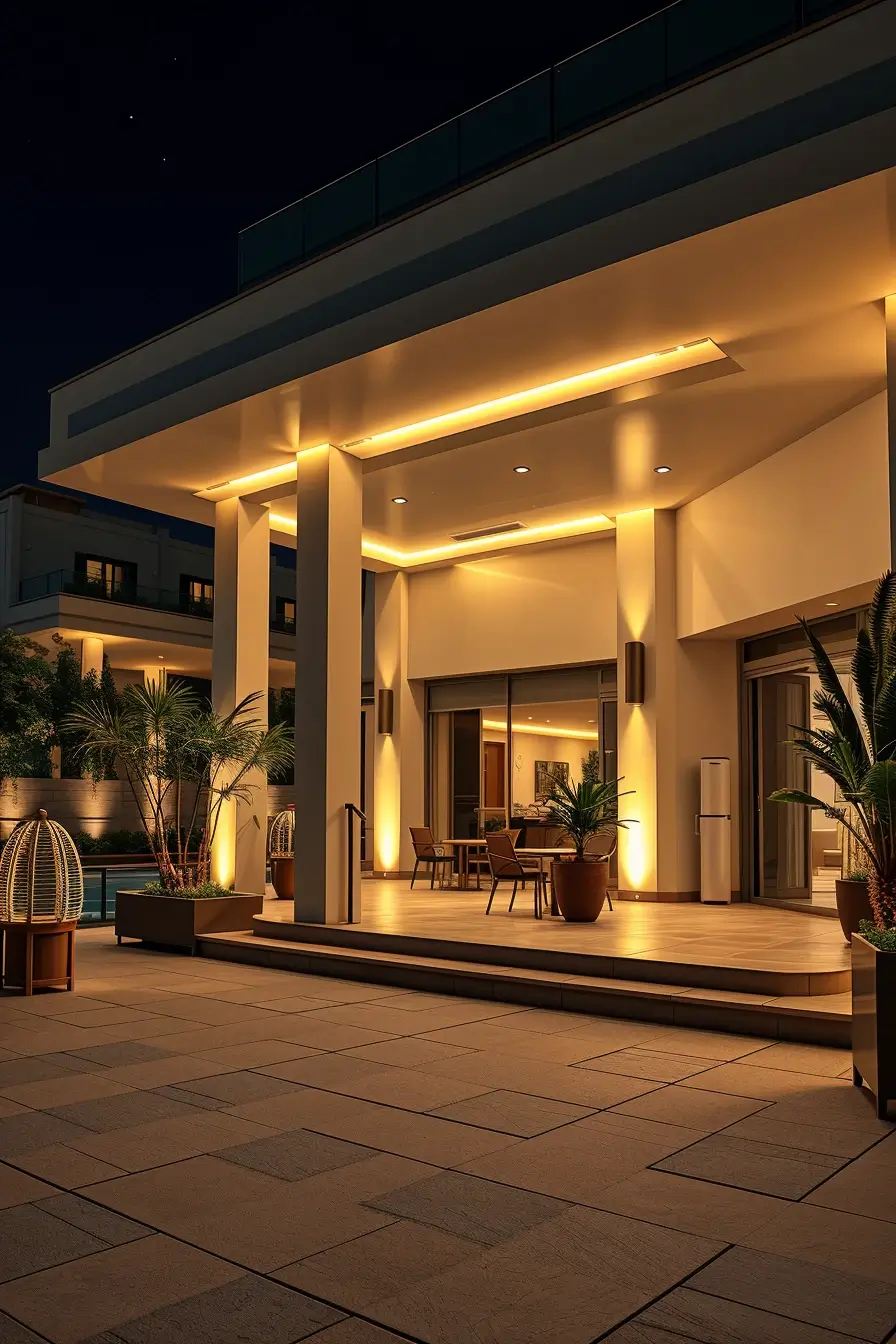
In practical terms, I rely on concealed linear fixtures, recessed wall washers, and integrated step lighting to outline boundaries and transitions. These elements should be included because they improve safety while maintaining a clean, modern aesthetic that allows architecture to remain the primary visual focus.
From my professional experience, many US-based architects recommend layered lighting strategies, combining ambient, accent, and task lighting. I have applied this approach repeatedly, and it consistently results in outdoor spaces that feel balanced and comfortable rather than overly dramatic.
What I would add here is the importance of warm color temperatures and dimmable systems, which allow architectural lighting to adapt to different moods and uses throughout the evening.
3. Modern Pathway Lighting With Artistic Forms
When designing pathways, I treat lighting as part of the journey rather than a purely functional element. In 2026, pathway lighting evolves into artistic outdoor lighting, featuring asymmetrical forms, curved profiles, and sculptural posts that guide movement while adding visual interest.
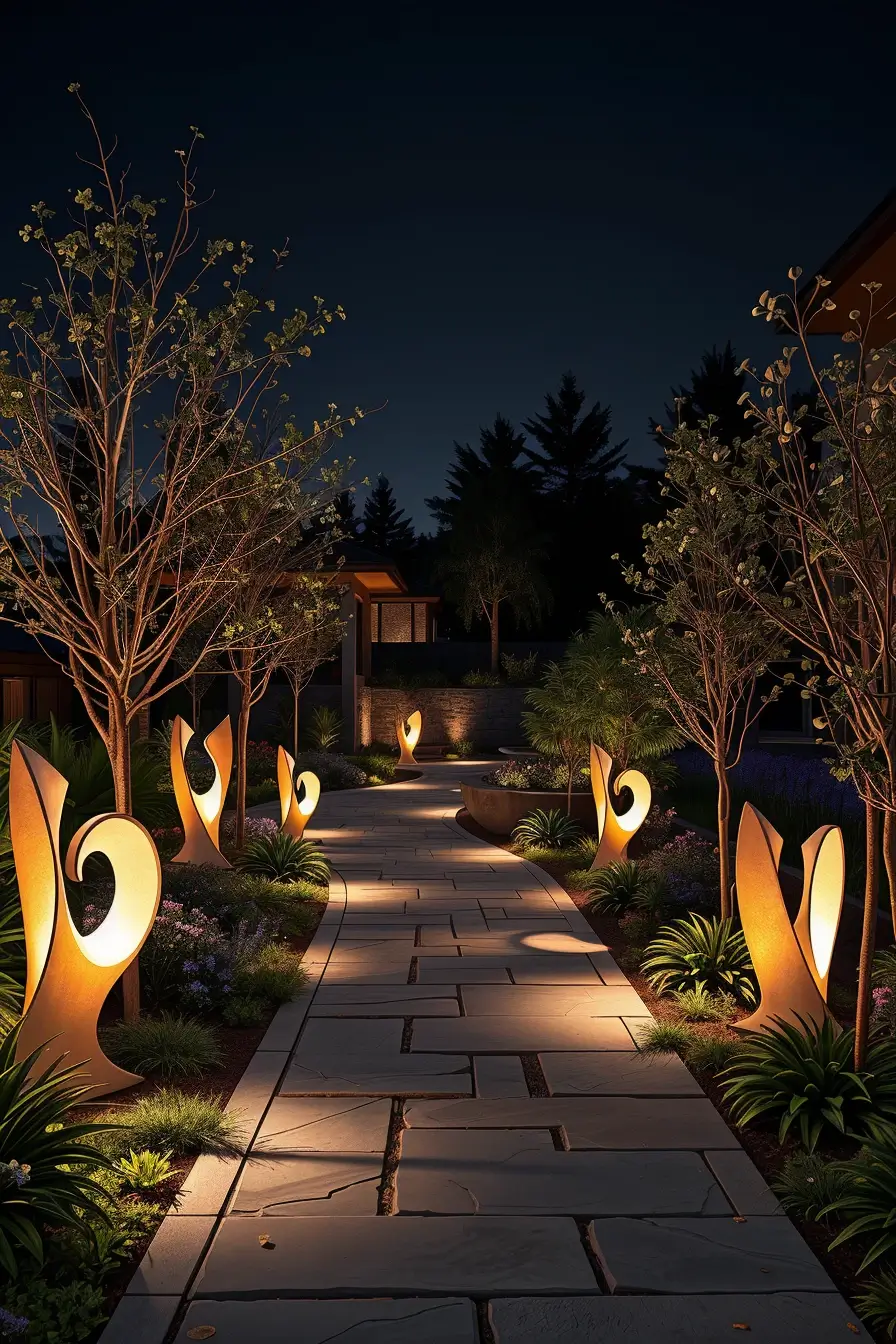
I typically include low-profile lights with diffused output, positioned to create rhythm along walkways without glare. These designs belong in outdoor interiors because they improve orientation and safety while reinforcing a stylish and cohesive design language throughout the landscape.
In my own projects, I have found that irregular spacing and varied fixture heights, as recommended by contemporary landscape designers, create a more natural and relaxed visual flow. This approach feels far more intentional than rigid, evenly spaced lighting.
To strengthen this section, I would add attention to surface materials, ensuring that light interacts thoughtfully with stone, concrete, or wood textures along the path.
4. Designer Bollard Lights With Minimal Silhouettes
Designer bollard lights in 2026 are defined by restraint and precision. I use them to subtly mark boundaries, frame outdoor rooms, and highlight circulation routes without visually cluttering the environment.
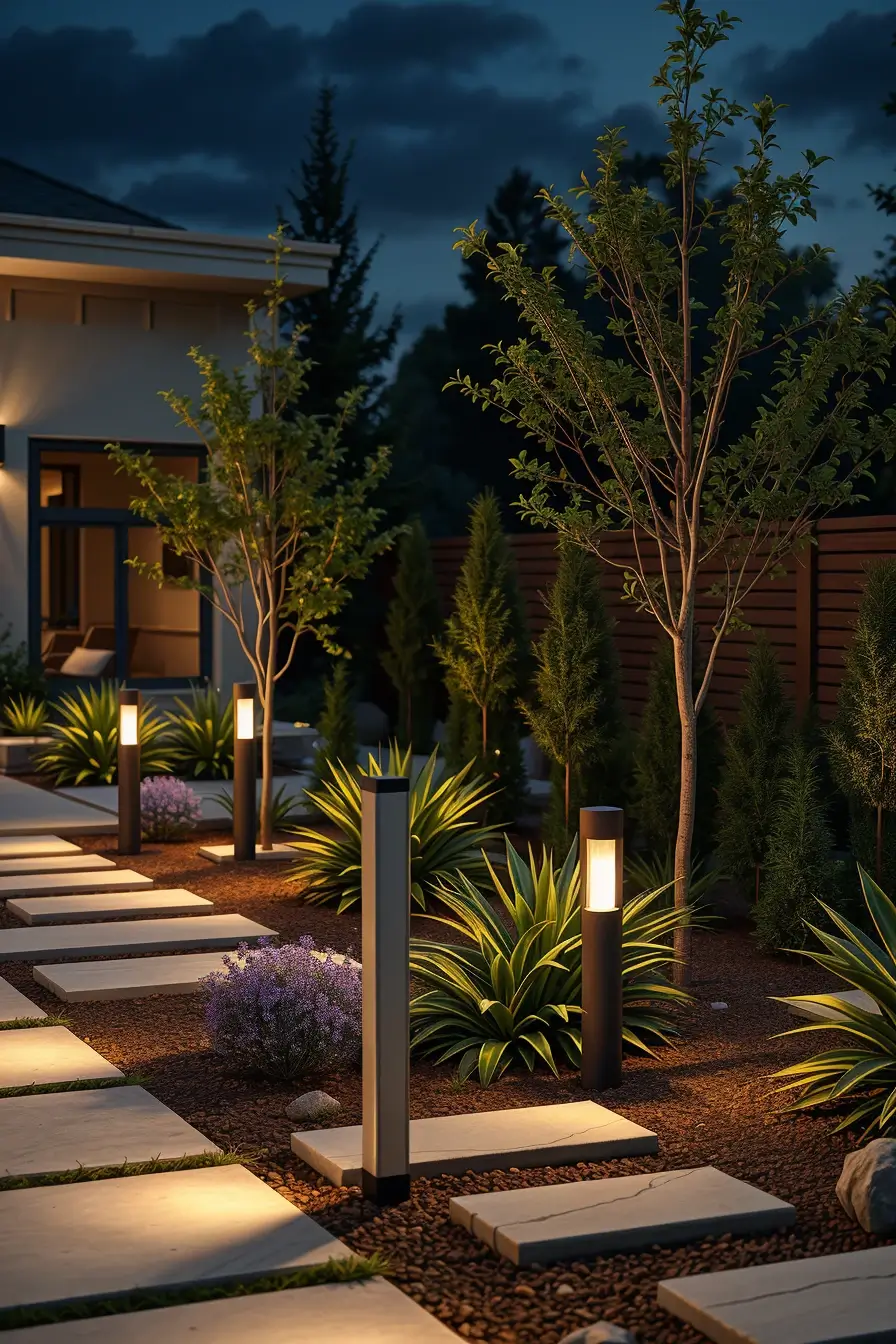
These bollards often feature slim profiles, matte finishes, and hidden light sources. I include them because their designer quality lies in what they conceal rather than what they reveal, allowing light to softly graze the ground while the fixture itself recedes into the background.
From my professional standpoint, many lighting specialists recommend bollards with controlled beam angles to avoid light pollution. I follow this guidance closely, as it results in calmer, more comfortable outdoor spaces.
What could be added here is coordination with planting height, ensuring that bollard lights remain effective and visually balanced as the landscape matures.
5. Statement Outdoor Floor Lamps For Open-Air Living
Outdoor floor lamps transform terraces and patios into true open-air living rooms. In 2026, I see these lamps becoming bolder and more expressive, often oversized and intentionally visible within seating and dining zones.
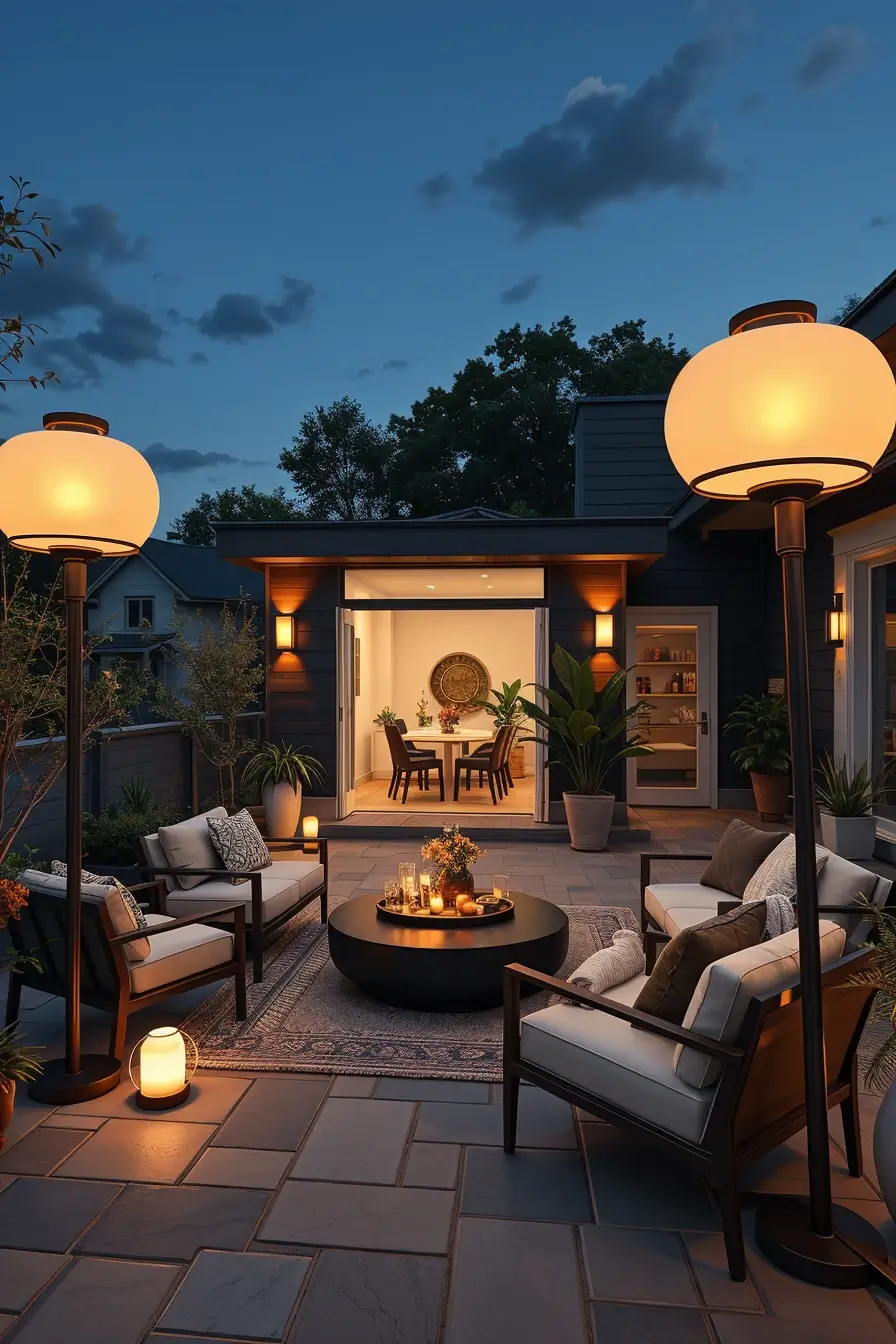
I select floor lamps with weather-resistant bases, sculptural shades, and soft ambient output. They deserve a place in outdoor interiors because they humanize large spaces, create intimacy, and visually anchor furniture arrangements in a way overhead lighting cannot.
Based on my experience, designers featured in Elle Decor often suggest treating outdoor lounges like indoor rooms, and I fully support this idea. Floor lamps help reinforce that mindset, making outdoor spaces feel furnished and complete.
To enhance this section, I would suggest pairing floor lamps with low seating and textured outdoor rugs to reinforce the sense of comfort and cohesion.
6. Floating And Suspended Outdoor Light Installations
Floating and suspended lighting installations bring a sense of lightness and drama to outdoor spaces without adding visual weight. In 2026, I see these installations used above dining tables, water features, and courtyards to create strong vertical presence.
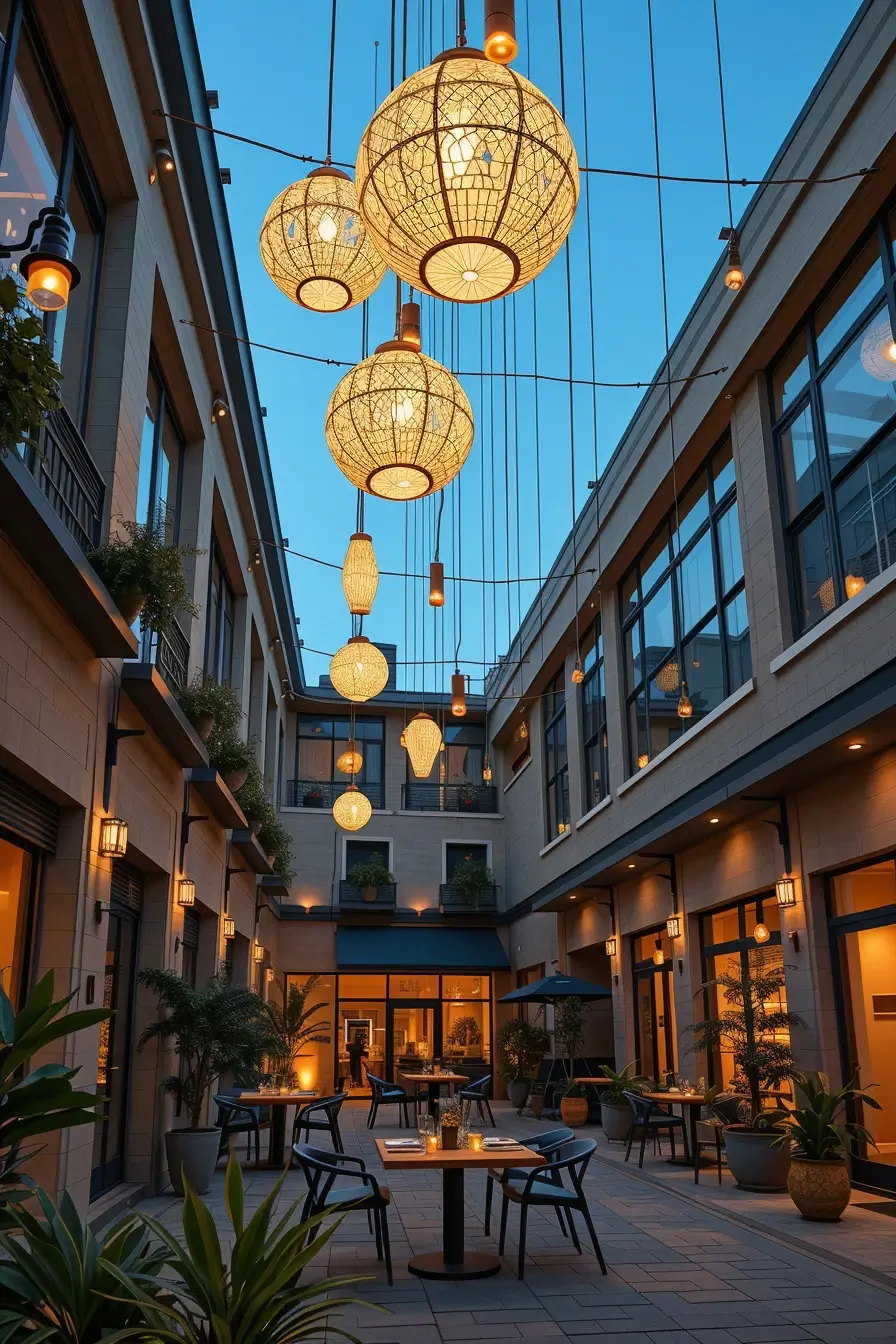
I work with suspended pendants, tension-cable systems, and floating rings that appear to hover in space. These elements belong in contemporary outdoor design because they draw the eye upward and help define zones without physical barriers.
In my professional practice, I have found that designers recommend careful attention to wind exposure and mounting systems. When done correctly, suspended lighting feels effortless rather than fragile.
What I would add is integration with smart controls, allowing these installations to shift brightness and tone depending on the event or time of night.
7. Artistic LED Lighting Integrated Into Landscaping
Artistic LED lighting integrated into landscaping allows light to become part of the terrain itself. In 2026, I use LEDs to trace contours, highlight elevation changes, and emphasize planting compositions in a subtle yet expressive way.
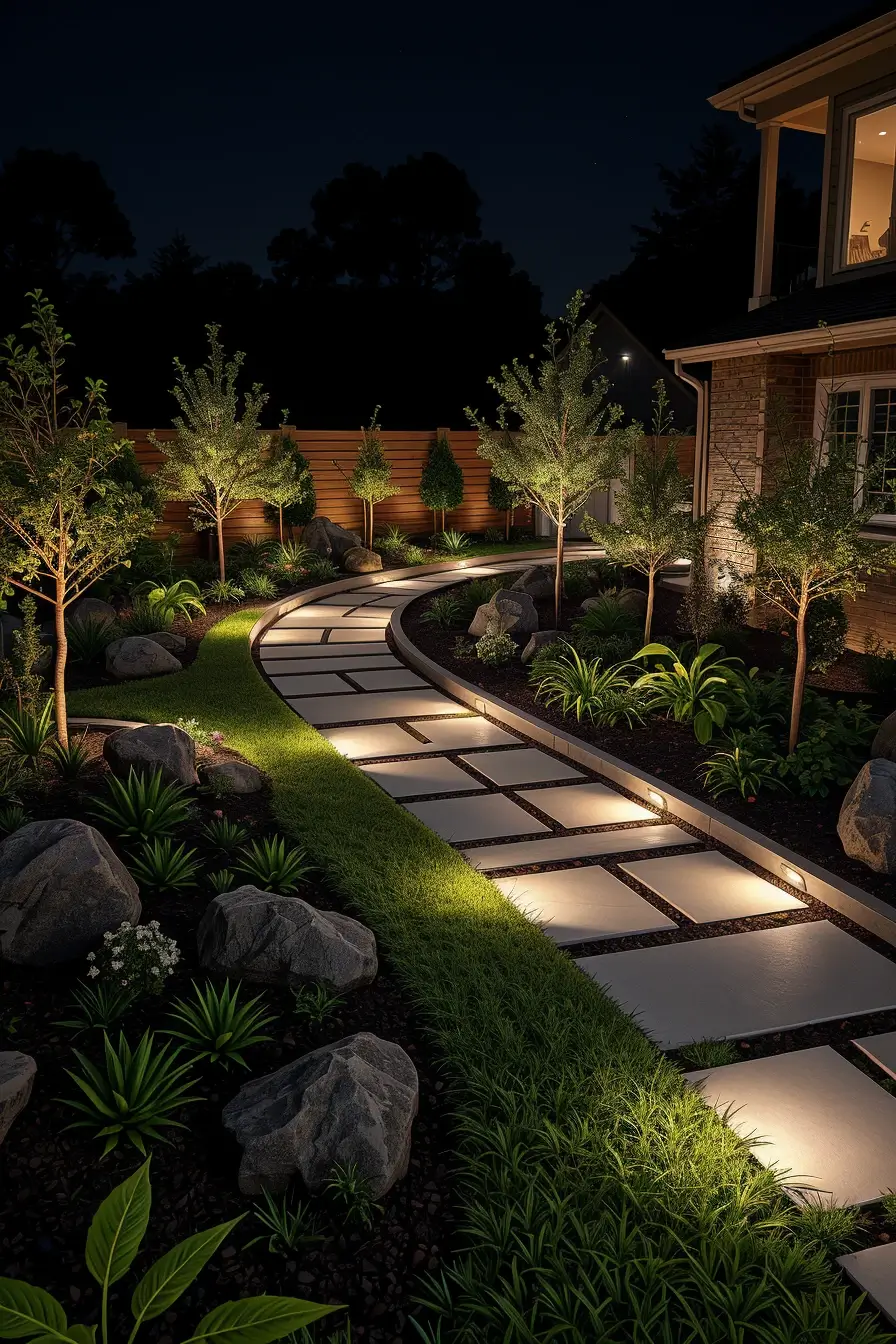
I incorporate hidden LED strips, ground-recessed spots, and softly glowing edges because they support both aesthetics and functionality. These solutions are essential for creating unique nighttime landscapes that feel immersive rather than artificially lit.
From my experience, landscape architects often stress the importance of concealment, and I agree completely. The most successful LED integrations are those where the source is invisible and the effect feels natural.
To complete this section, I would recommend coordination with irrigation and drainage systems to ensure long-term durability and consistent performance.
8. Unique Outdoor Wall Lights With Sculptural Depth
I consider outdoor wall lighting in 2026 to be an architectural layer that adds depth and rhythm to exterior surfaces. Rather than flat fixtures, unique wall lights are designed with sculptural relief, casting layered shadows that visually expand walls and facades while maintaining practical illumination for entrances, patios, and transitional zones.
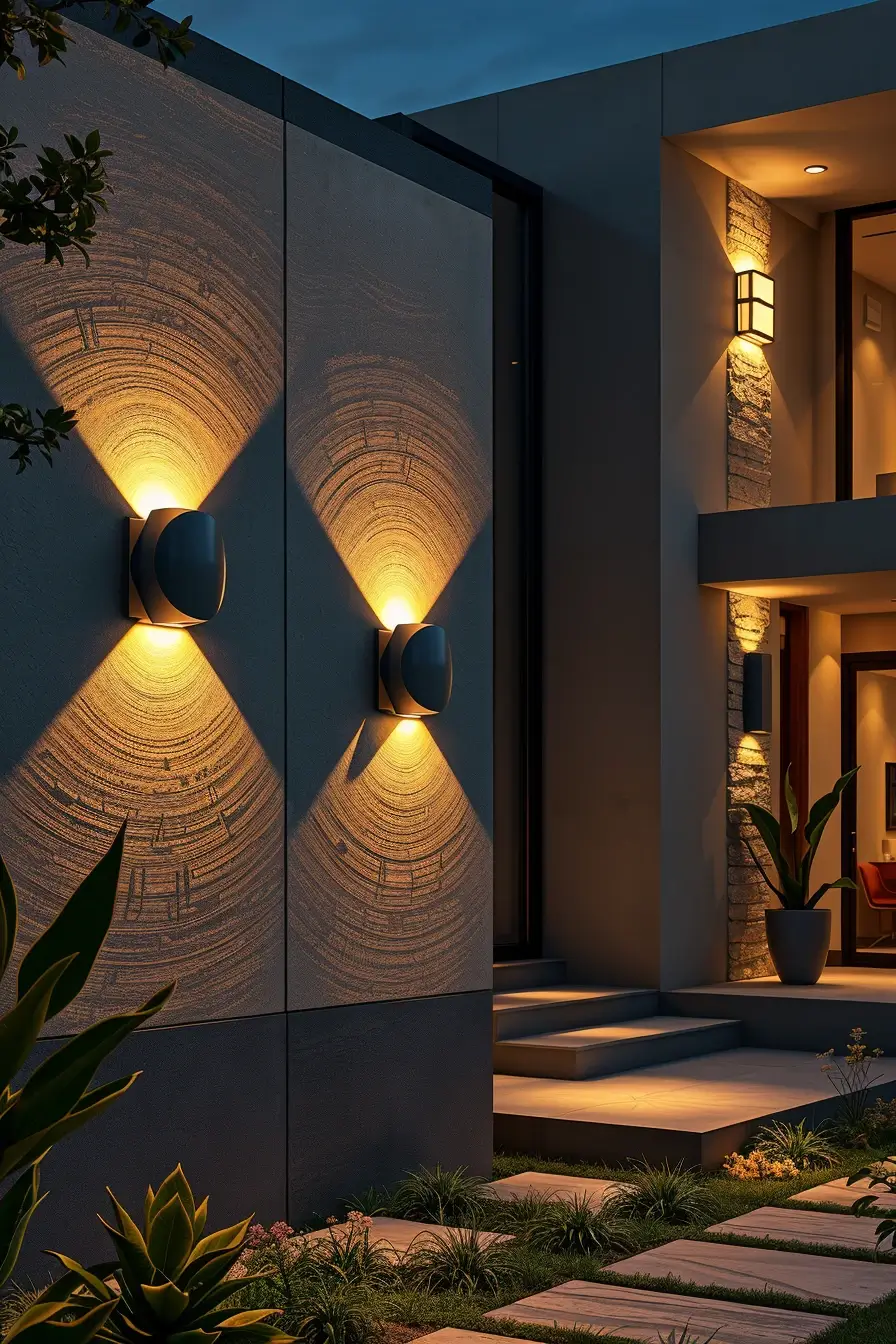
In my projects, I gravitate toward wall lights with carved forms, stacked volumes, or recessed geometries finished in stone, concrete, or matte metal. These elements deserve inclusion because they function both as light sources and as vertical design accents, reinforcing a designer and modern outdoor aesthetic without overwhelming the architecture.
From my professional experience, lighting designers frequently note in publications like Dezeen that shadow play is as important as brightness. I fully support this idea, as sculptural wall lights add visual interest even at low light levels and feel intentional rather than decorative.
What I would add here is careful spacing and alignment, ensuring wall lights follow architectural lines and proportions so the facade reads as cohesive and refined.
9. Contemporary Courtyard Lighting With Gallery Aesthetics
When working with courtyards, I approach lighting as if I were curating a gallery space. In 2026, courtyard lighting emphasizes controlled illumination, clean sightlines, and a calm atmosphere that allows materials, art pieces, and greenery to stand out.
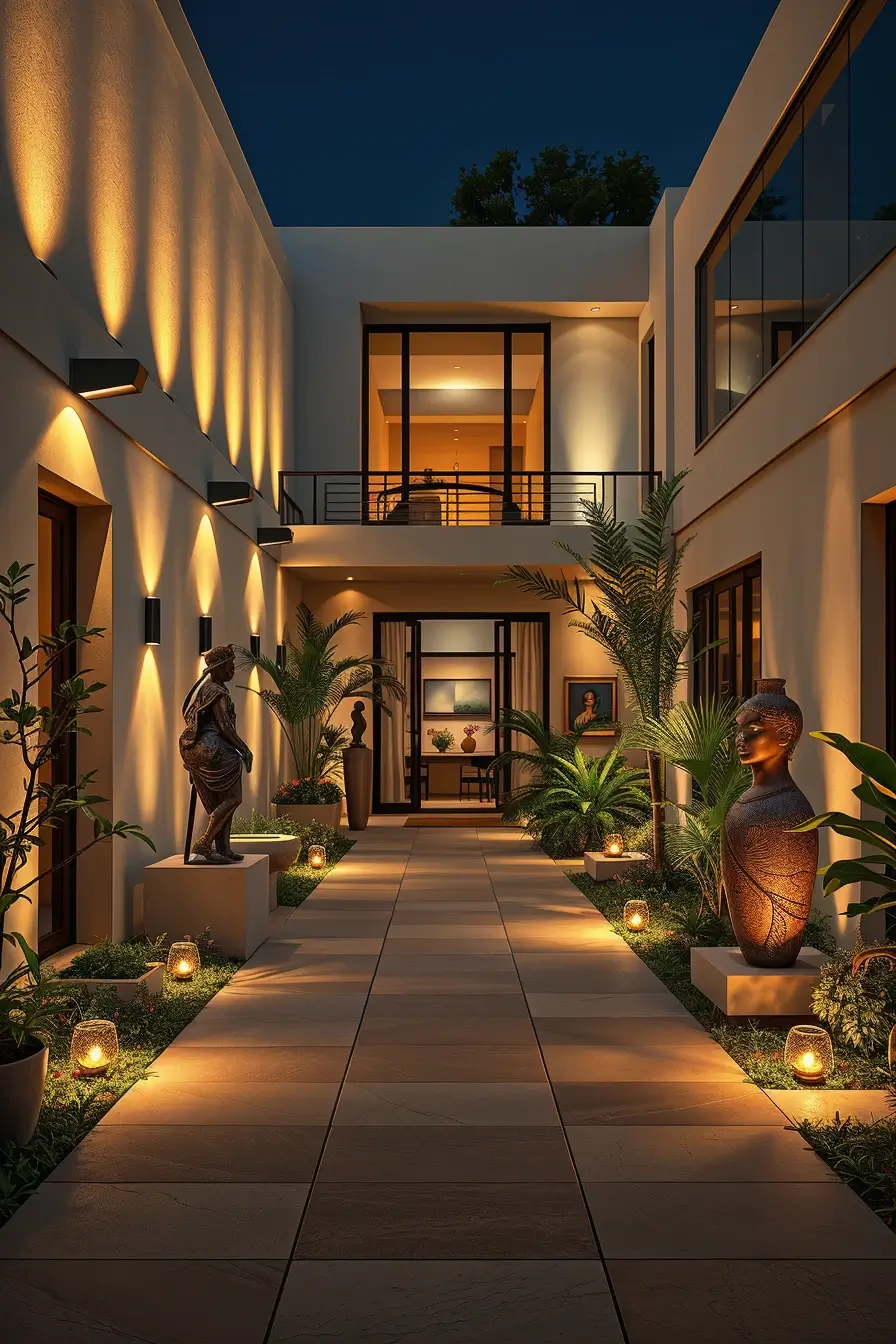
I typically include discreet spotlights, wall washers, and floor-integrated lighting to highlight textures, sculptures, or water features. These choices belong in contemporary courtyards because they create a composed, almost museum-like environment that feels intentional and serene after dark.
In my experience, many interior designers recommend treating courtyards as outdoor rooms with a clear visual hierarchy. I have found that applying gallery-style lighting principles results in outdoor spaces that feel elevated and thoughtfully designed rather than purely functional.
To complete this section, I would suggest adding adjustable lighting angles, allowing homeowners to reframe the courtyard as displays or plantings change over time.
10. Outdoor Lighting Inspired By Modern Sculpture
Outdoor lighting inspired by modern sculpture embraces bold form and expressive presence. In 2026, I see lighting fixtures that echo the language of contemporary art, becoming focal points rather than background elements.
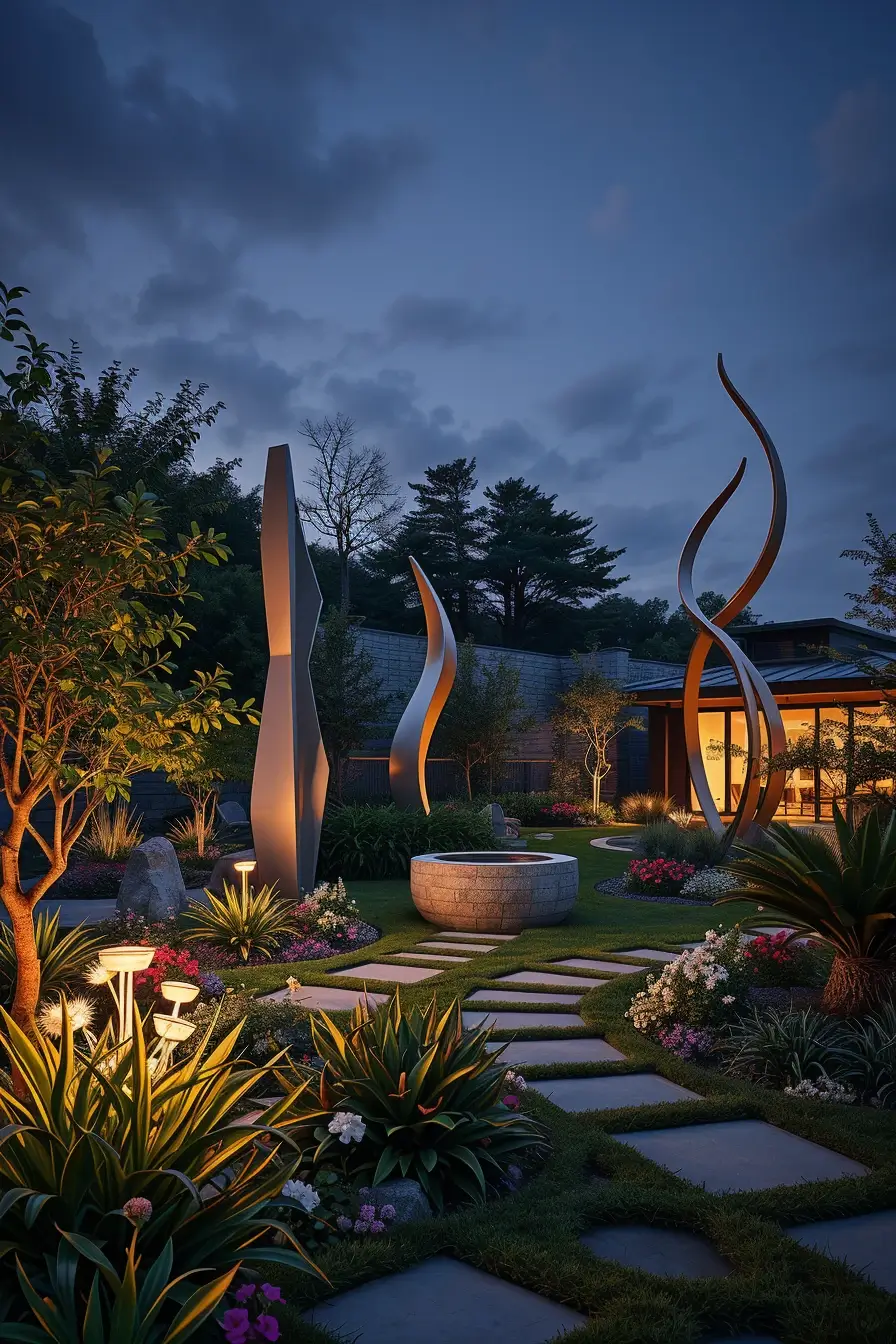
I include freestanding lights with abstract profiles, curved metal structures, or asymmetrical compositions because they introduce artistic outdoor lighting into open landscapes. These pieces are important because they create identity and emotional impact, especially in large gardens or minimalist outdoor settings.
From my professional standpoint, many landscape architects encourage the use of statement elements to anchor open spaces. I agree with this approach, as sculptural lighting provides a visual anchor while still serving a functional role at night.
What I would add is coordination with surrounding materials, ensuring the sculpture-inspired lighting complements stone, wood, or concrete rather than competing with them.
11. Soft Architectural Lighting For Terraces And Decks
Soft architectural lighting plays a crucial role in making terraces and decks usable and comfortable in the evening. In 2026, I focus on indirect lighting strategies that enhance spatial clarity without harsh contrasts.
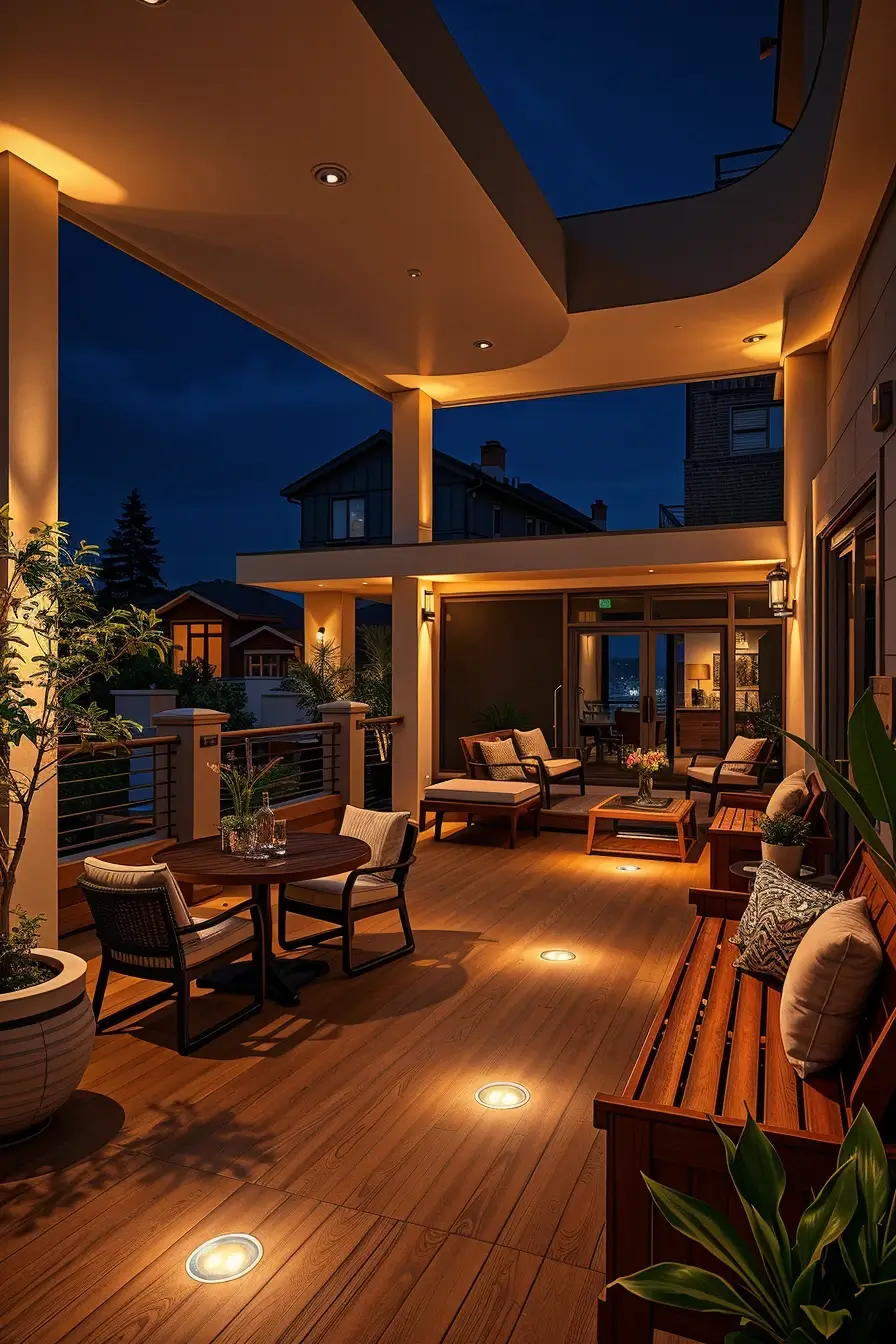
I rely on recessed floor lights, concealed step lighting, and under-bench illumination to define edges and circulation paths. These elements should be included because they improve safety while preserving a calm, stylish ambiance that supports relaxation and social interaction.
Based on my experience, many US-based outdoor living experts recommend layered, low-glare lighting for decks. I consistently see better results when light sources remain hidden and the glow feels ambient rather than directional.
To strengthen this section, I would add attention to railing integration, using subtle lighting within handrails to maintain visual continuity and comfort.
12. Experimental Outdoor Lighting With Organic Shapes
Experimental outdoor lighting in 2026 explores organic shapes inspired by nature and fluid movement. I view this trend as a response to rigid geometry, introducing softer forms that feel more approachable and expressive.
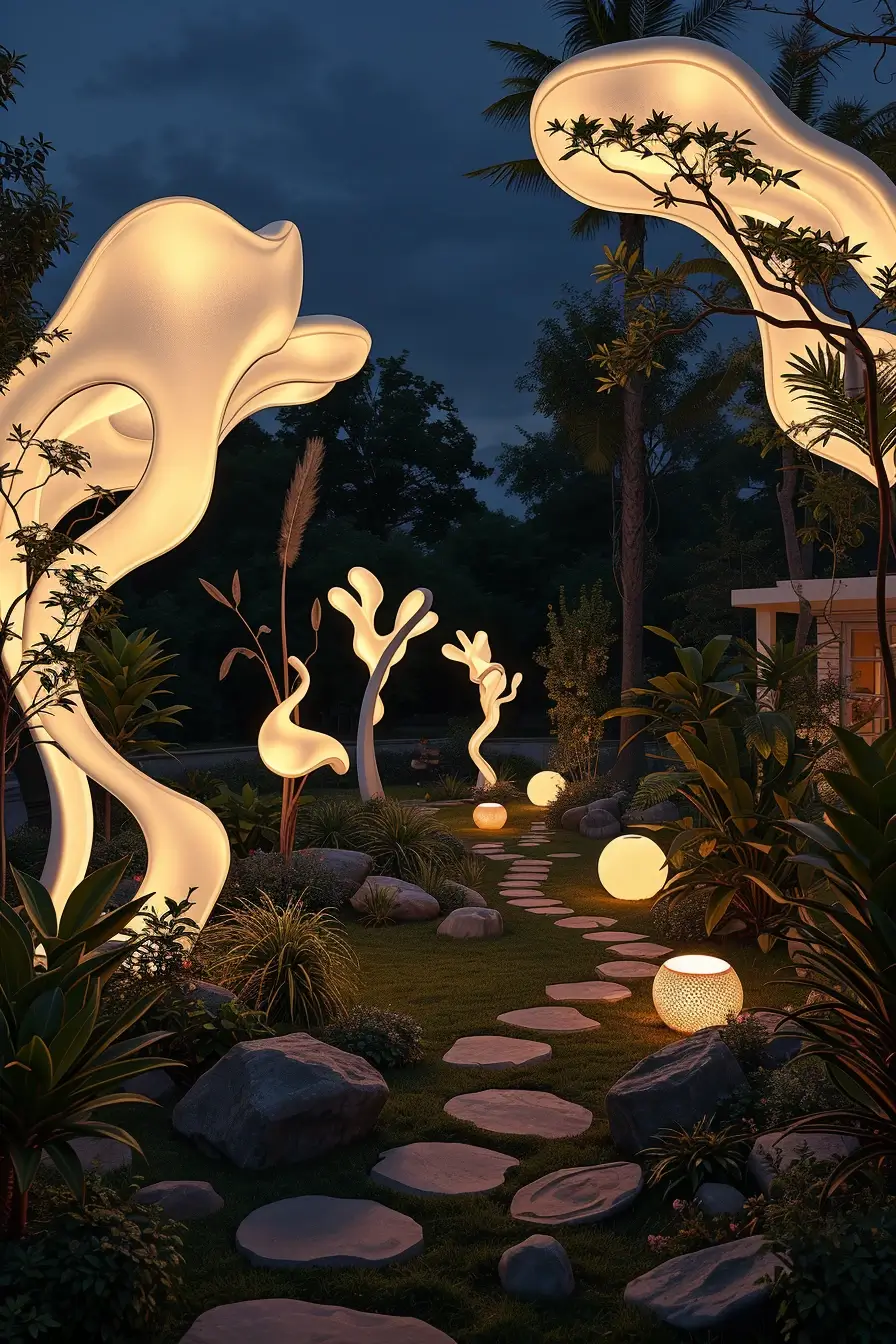
I often incorporate lighting elements that resemble stones, branches, or flowing forms placed organically throughout the landscape. These designs belong in outdoor environments because they harmonize with planting schemes and create a more immersive nighttime experience.
In my professional practice, I have observed that designers increasingly value emotional response in outdoor spaces. Organic lighting shapes support this goal by creating environments that feel intuitive and calming rather than strictly structured.
What I would add here is thoughtful placement near seating or water features, where organic forms can enhance sensory experiences through reflection and shadow.
13. Linear And Geometric Lighting Trends For 2026
Linear and geometric lighting remains a defining trend for 2026, offering clarity and order within outdoor spaces. I use these forms to emphasize axes, edges, and transitions, reinforcing the underlying structure of the design.
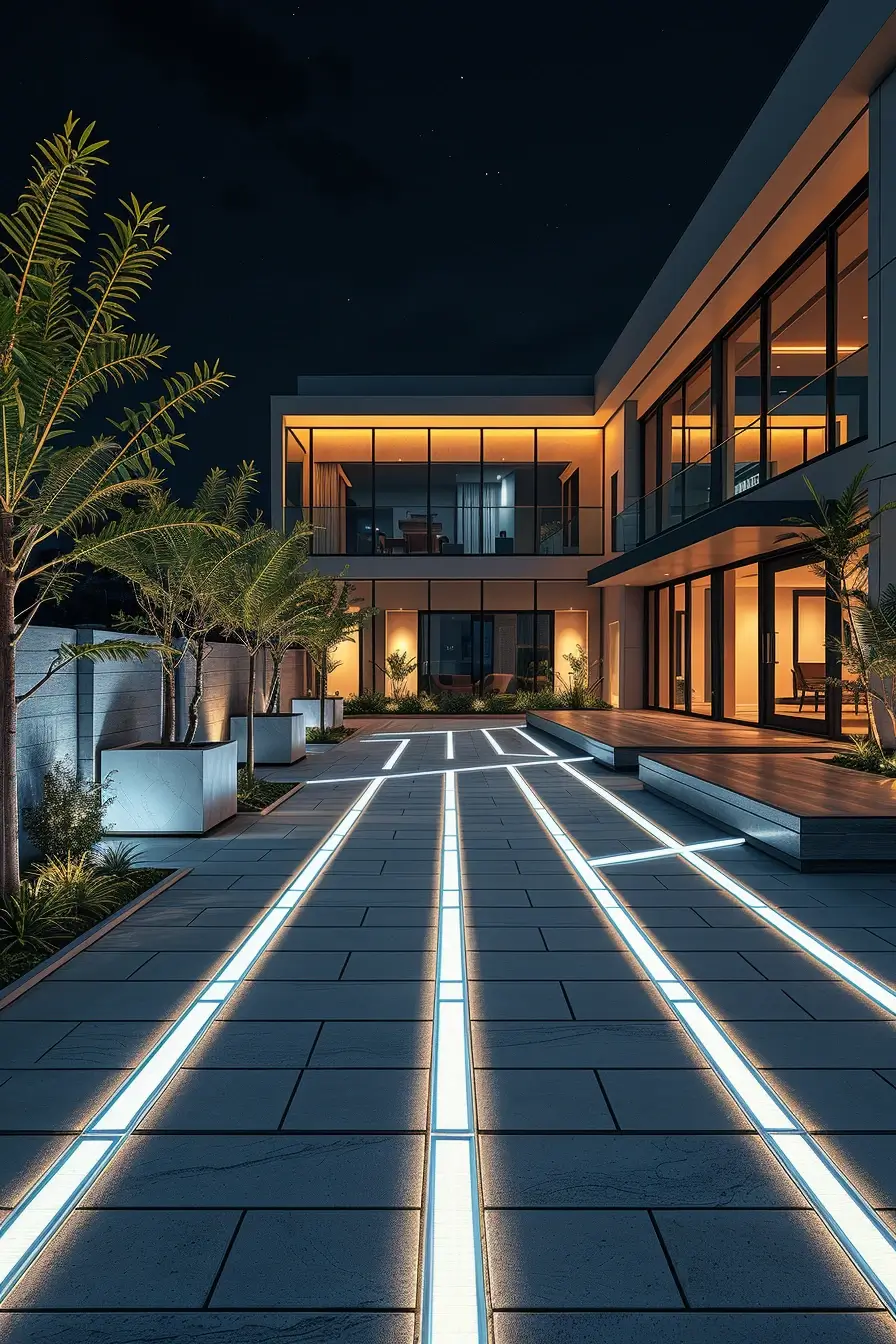
I include linear LED strips, rectangular fixtures, and precise geometric forms because they align naturally with modern architecture and contemporary landscaping. These elements are essential for creating visual rhythm and guiding movement through outdoor areas.
From my experience, many lighting professionals recommend geometric lighting for its versatility and timeless appeal. I have found that it adapts well to both residential and commercial outdoor environments.
To enhance this section, I would suggest combining linear lighting with textured surfaces, allowing light to interact dynamically with materials.
14. Futuristic Outdoor Lighting With Smart Design
Futuristic outdoor lighting in 2026 integrates advanced technology with refined aesthetics. I see smart lighting systems not as gadgets, but as tools that enhance usability, efficiency, and personalization.
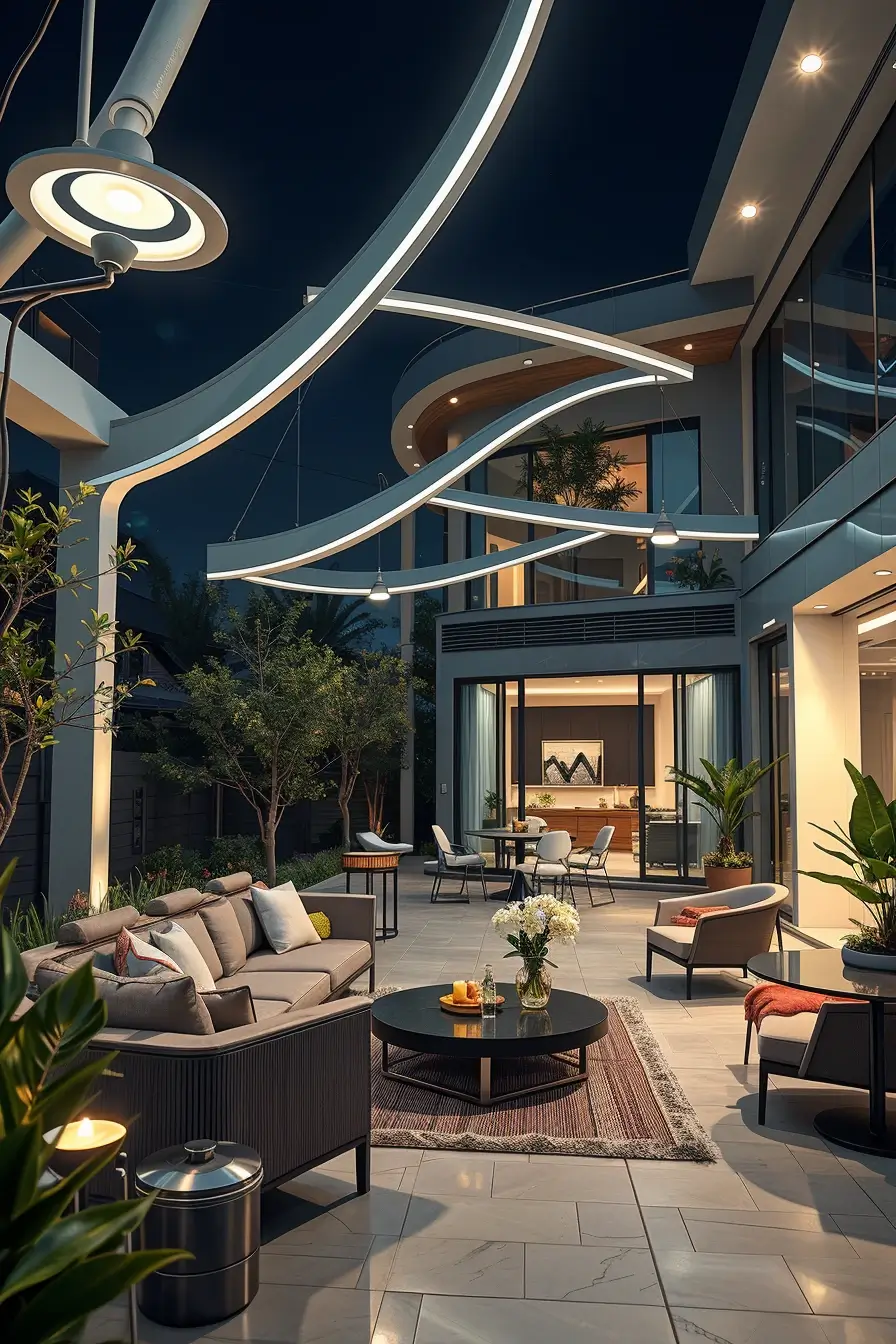
I incorporate fixtures with integrated sensors, adaptive brightness, and app-controlled settings because they allow outdoor environments to respond to real usage patterns. These designer solutions belong in contemporary outdoor spaces as they combine convenience with visual sophistication.
In my professional experience, technology-focused design publications emphasize that smart systems should remain visually discreet. I agree fully, as the most successful futuristic lighting feels seamless rather than technical.
What I would add is a strong emphasis on user-friendly controls, ensuring that smart features enhance daily life without complicating the experience.
15. Artistic Solar Lighting With Designer Appeal
I see artistic solar lighting in 2026 as a serious design tool rather than a compromise. Modern solar fixtures are now powerful enough to illuminate pathways, patios, and garden zones while maintaining a refined, sculptural presence. These designs integrate seamlessly into outdoor layouts, offering sustainability without sacrificing aesthetics, which is especially important in contemporary exterior planning.
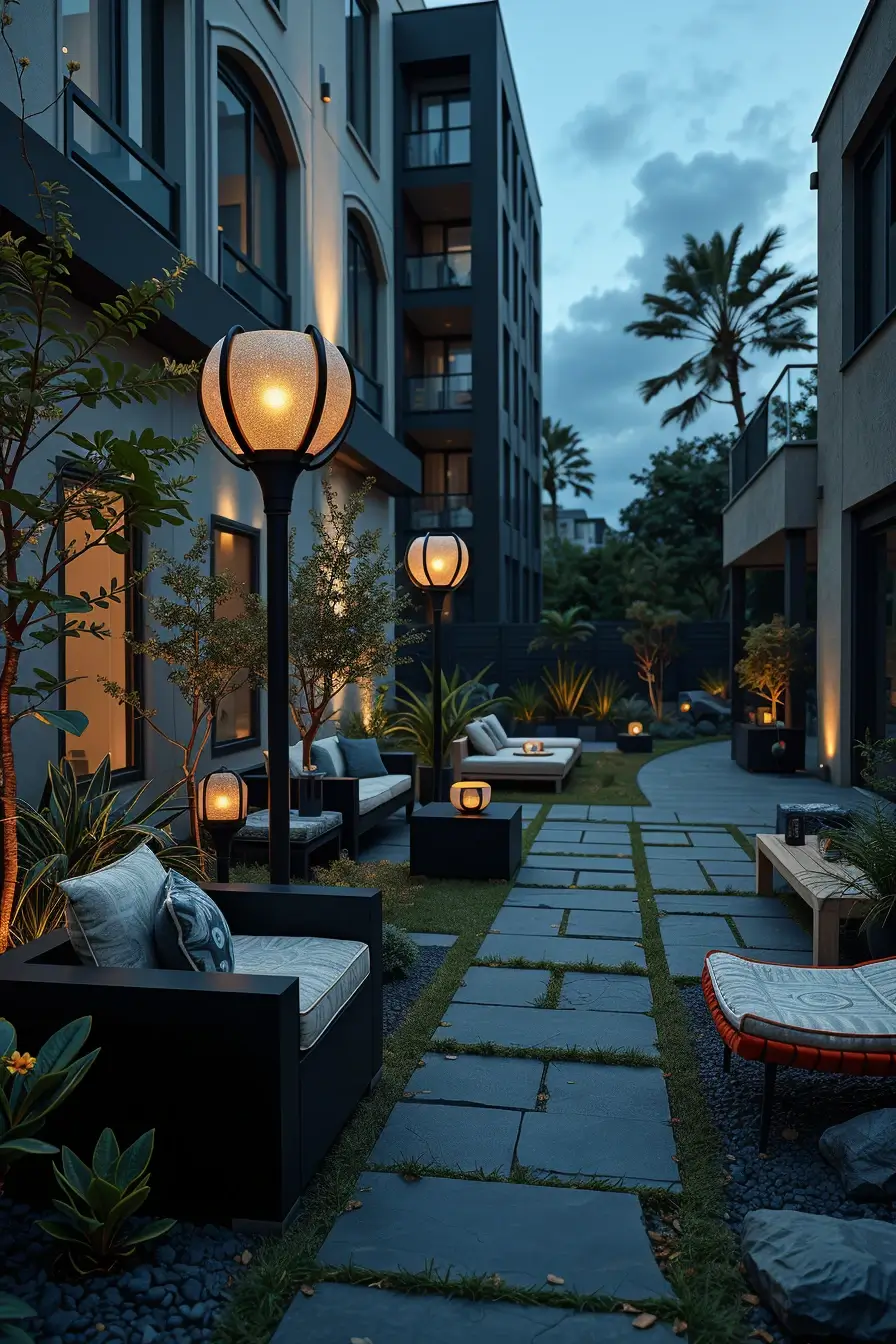
I typically recommend solar floor lamps with sculptural silhouettes, slim solar bollards with matte finishes, and integrated solar panels hidden within the fixture design. When paired with outdoor lounge furniture, stone walkways, or garden seating areas, these lights create visual rhythm and depth while remaining energy independent. Their placement enhances circulation and zoning without visible wiring or clutter.
From my experience, designers featured in Architectural Digest emphasize that solar lighting works best when treated as a design accent rather than a utility object. I agree with this approach because well-designed solar fixtures enhance both sustainability and atmosphere. In my projects, choosing high-quality solar lighting reduces long-term maintenance while elevating the visual identity of the space.
What I would add here is layered solar lighting at different heights to strengthen visual composition at night. Combining low-level pathway lights with mid-height sculptural pieces creates a balanced and intentional nighttime landscape.
16. Minimalist Outdoor Lighting With High Visual Impact
Minimalist outdoor lighting in 2026 focuses on clarity, proportion, and deliberate placement. I approach these designs with restraint, allowing light itself to become the focal point rather than the fixture. Clean lines, slim profiles, and hidden light sources define this style while maintaining strong visual presence after dark.
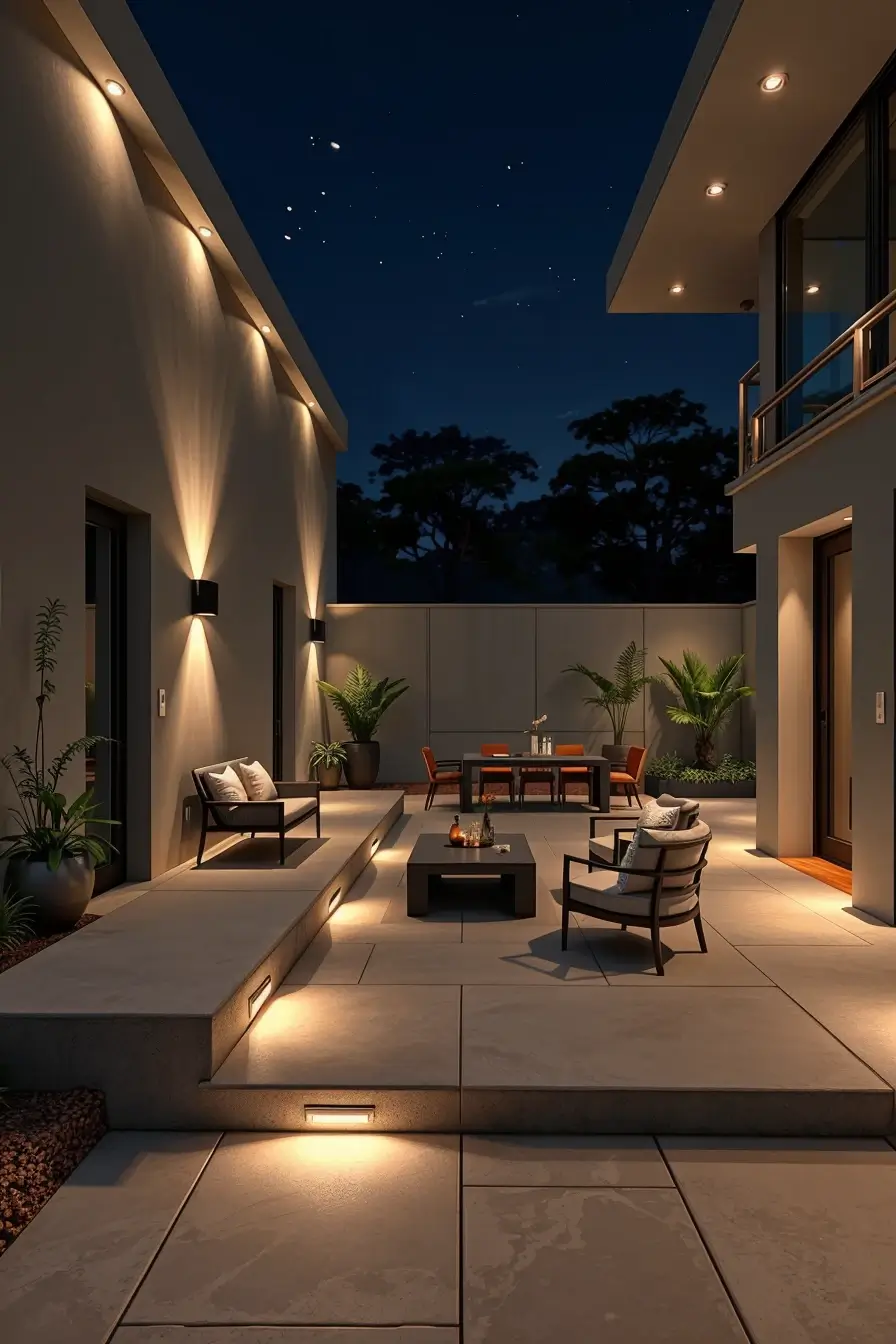
I usually work with recessed wall lights, linear LED strips integrated into steps or seating, and slender pole lights in neutral finishes. These elements pair exceptionally well with minimalist outdoor furniture, concrete surfaces, and modern architectural facades. Each light has a clear purpose, whether guiding movement or emphasizing structure.
In my professional opinion, minimalism works best when lighting is planned early in the design process. Publications like Dezeen frequently highlight how minimalist lighting enhances architectural clarity rather than competing with it. I apply this principle by limiting the number of fixtures and focusing on precision rather than decoration.
What could strengthen this section is the inclusion of smart dimming systems. Adjustable brightness allows minimalist lighting to shift mood effortlessly from functional to atmospheric.
17. Statement Lanterns Reimagined For Modern Exteriors
Statement lanterns in 2026 are bold, architectural, and intentionally oversized. I no longer treat lanterns as traditional accessories but as anchor pieces that define outdoor rooms. Their scale and form help establish hierarchy in patios, terraces, and entry zones.
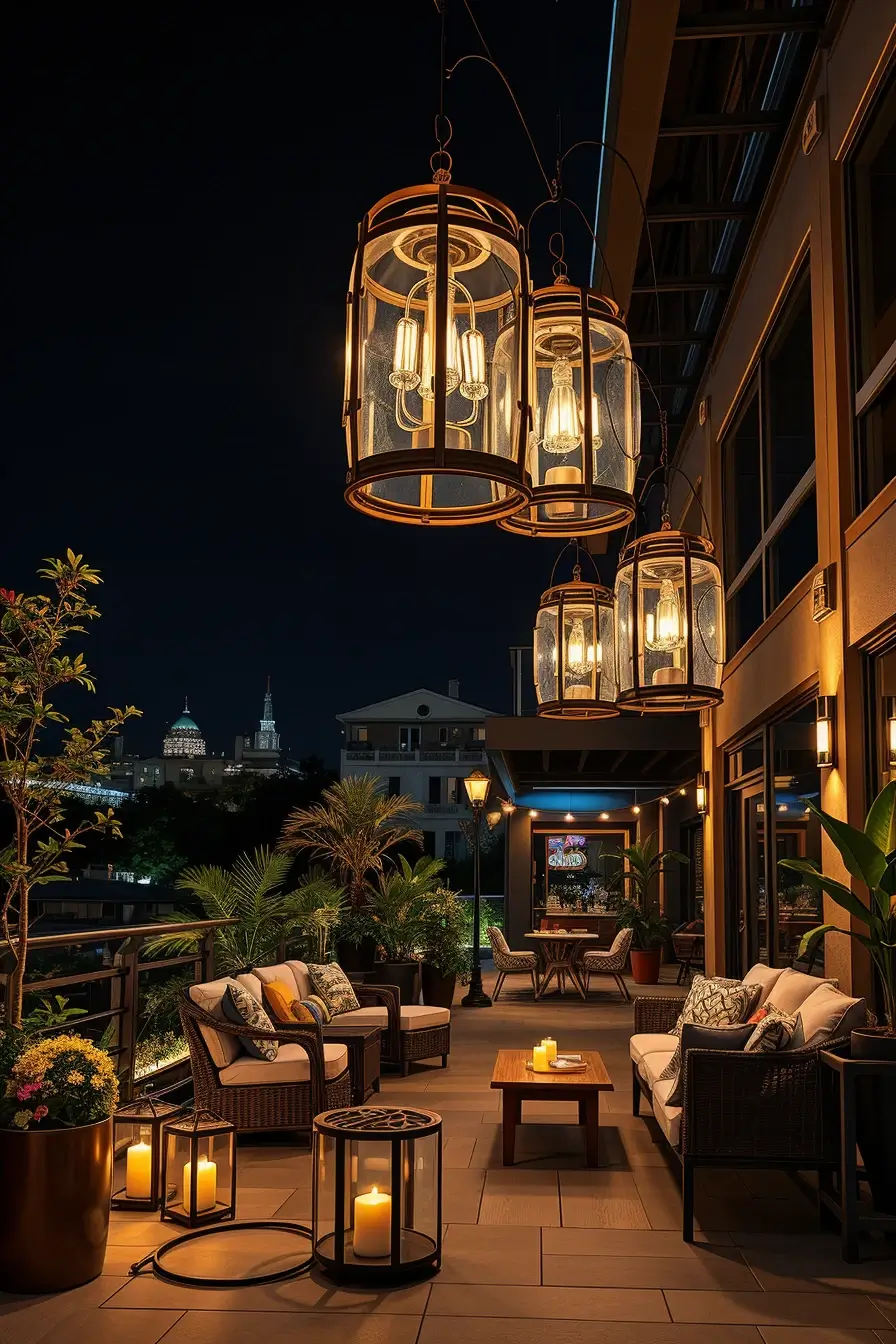
I recommend lanterns crafted from powder-coated metal, frosted glass, or sculptural wire frames, often positioned near outdoor sofas, dining tables, or entryways. These lanterns provide ambient lighting while also acting as visual sculptures during the day. When combined with contemporary outdoor furniture, they reinforce a curated, designer-led aesthetic.
From my experience, House Beautiful designers often emphasize mixing traditional forms with modern materials to create timeless appeal. I follow this advice by choosing lantern shapes that feel familiar but are executed in modern finishes and proportions.
To enhance this concept further, I would add integrated LED technology with warm color temperatures to maintain comfort while ensuring energy efficiency.
18. Outdoor Lighting That Highlights Texture And Materials
In 2026, outdoor lighting increasingly focuses on revealing texture rather than flooding spaces with light. I use directional lighting to emphasize stone walls, wood cladding, concrete surfaces, and landscaped elements. This approach adds depth and drama while maintaining a refined atmosphere.
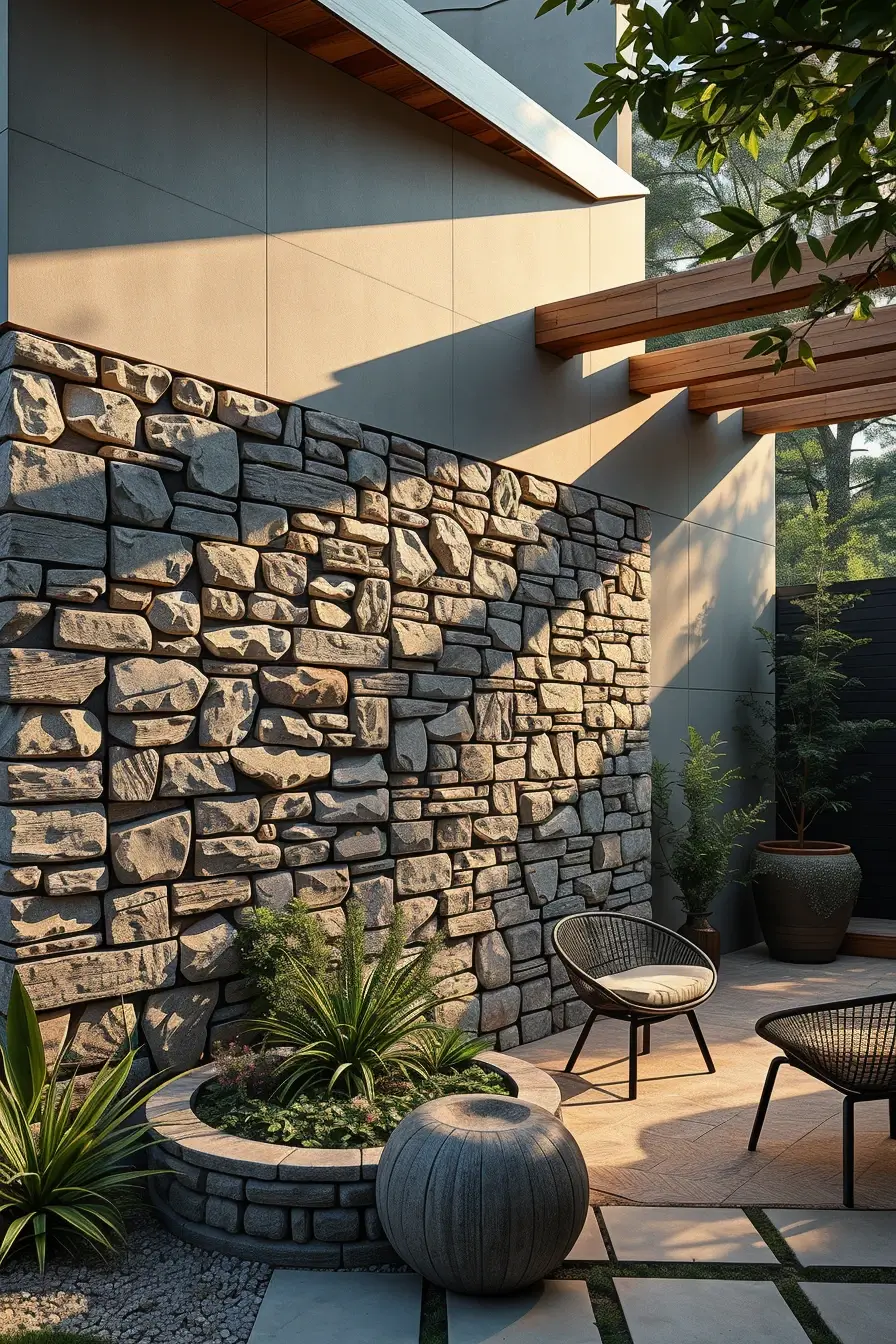
Wall washers, ground-mounted uplights, and adjustable spotlights are essential tools for this effect. I place them strategically near textured surfaces or architectural details to create shadow play. These lights work beautifully alongside natural materials and understated outdoor furniture.
I often reference guidance from lighting designers featured in Lighting Design and Application, who stress that grazing light brings materials to life. I apply this principle carefully, ensuring angles are precise to avoid glare or harsh contrasts.
What could be added here is a greater focus on color temperature variation. Slight shifts between warm and neutral tones can further enhance material richness.
19. Sculptural Lighting For Pools And Water Features
Pools and water features in 2026 are designed as visual centerpieces, and lighting plays a crucial role in defining them at night. I approach these spaces with sculptural underwater and perimeter lighting that enhances movement, reflection, and spatial flow.
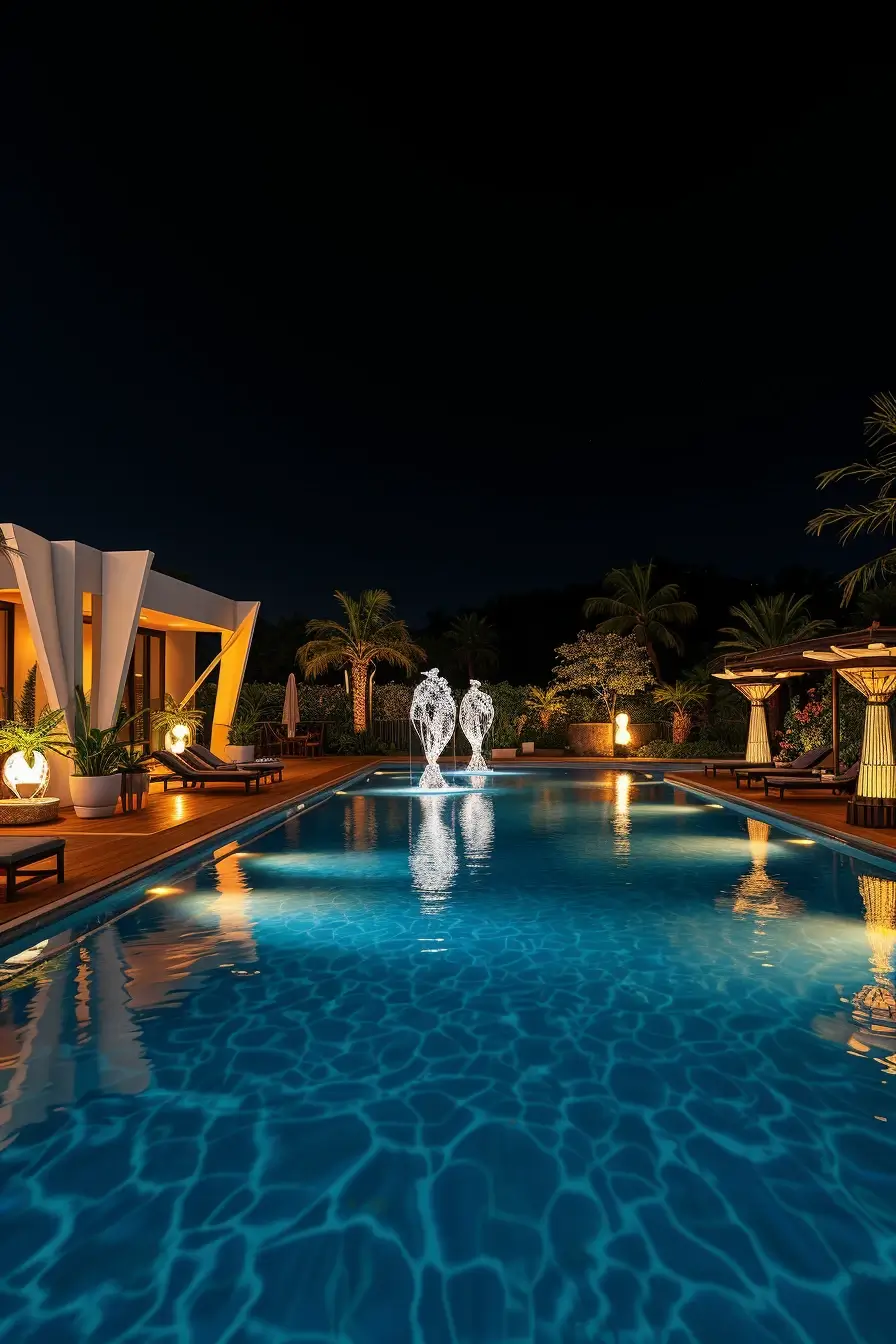
I typically integrate recessed pool lights, illuminated water bowls, and sculptural light columns placed near pool edges. These elements interact with water surfaces to create dynamic reflections while maintaining safety and visibility. Outdoor loungers and decking materials benefit greatly from this layered lighting approach.
From my experience, designers featured in Luxe Interiors emphasize restraint around water lighting to preserve elegance. I agree, as subtle illumination often feels more luxurious than excessive brightness.
To complete this section, I would include programmable lighting scenes that adjust intensity and color for different occasions.
20. Modern Outdoor Lighting For Large Architectural Homes
Large architectural homes require lighting that respects scale and structure. In 2026, I focus on lighting that reinforces architectural geometry without overwhelming it. The goal is to enhance form, not distract from it.
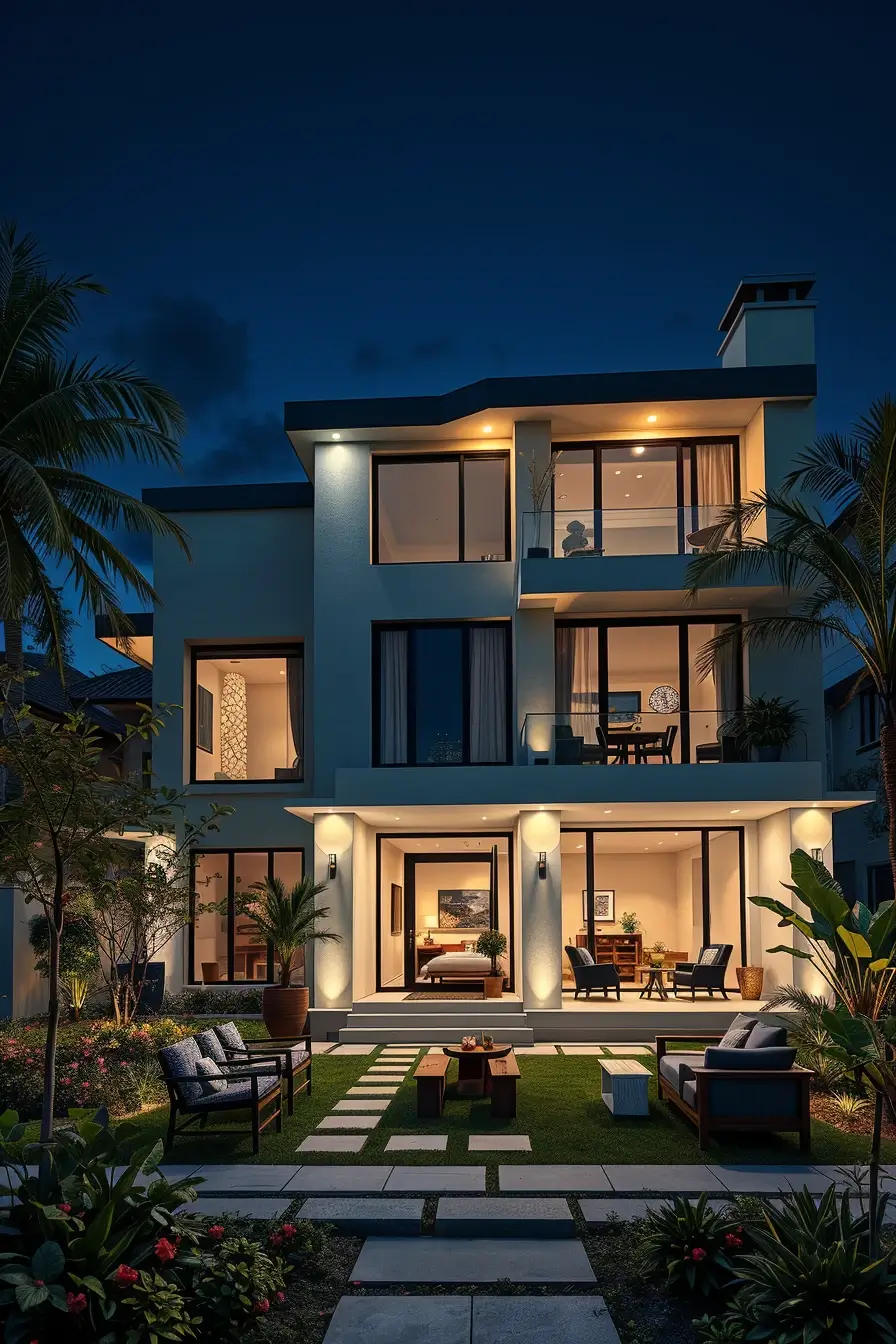
I work with facade uplights, linear lighting along rooflines, and discreet pathway lights that guide movement across expansive properties. These fixtures pair with structured landscaping and contemporary outdoor furniture to create cohesion across large outdoor areas.
Architectural Digest often highlights how exterior lighting should mirror the home’s architectural language. I follow this philosophy by aligning fixture placement with structural lines and materials.
What could improve this approach is integrating smart lighting controls that adapt illumination levels throughout the night for energy efficiency and comfort.
21. Creative Outdoor Lighting For Small Exterior Spaces
Small outdoor spaces in 2026 benefit from creative lighting strategies that expand perceived space. I focus on vertical lighting, reflective surfaces, and layered illumination to make compact areas feel intentional and inviting.
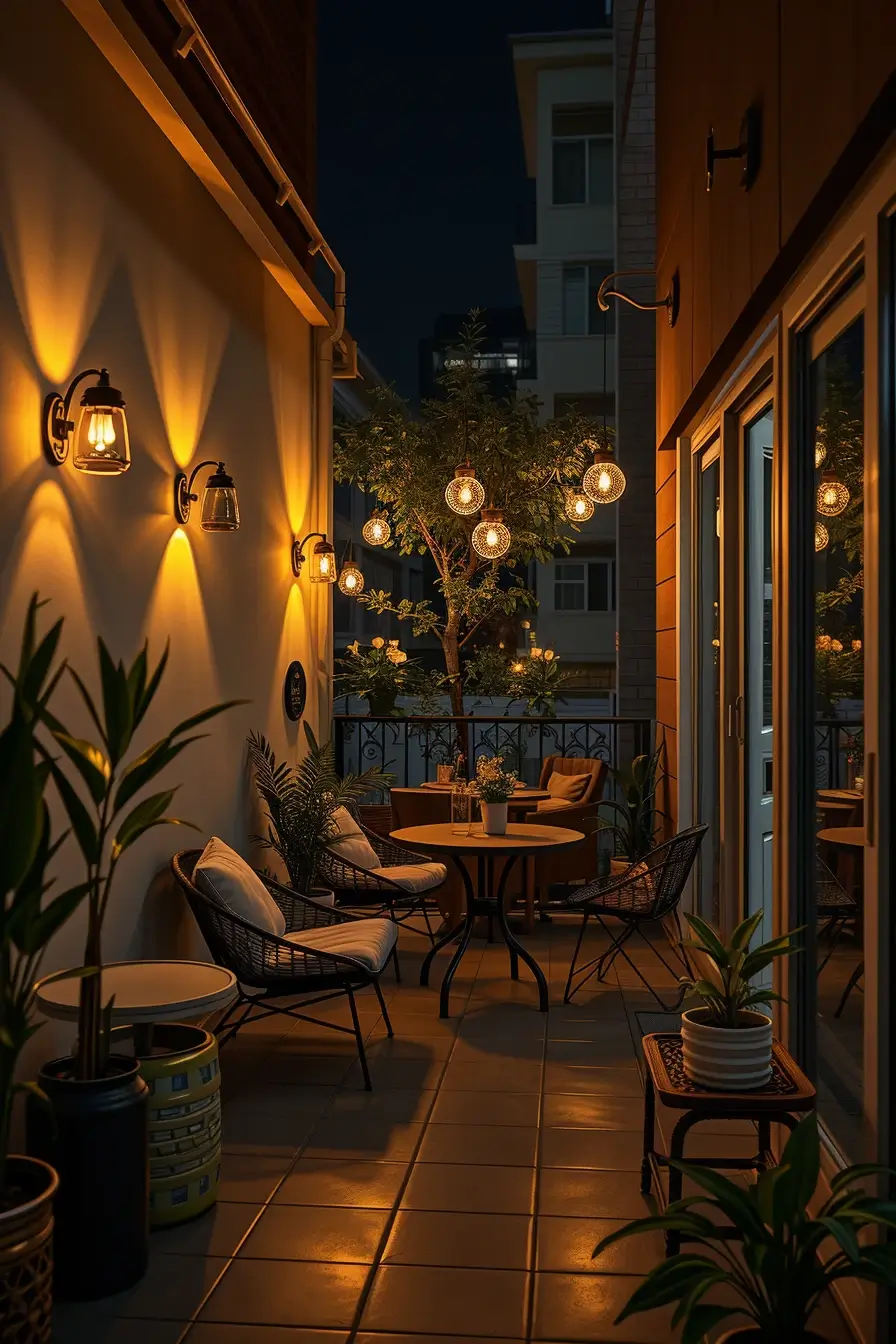
Wall-mounted lights, hanging pendants, and integrated bench lighting work exceptionally well in balconies, courtyards, and small patios. When combined with compact outdoor furniture, these lights help define zones without cluttering the space.
From my experience, interior designers at Domino often recommend treating small outdoor areas like interior rooms. I apply this advice by creating lighting layers similar to living spaces, ensuring comfort and visual balance.
To strengthen this section, I would add mirrors or reflective panels that amplify light and enhance spatial depth.
22. Artistic Light And Shadow Effects In Outdoor Design
In 2026, I treat light and shadow as equal design elements in outdoor environments. Instead of fully illuminating spaces, I intentionally allow darkness to coexist with light, creating depth and emotional contrast. This approach makes outdoor areas feel more sophisticated and visually layered rather than flat and overexposed.
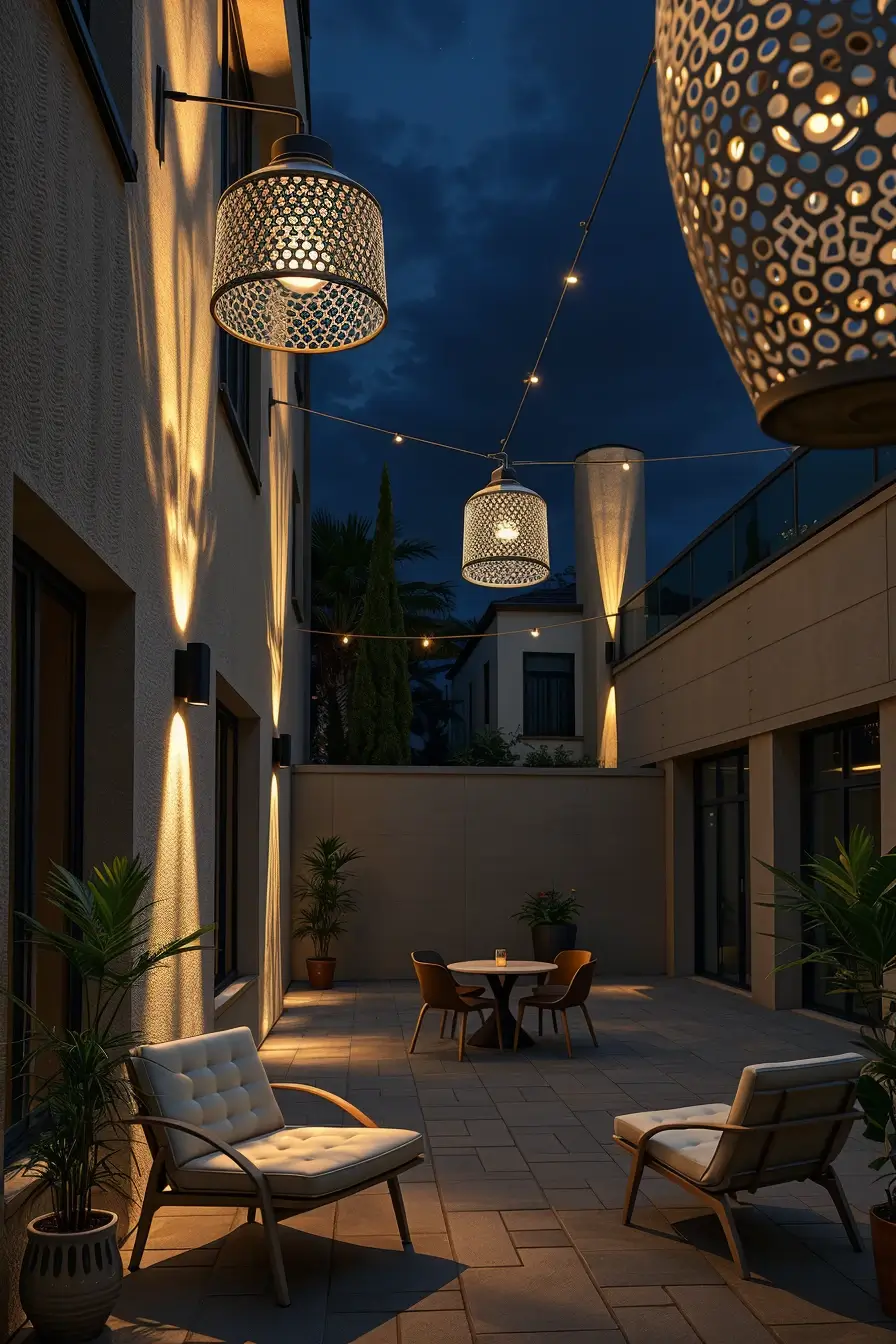
I often use perforated metal fixtures, slatted screens with backlighting, and directional spotlights aimed through architectural elements. These lighting choices interact with walls, plants, and pergolas to cast dynamic patterns across surfaces. When paired with restrained outdoor furniture, the shadows become part of the overall composition rather than visual noise.
From my professional perspective, designers featured in Interior Design Magazine frequently note that shadow is essential for atmosphere. I fully agree, as shadow adds movement and intrigue throughout the evening. In my work, clients often respond emotionally to these spaces because they feel immersive and intentionally designed.
To complete this section, I would add adjustable beam fixtures to fine-tune shadow intensity as seasons and foliage change.
23. Designer Outdoor Lighting With Custom Finishes
Custom finishes define luxury outdoor lighting in 2026. I increasingly specify lighting fixtures that can be tailored in color, texture, and material to match architectural details. This creates a cohesive exterior environment where lighting feels integrated rather than added afterward.
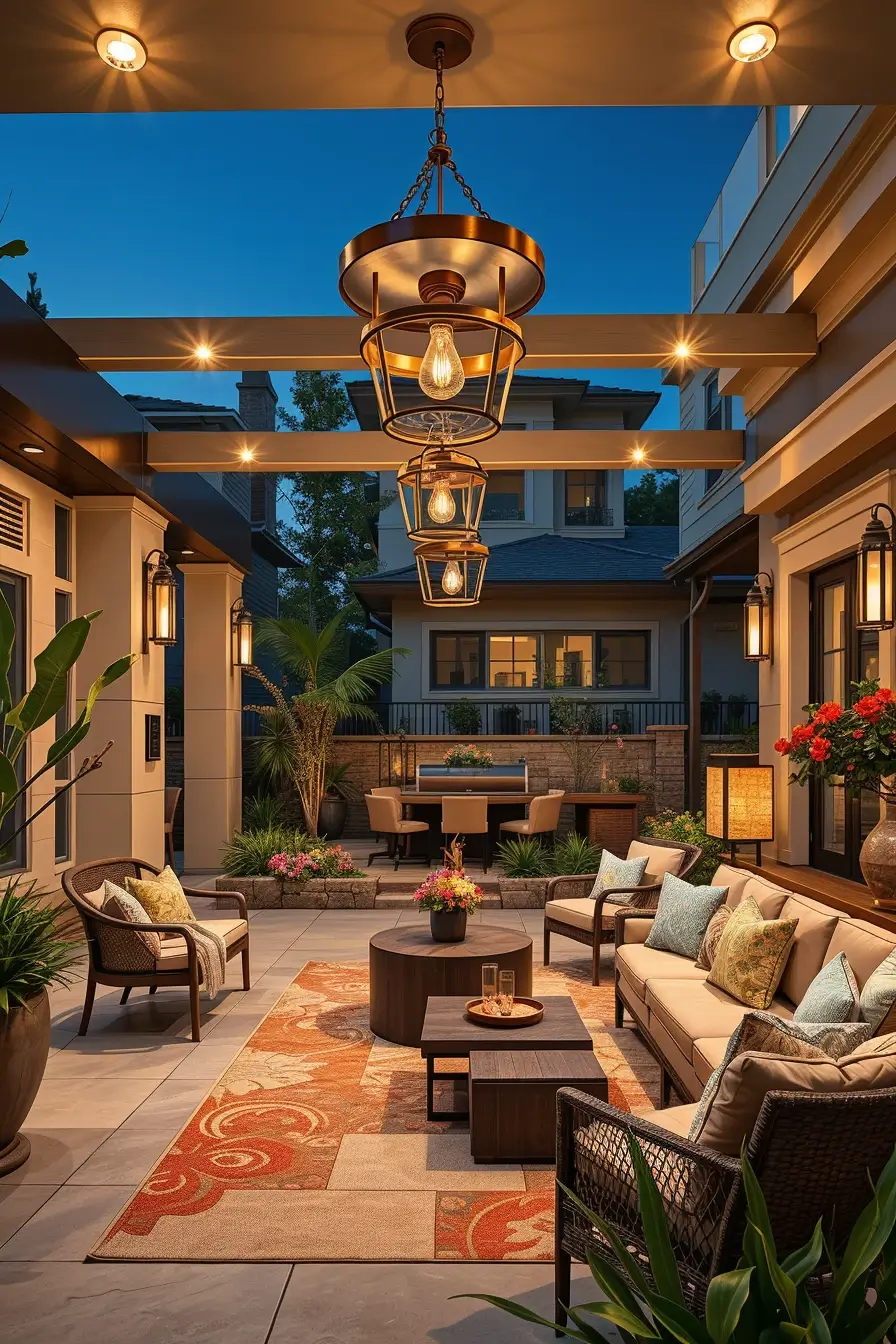
I typically work with powder-coated metals, brushed bronze, aged brass, or textured concrete finishes. These fixtures complement outdoor furniture, railings, and facade materials, reinforcing a unified design language. Custom finishes also improve durability in varied climates while maintaining a refined appearance.
Based on my experience and insights from Luxe Interiors, customization is one of the strongest indicators of thoughtful design. I find that clients appreciate lighting that feels exclusive and intentionally selected for their space rather than mass-produced.
What could enhance this section further is collaboration with local fabricators to create truly one-of-a-kind lighting elements tailored to specific architectural contexts.
24. Nature-Inspired Sculptural Lighting For Gardens
Nature-inspired sculptural lighting in 2026 blends organic forms with modern technology. I design garden lighting that echoes natural shapes while remaining clearly contemporary. This creates harmony between planted landscapes and architectural elements.
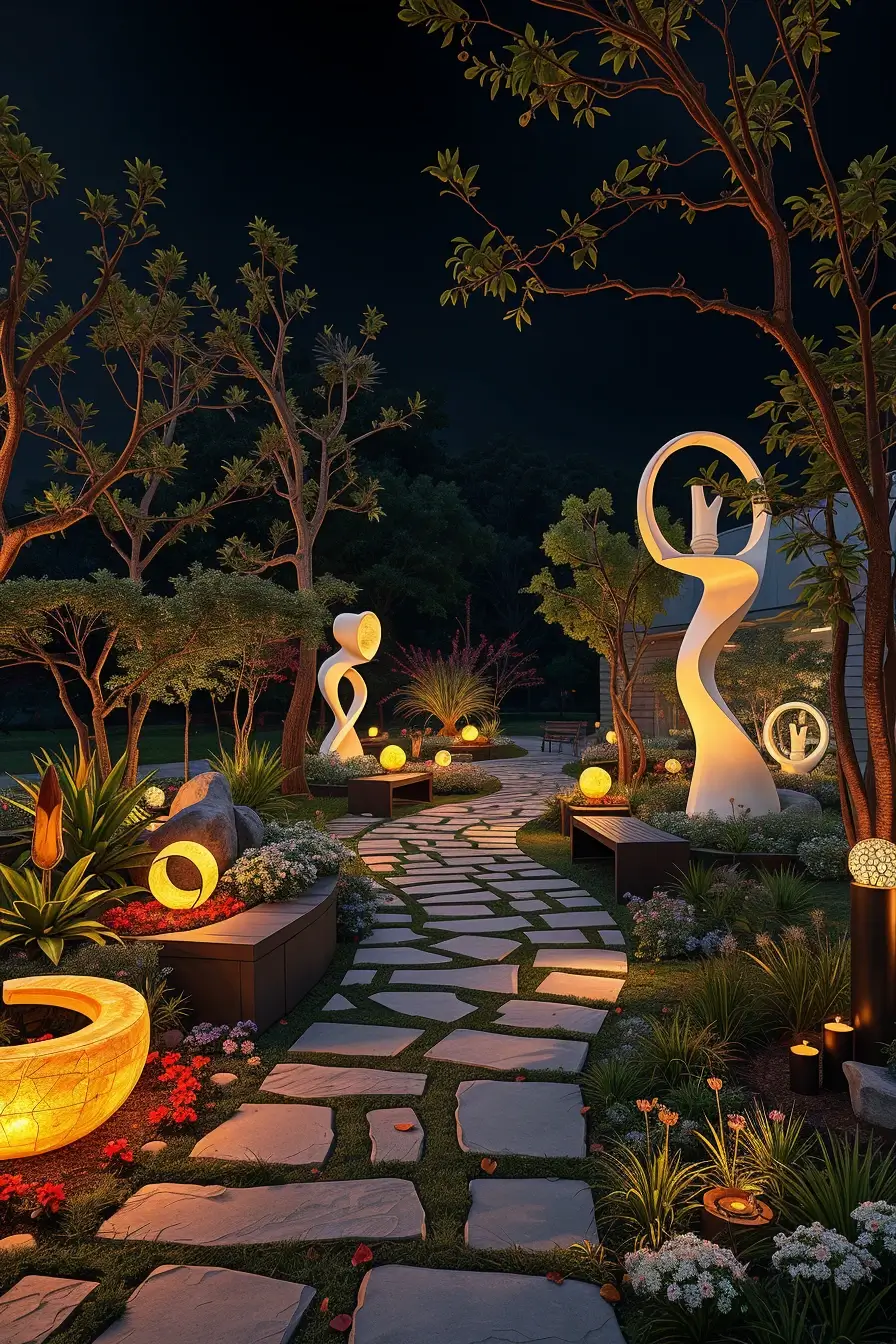
I often choose fixtures shaped like abstract branches, stones, or flowing forms placed among trees, pathways, and seating areas. These lights complement garden benches, water features, and natural materials without overpowering them. During the day, they function as sculptures, and at night, they softly illuminate the surroundings.
I align with garden designers featured in Garden Design Magazine who emphasize respecting the natural rhythm of outdoor spaces. I apply this philosophy by spacing fixtures carefully and avoiding symmetry that feels forced or artificial.
To improve this section, I would introduce low-glare optics to protect plant life and maintain a gentle nighttime environment.
25. Outdoor Lighting As A Nighttime Design Feature
In 2026, outdoor lighting is no longer secondary to daytime design. I plan lighting as a primary nighttime feature that reshapes how spaces are experienced after sunset. This mindset transforms patios, gardens, and courtyards into evening destinations.
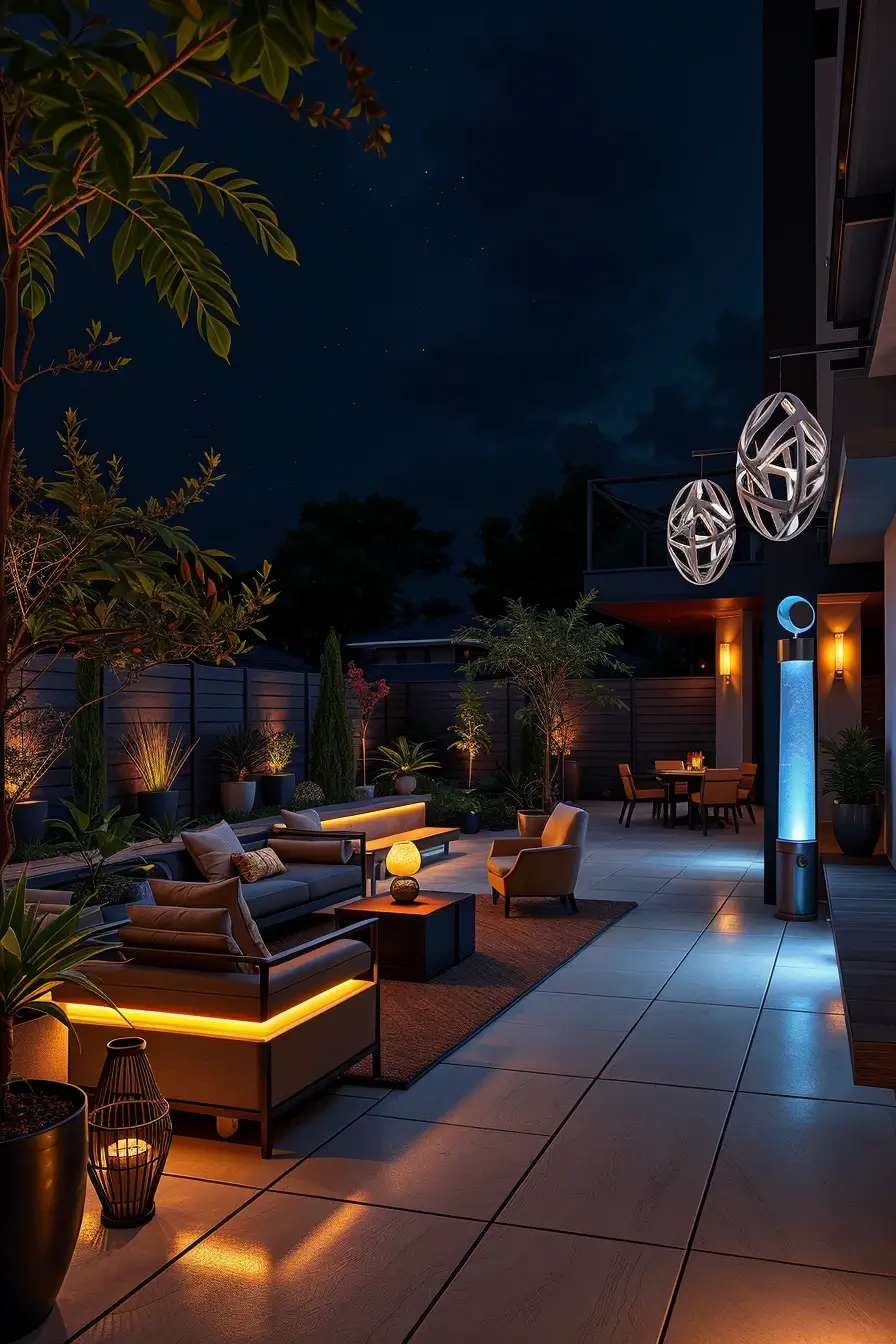
I integrate layered lighting zones using ambient, accent, and functional fixtures. These include floor-integrated lights, illuminated seating edges, and sculptural fixtures that anchor outdoor rooms. Furniture placement becomes more intentional when lighting defines circulation and gathering areas.
From my experience, designers at Dwell often highlight that lighting dictates how people move through space at night. I see this firsthand when clients begin using their outdoor areas more frequently once lighting is thoughtfully designed.
What could strengthen this section is the inclusion of programmable scenes that adapt lighting layouts for relaxation, entertaining, or quiet evenings.
26. Innovative Lighting Concepts For Outdoor Entertaining
Outdoor entertaining in 2026 relies heavily on flexible and expressive lighting. I design lighting systems that support dining, conversation, and movement without overpowering guests. The goal is comfort paired with visual sophistication.
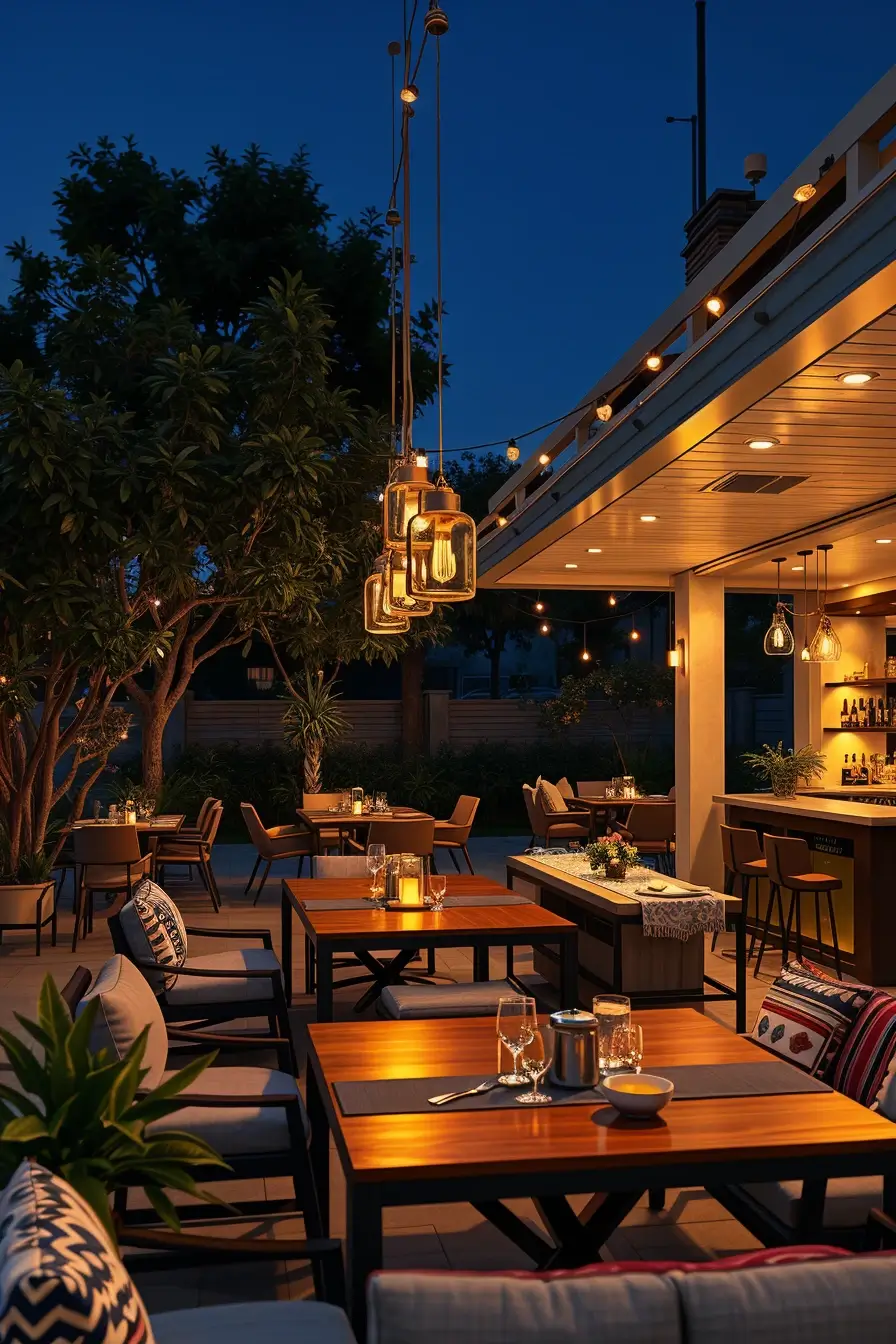
I often specify dimmable pendant lights over dining tables, integrated lighting in outdoor kitchens, and accent lights around lounge seating. These fixtures work in harmony with outdoor furniture and bar elements to create inviting social zones.
Drawing from recommendations in Better Homes and Gardens, I prioritize layered lighting to avoid harsh contrasts. In my projects, this approach consistently improves how guests perceive and use outdoor spaces.
To complete this section, I would add wireless lighting controls that allow hosts to adjust ambiance instantly during events.
27. Bold And Unique Outdoor Lighting Trends For 2026
Bold lighting trends in 2026 emphasize individuality and artistic expression. I encourage clients to move beyond safe choices and embrace lighting that makes a statement. This includes unconventional forms, oversized fixtures, and unexpected placements.
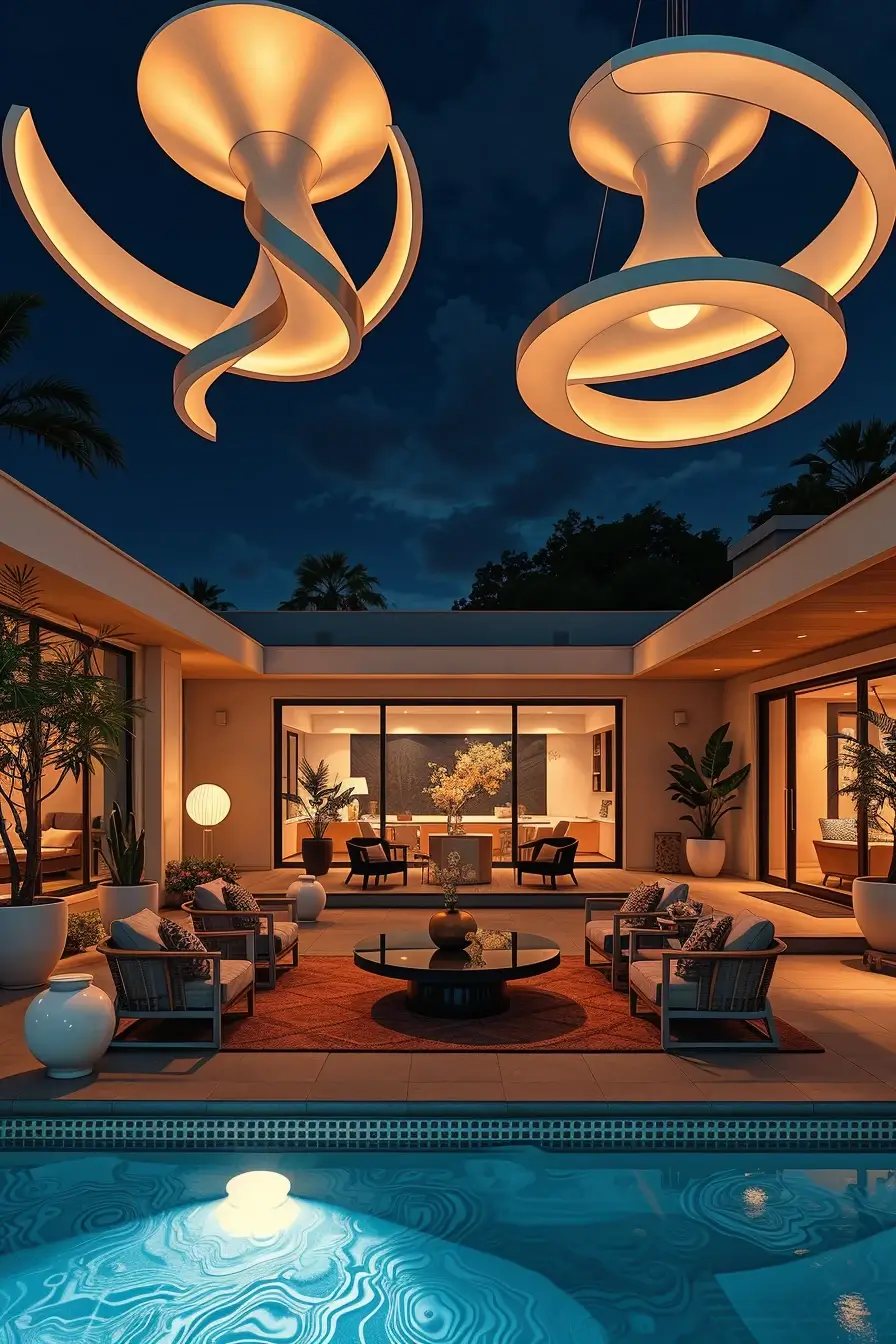
I work with asymmetrical designs, sculptural poles, and artistic installations positioned as focal points. These lights often contrast intentionally with minimal outdoor furniture, creating visual tension that feels curated and modern.
From my perspective, trend analyses published by Elle Decor confirm that expressive lighting is becoming central to exterior design. I see this shift as a positive evolution toward more personal and meaningful outdoor spaces.
What could enhance this section is experimentation with mixed materials, combining metal, glass, and natural stone within single fixtures.
28. The Future Of Artistic Outdoor Lighting Design
Looking ahead, I see the future of outdoor lighting as deeply integrated with architecture, technology, and personal expression. In 2026, lighting is both functional infrastructure and artistic statement, shaping how spaces feel rather than simply how they are seen.
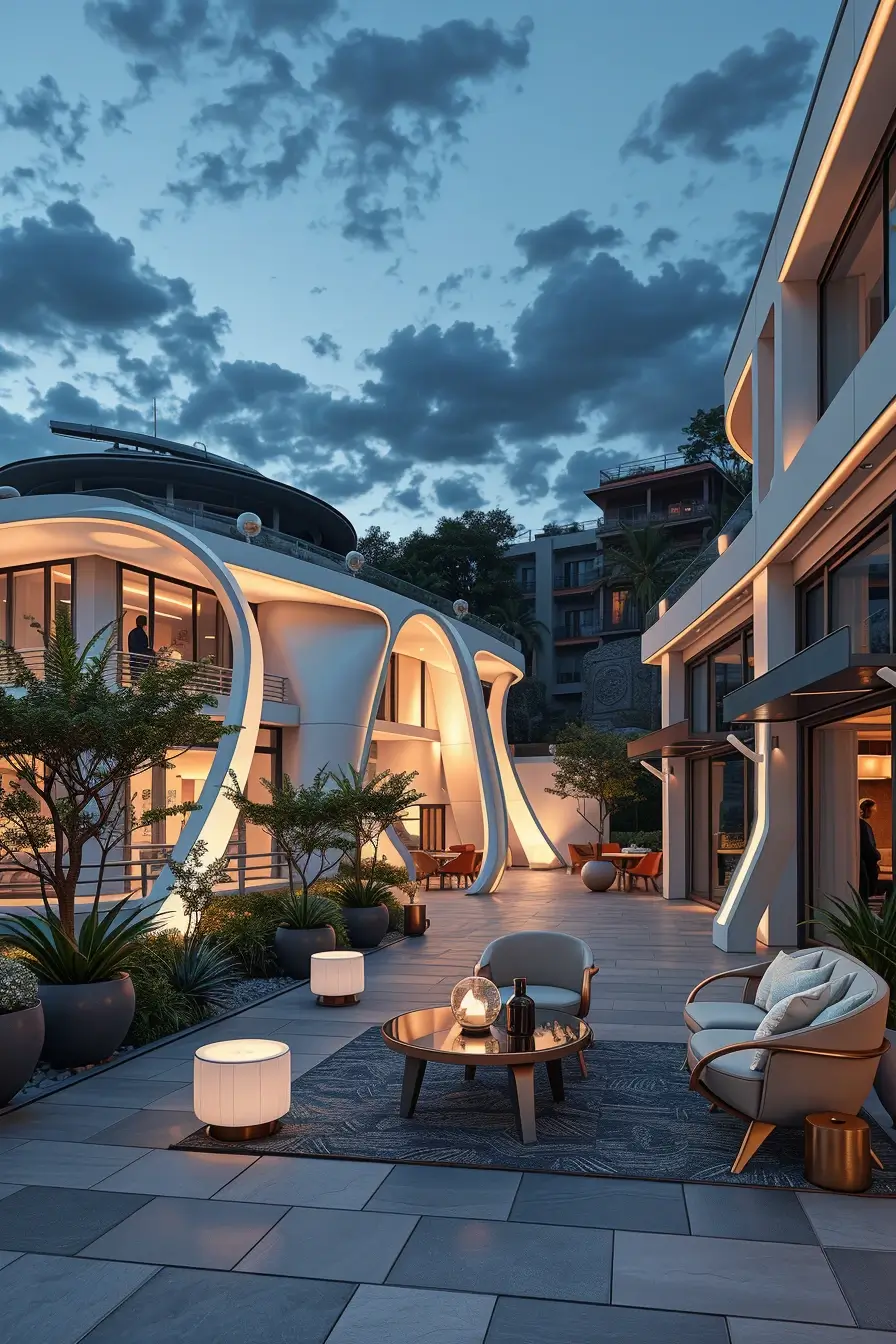
I anticipate increased use of adaptive lighting systems, sculptural forms, and sustainable technologies that align with modern outdoor furniture and landscape design. These elements work together to create cohesive nighttime environments.
From my professional standpoint, leading voices in architectural lighting consistently stress the importance of emotional response. I agree fully, as the most successful outdoor lighting designs evoke calm, curiosity, and connection.
To complete this section, I would emphasize the importance of early collaboration between architects, landscape designers, and lighting specialists.
Outdoor lighting in 2026 is no longer just about visibility, it is about identity, atmosphere, and thoughtful design. By embracing sculptural, artistic, and designer lighting solutions, outdoor spaces can become expressive extensions of the home. I would love to hear your thoughts and experiences, so feel free to share your ideas and questions in the comments.