Backyard landscaping in 2026 is moving far beyond traditional layouts and predictable designs, evolving into a true form of outdoor expression. Today’s backyards are becoming stylish extensions of the home, where modern design, creative landscaping, and designer details come together to create spaces that feel both artistic and functional. Smooth curves, oval lawns, sculptural hardscaping, and fluid transitions are replacing rigid lines, giving outdoor areas a softer, more natural flow while still maintaining a bold, contemporary look.
In this article, we explore the most inspiring backyard landscaping ideas for 2026, focusing on unique, modern, and unconventional approaches that redefine how outdoor spaces are designed and experienced. From architecturally inspired layouts to innovative materials and statement features, these ideas highlight how thoughtful landscaping can transform an ordinary backyard into a distinctive, future-ready retreat that reflects personality, creativity, and modern living.
1. The Evolution Of Backyard Landscaping In 2026
I see backyard landscaping in 2026 as a clear departure from rigid layouts toward more expressive and fluid outdoor environments. Practicality still matters, but it is now blended with intentional design thinking. I focus on layouts that allow movement to feel natural, where seating, greenery, and architectural elements are arranged to support both relaxation and visual harmony. This evolution reflects how homeowners increasingly use their backyards as extensions of their living spaces.
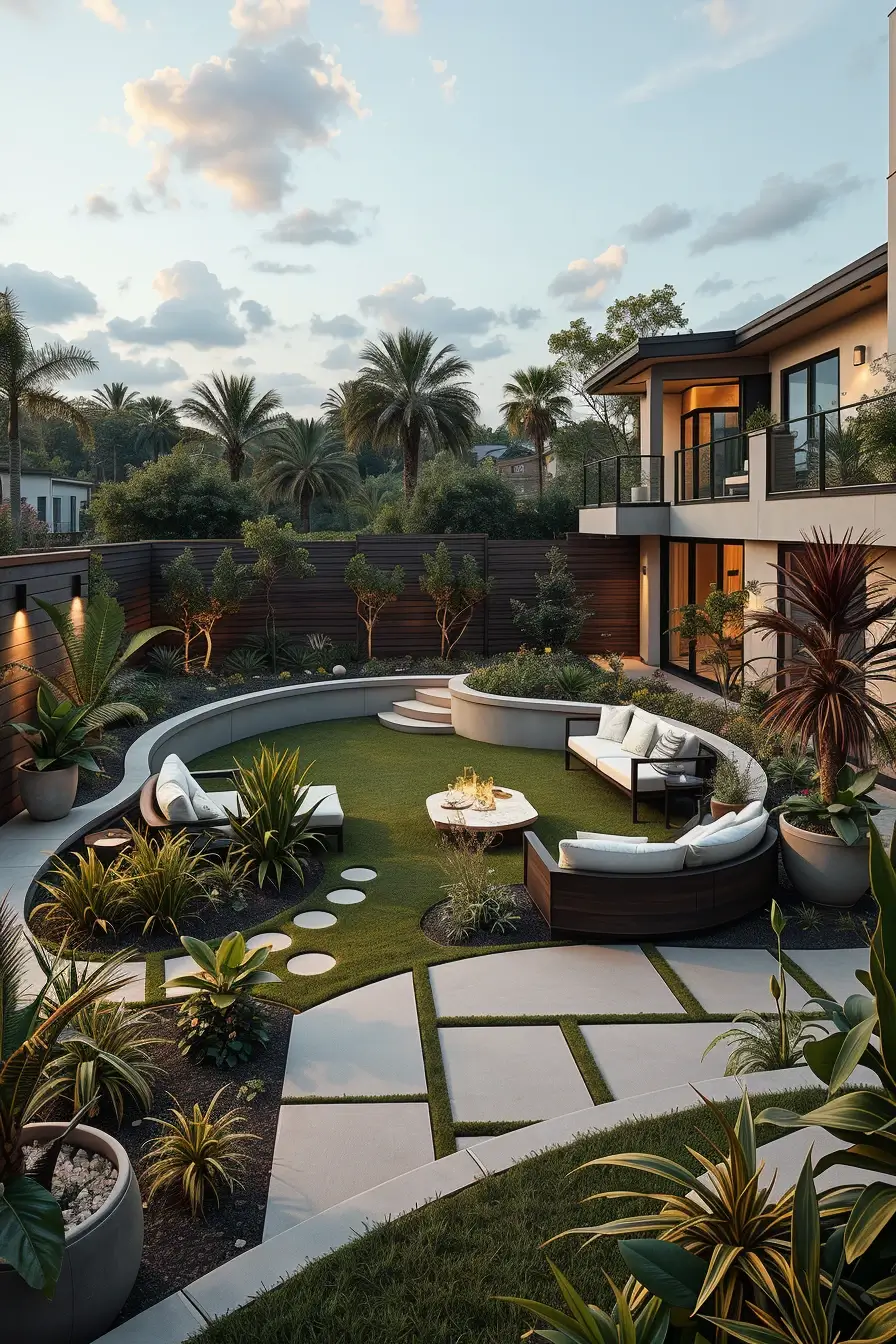
When designing these spaces, I prioritize modular outdoor furniture, integrated lighting, and layered plantings that respond to curved layouts rather than straight borders. Low-profile sofas, rounded fire pits, and sculptural planters work together to create a cohesive environment. Each element serves a purpose while contributing to the overall aesthetic, ensuring the backyard remains functional for gatherings and daily use.
From my experience, leading landscape designers in the US emphasize longevity and adaptability. Publications like Architectural Digest highlight how future-focused landscaping relies on timeless materials paired with innovative forms. I have found that when a backyard is designed with evolution in mind, it ages more gracefully and remains relevant longer.
To strengthen this type of space, I would add smart irrigation systems and subtle zoning through lighting and texture. These additions enhance sustainability and usability without disrupting the visual flow of the design.
2. Designer Backyards That Feel Like Outdoor Art Galleries
I approach designer backyards as curated environments where each element feels intentionally placed, much like artwork in a gallery. In 2026, outdoor spaces are increasingly designed to be visually engaging from every angle, encouraging exploration and appreciation. Open sightlines and focal points guide movement while maintaining balance and calm.
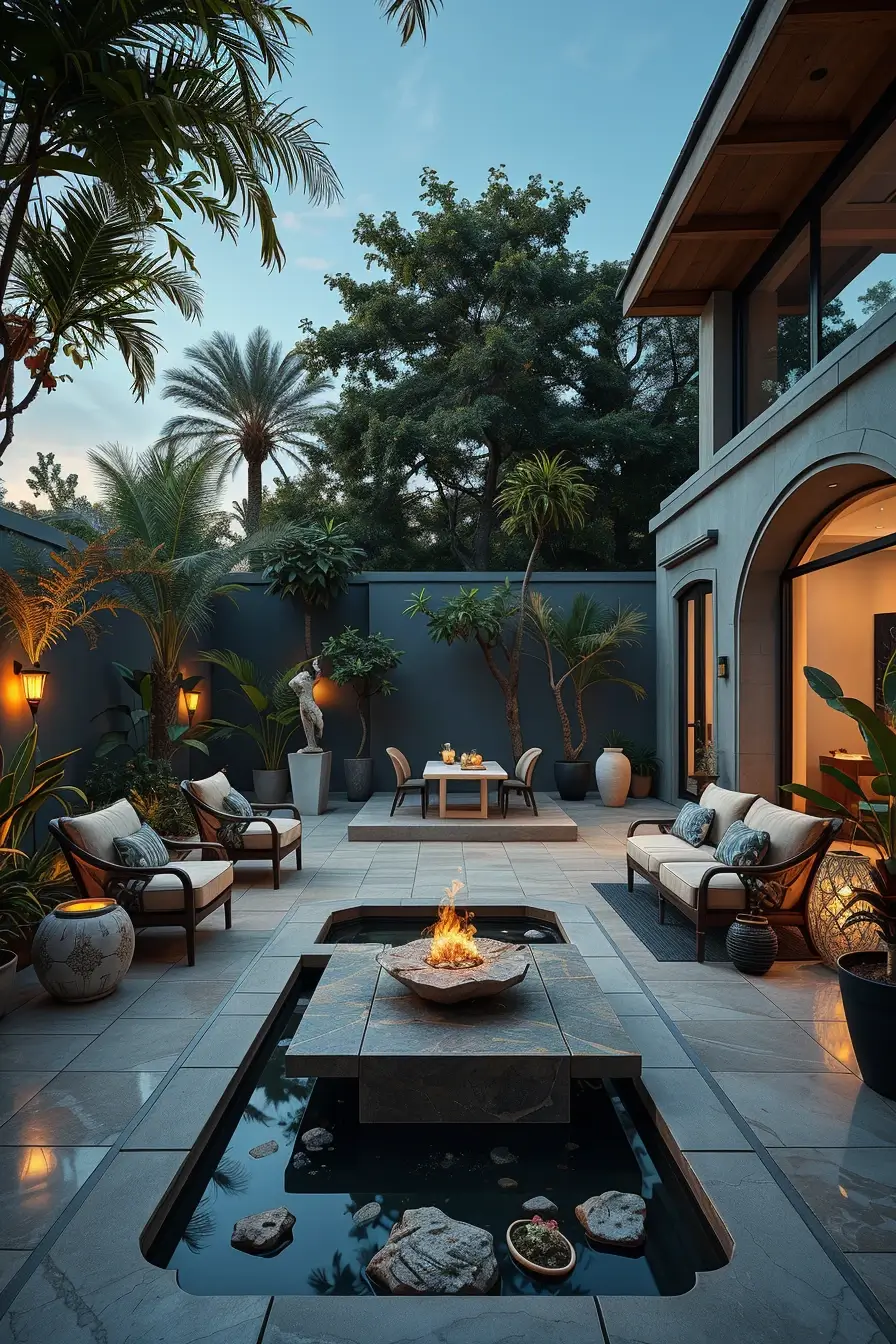
In these backyards, I often include sculptural seating, statement planters, and minimal water features that act as visual anchors. Materials such as polished concrete, natural stone, and smooth wood finishes help highlight forms without overwhelming the space. Furniture is selected not only for comfort but also for its ability to complement the artistic vision.
Personally, I believe this approach elevates how people interact with their outdoor spaces. Designers featured in Dwell frequently note that art-driven landscapes encourage mindfulness and slower living. I have seen clients spend more time outdoors simply because the space invites observation and reflection.
To complete this type of backyard, I would introduce curated lighting that highlights key elements after sunset. Directional uplights and soft washes transform the space into a true outdoor gallery at night.
3. Curved Landscaping Lines As The New Backyard Standard
Curved landscaping lines have become a defining feature of modern backyard design in 2026. I use curves to soften transitions between zones and to create a sense of natural movement throughout the space. These lines improve flow and make even smaller backyards feel more expansive and welcoming.
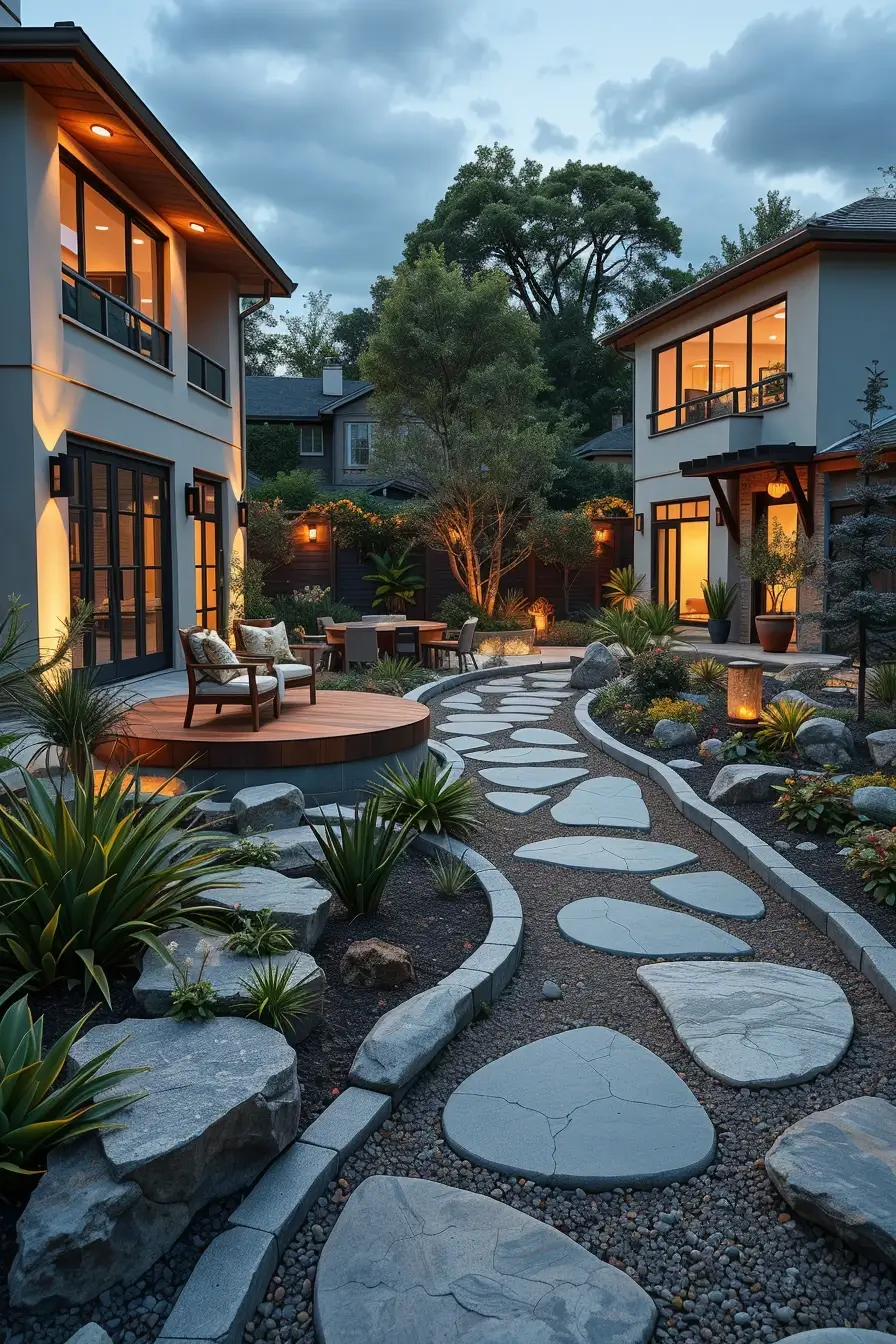
I typically apply curved lines to pathways, planting beds, and seating areas. Rounded benches, crescent-shaped retaining walls, and gently winding walkways work together to eliminate harsh visual breaks. This approach improves both comfort and accessibility while enhancing the overall aesthetic.
From my perspective, curved landscaping aligns closely with how people naturally move through space. Landscape architects interviewed by Garden Design Magazine often emphasize that curves reduce visual stress and promote relaxation. I consistently notice how users instinctively respond more positively to these layouts.
What I would add here is a stronger emphasis on layered planting heights along curved edges. This reinforces depth and creates a richer visual experience without cluttering the design.
4. Oval Lawn Layouts For A Softer And More Organic Look
Oval lawn layouts are one of my preferred solutions for creating a softer, more organic backyard appearance. In 2026, lawns are no longer central rectangles but sculpted forms that integrate seamlessly with surrounding elements. This layout improves circulation and enhances visual continuity.
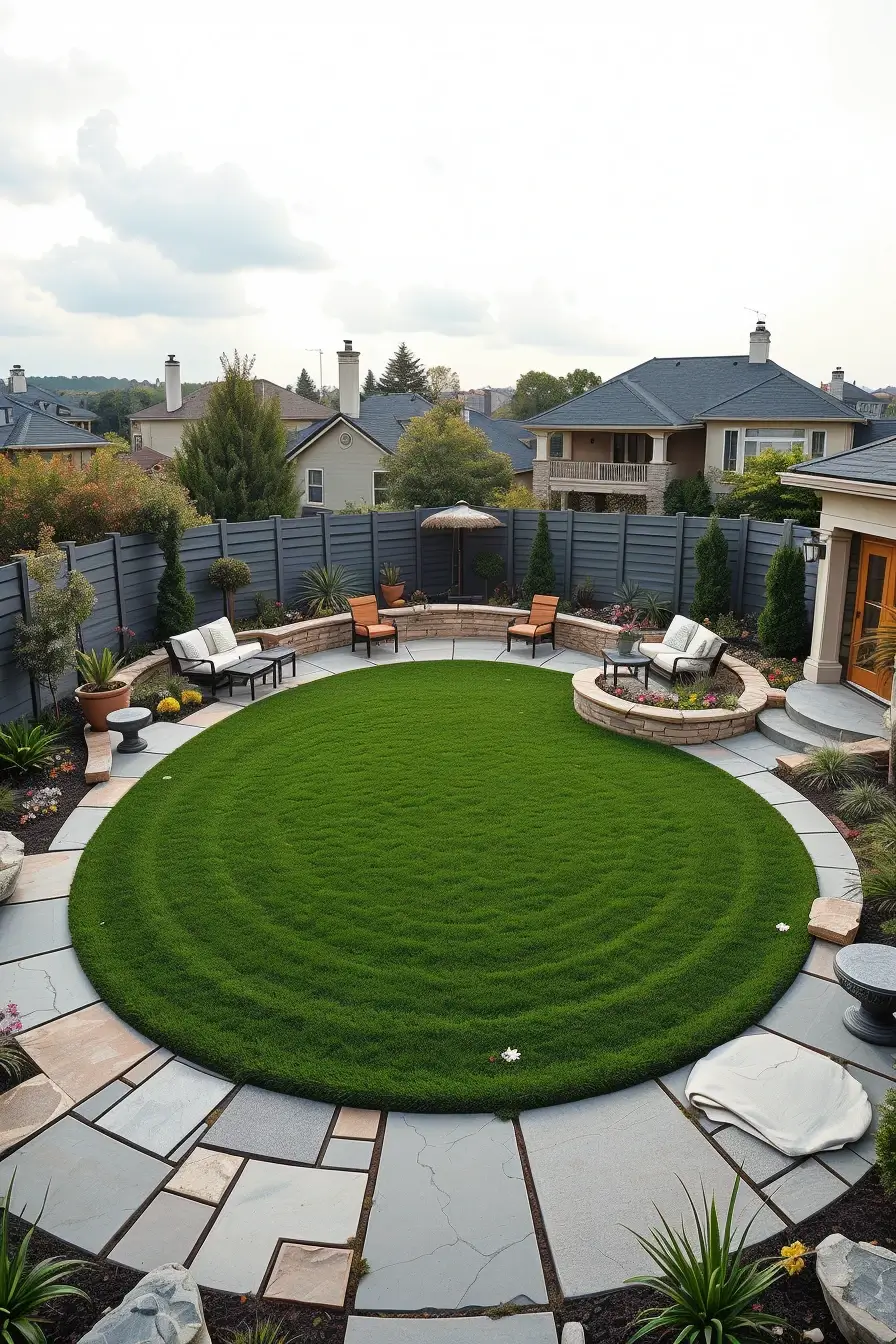
I design oval lawns to be framed by planting beds, curved seating, or low walls that define the space without enclosing it. The lawn becomes a calm visual center, while surrounding furniture such as rounded loungers or circular dining sets supports flexible use. This balance keeps the space open yet structured.
In my experience, oval layouts feel more inviting and adaptable than traditional designs. Experts from Better Homes and Gardens often highlight how organic lawn shapes improve usability for both relaxation and entertaining. I have found that these layouts naturally encourage multiple activities without conflict.
To refine this design further, I would integrate subtle drainage solutions beneath the lawn to maintain its shape and quality year-round, especially in climates with variable weather.
5. Modern Backyard Landscaping With Fluid Geometry
Fluid geometry defines how I approach modern backyard landscaping in 2026. Instead of separating zones with straight lines, I use flowing shapes that visually connect seating, greenery, and architectural features. This approach improves movement and creates a cohesive outdoor experience.
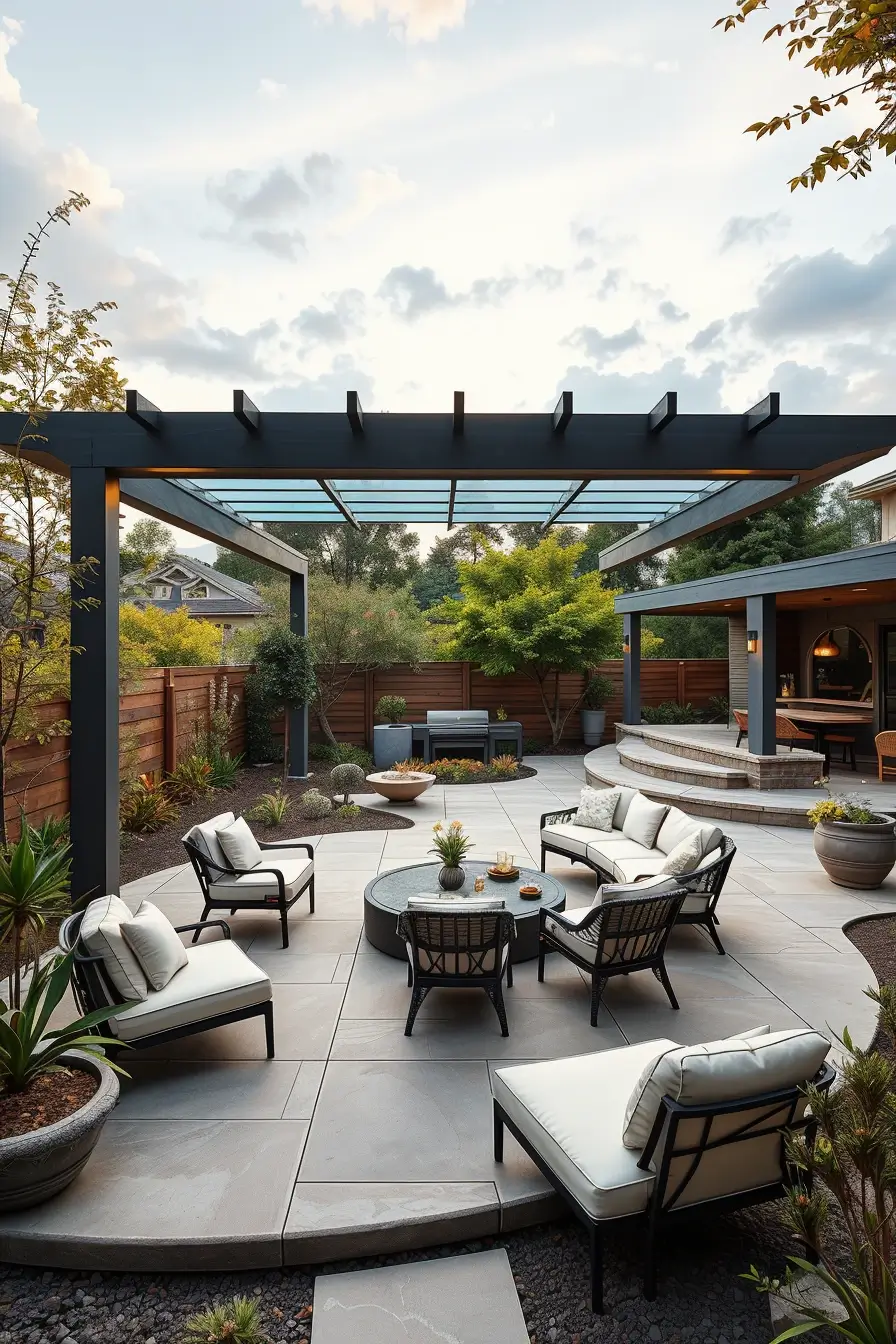
Furniture and hardscaping elements are selected to echo these shapes. Curved sectionals, rounded pergolas, and organically shaped patios reinforce the overall geometry. Materials with smooth finishes help maintain continuity and avoid visual interruptions.
I strongly believe fluid geometry represents the future of outdoor design. Industry voices from Landscape Architecture Magazine consistently point out that these layouts feel more human-centered and adaptable. I have observed that clients respond positively to spaces that feel intuitive rather than rigid.
To enhance this concept, I would incorporate custom-built elements such as curved planters or bespoke seating. These additions ensure the geometry feels intentional rather than incidental.
6. Creative Backyard Zones Designed Without Straight Angles
When I design creative backyard zones in 2026, I intentionally avoid straight angles to create spaces that feel intuitive and comfortable. These layouts allow each zone to flow into the next, making the backyard feel larger and more cohesive. I focus on how people naturally move, sit, and gather, and I translate those behaviors into curved spatial planning that supports relaxation and social interaction.
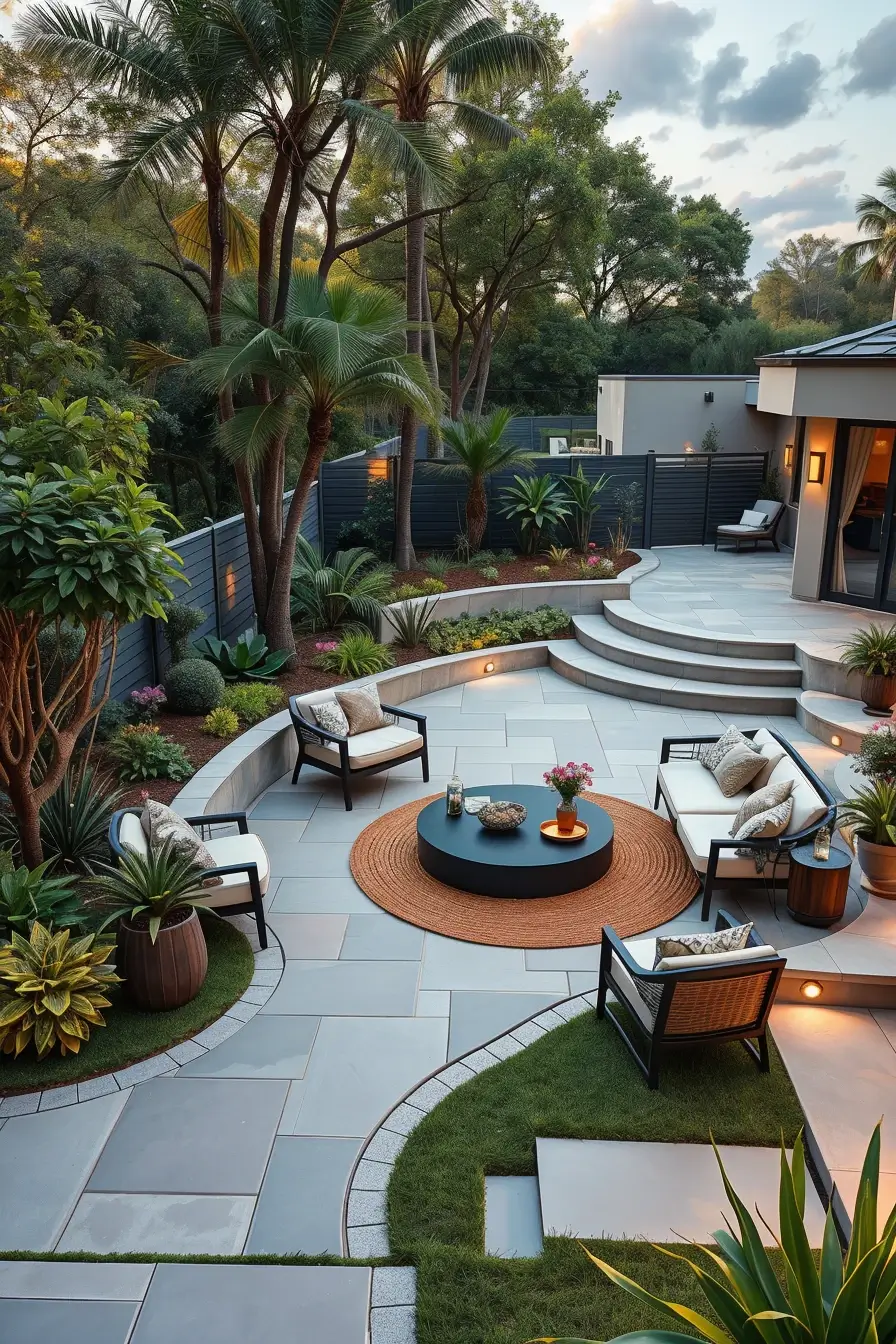
In these backyards, I rely on rounded decking platforms, curved outdoor sofas, circular dining areas, and organically shaped planters. Each zone is visually distinct but not physically separated, which maintains openness. Furniture placement follows soft arcs rather than grids, helping the design feel effortless while still being highly functional.
From my professional experience, this approach reflects a broader shift in landscape architecture. Designers featured in Landscape Architecture Magazine emphasize that non-linear zoning improves usability and emotional comfort. I have consistently seen clients feel more connected to their outdoor spaces when rigid geometry is removed.
What I would add to strengthen this concept is subtle material variation between zones, such as changes in stone texture or decking tone. This reinforces zoning without introducing hard boundaries.
7. Sculptural Hardscaping Elements As Backyard Focal Points
In 2026, I treat hardscaping as sculpture rather than background structure. Sculptural elements act as focal points that anchor the entire backyard design. Instead of decorative overload, I rely on a few bold forms that guide the eye and define the space with confidence and clarity.
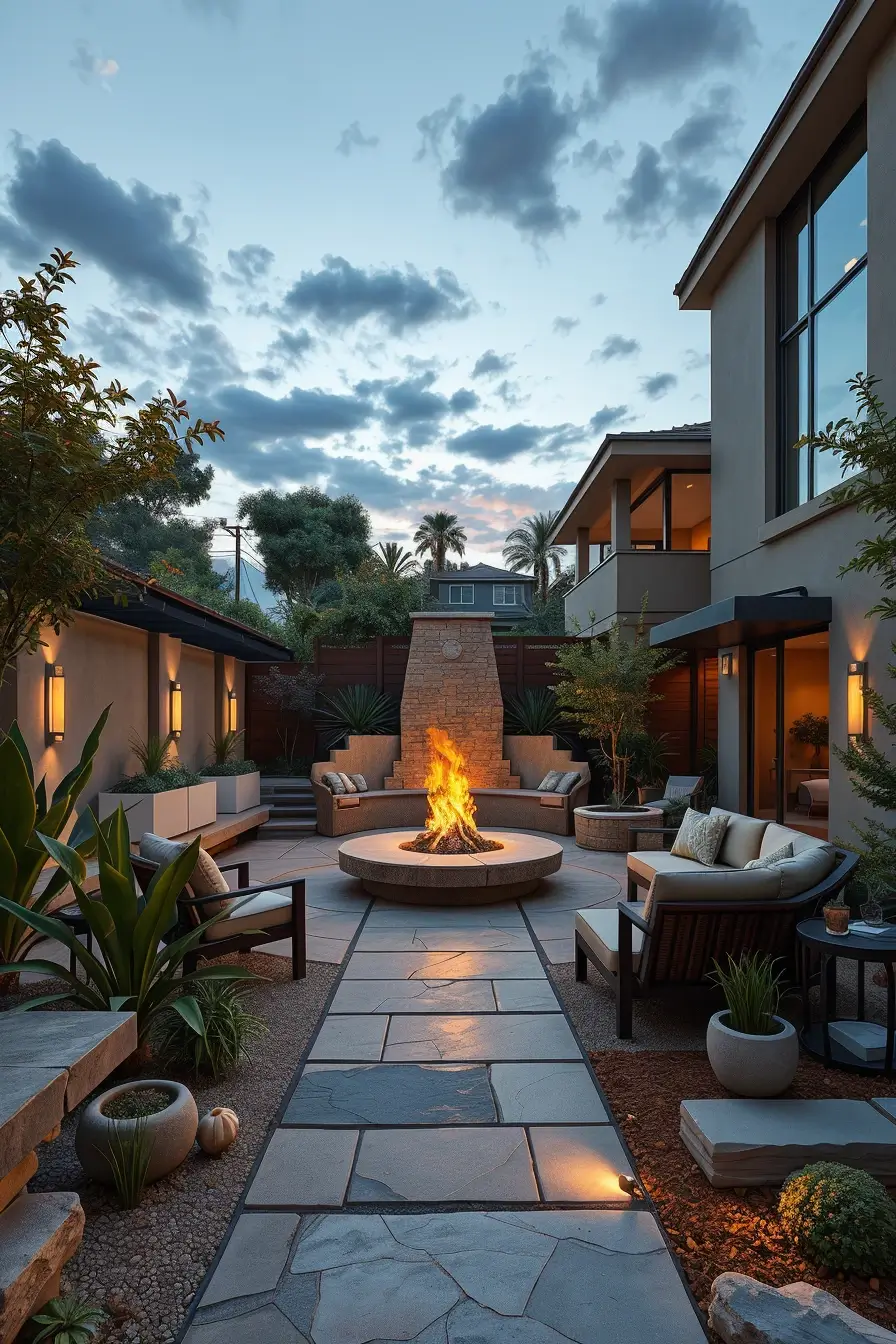
I often incorporate curved retaining walls, monolithic fire features, and organically shaped water elements made from concrete, stone, or composite materials. These features provide structure while maintaining visual softness. Seating is frequently integrated directly into these forms, enhancing both aesthetics and practicality.
Personally, I believe sculptural hardscaping is what transforms a backyard into a designer outdoor environment. Publications like Architectural Digest highlight how statement hardscape elements add lasting value and identity. I have found that clients remember and emotionally connect to these features long after installation.
To elevate this section further, I would integrate concealed lighting within sculptural elements. This adds depth and drama after dark without overwhelming the design.
8. Unique Backyard Landscaping Inspired By Architectural Forms
I often draw inspiration from contemporary architecture when developing unique backyard landscaping concepts. In 2026, outdoor spaces increasingly mirror the curves, voids, and volumes seen in modern buildings. This creates a seamless relationship between the home and the landscape surrounding it.
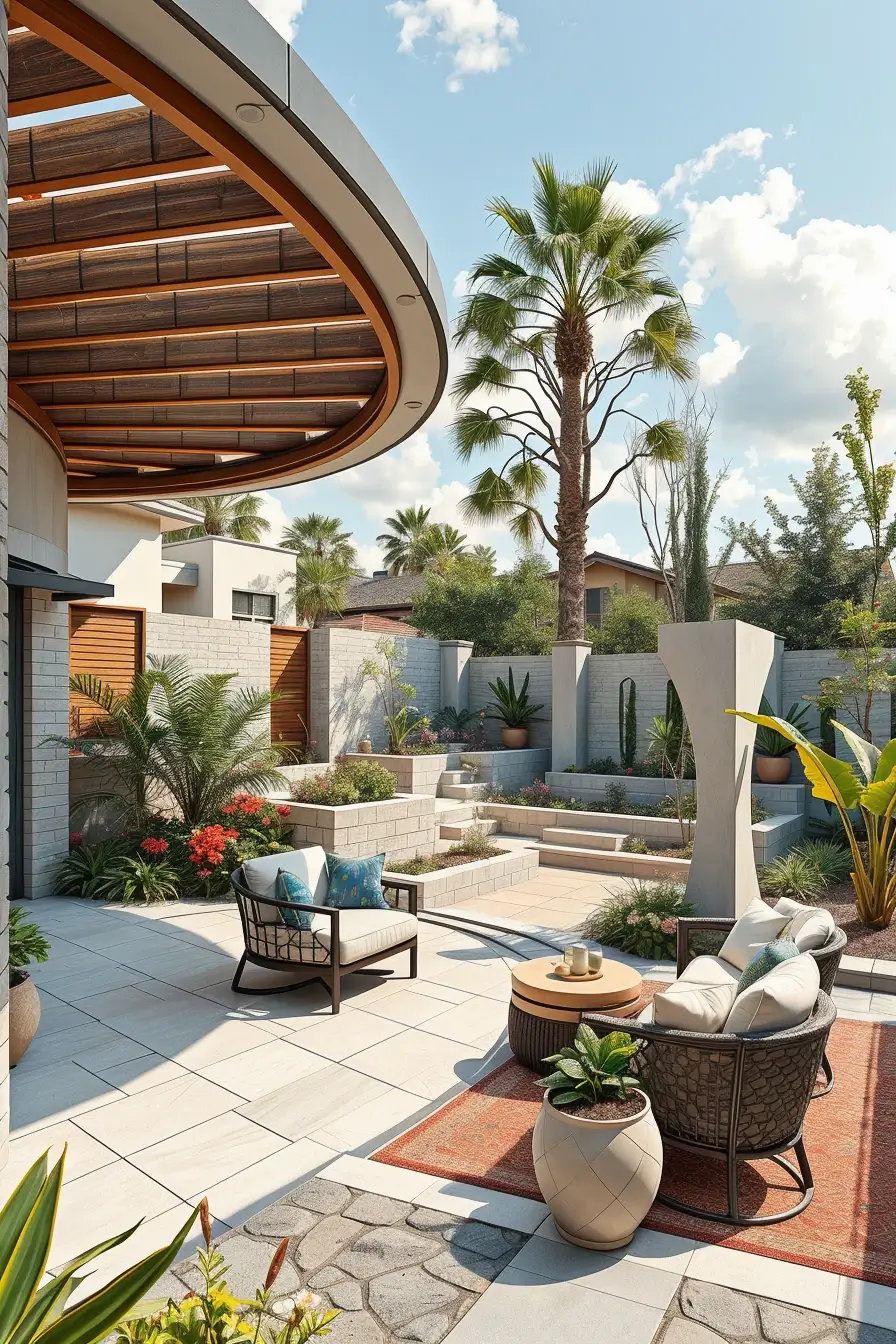
Architectural inspiration shows up in arched pergolas, curved privacy screens, and terraces that echo the home’s geometry. Furniture is selected with similar attention to form, favoring clean silhouettes and smooth transitions. The result is a backyard that feels intentionally designed rather than appended.
From my perspective, this architectural approach creates timeless outdoor spaces. Designers featured in Dezeen frequently stress the importance of architectural continuity between indoor and outdoor areas. I have observed that backyards designed this way feel more cohesive and premium.
What I would add here is closer collaboration between landscape designers and architects early in the planning process. This ensures forms align perfectly and avoids visual conflict.
9. Stylish Minimalist Backyards With Bold Curves
Minimalism in 2026 does not mean simplicity without character. When I design minimalist backyards, I use bold curves to introduce visual interest while keeping the palette restrained. This approach allows the space to feel calm, refined, and intentionally modern.
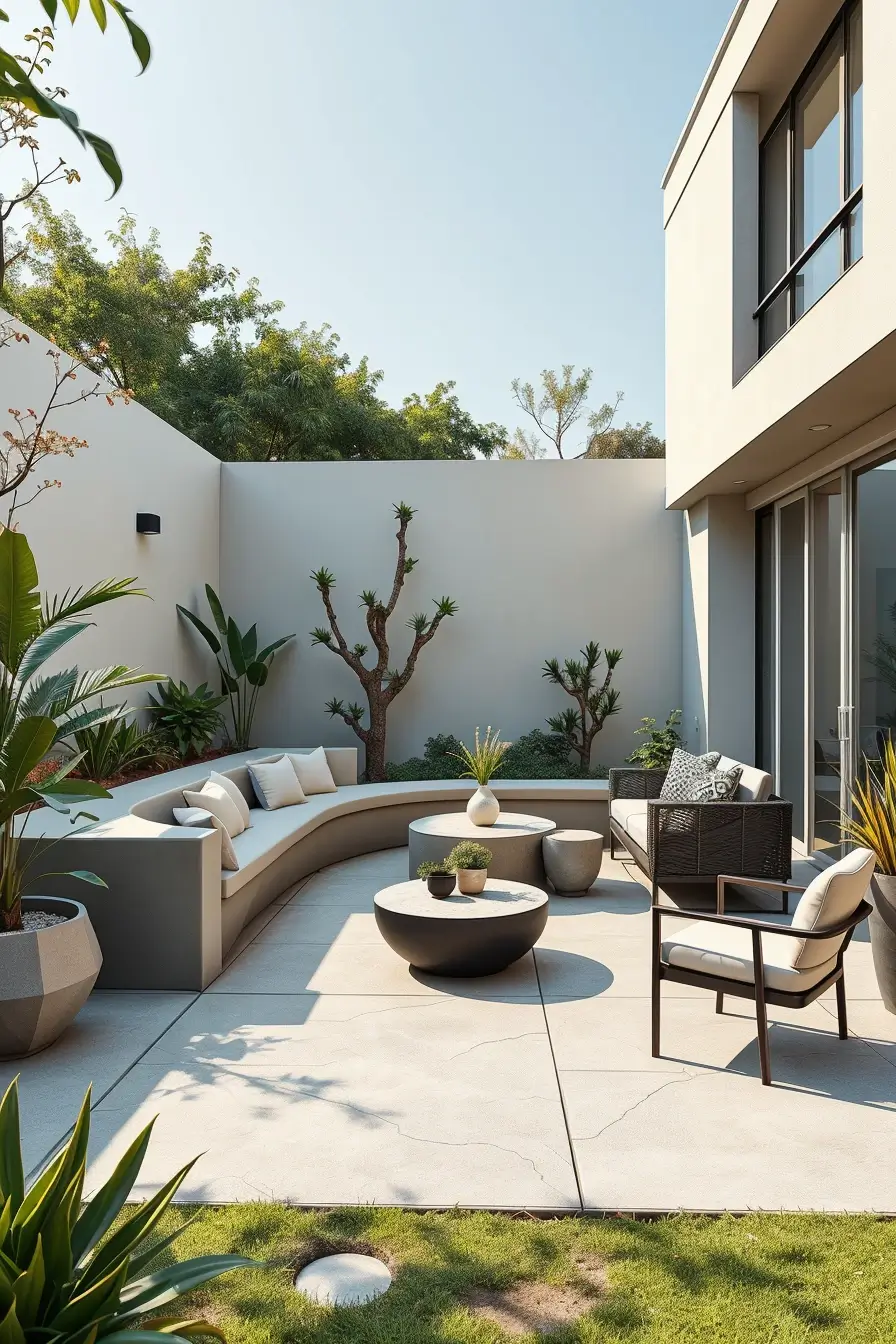
I select a limited number of furnishings, such as curved lounge chairs, low-profile sofas, and simple sculptural tables. Planting is controlled and deliberate, often focusing on a few species arranged in flowing compositions. Materials like concrete, wood, and stone are used sparingly but thoughtfully.
I personally favor this style for clients who value clarity and calm. Experts from Dwell frequently note that minimalist landscapes reduce visual noise and improve well-being. I have seen these spaces encourage slower living and deeper relaxation.
To complete this type of backyard, I would add integrated storage solutions hidden within seating or hardscape elements to maintain visual purity without sacrificing functionality.
10. Designer Pathways With Flowing And Asymmetrical Shapes
Designer pathways in 2026 are no longer purely functional; they are experiential. I design pathways with flowing and asymmetrical shapes that guide movement gently through the backyard. These paths create anticipation and discovery, encouraging people to explore the space naturally.
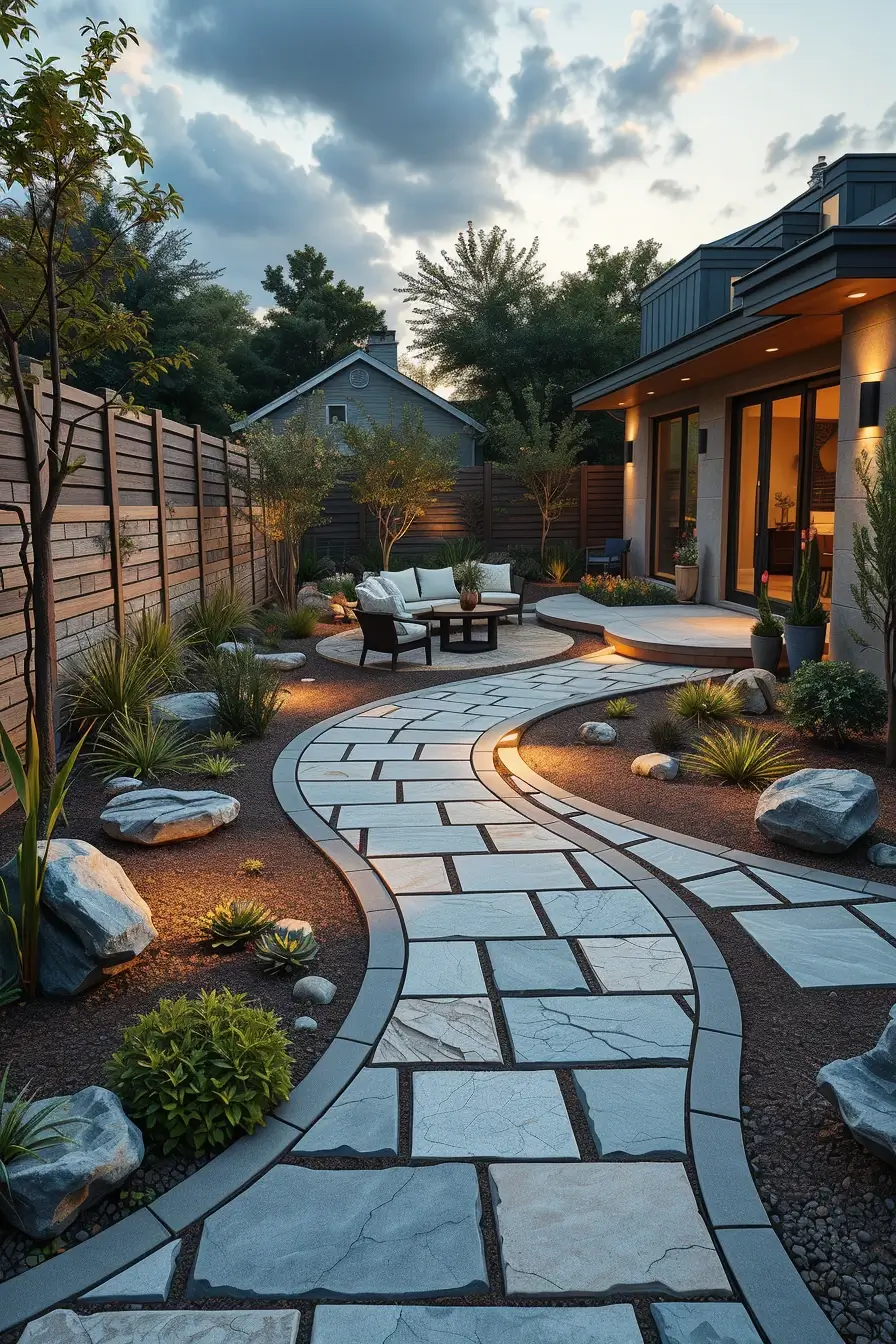
I use materials like large-format stone, poured concrete, or composite pavers cut into organic shapes. Pathways widen and narrow intentionally, sometimes incorporating seating niches or planting pockets. Lighting is embedded along curves to enhance safety while highlighting form.
In my experience, well-designed pathways significantly improve how a backyard is perceived and used. Landscape designers interviewed by Garden Design Magazine often emphasize that movement is a core design element. I have found that asymmetrical paths make outdoor spaces feel more dynamic and engaging.
To enhance this section further, I would integrate permeable materials to improve drainage and sustainability while maintaining the sculptural quality of the design.
11. Statement Seating Areas With Rounded And Modular Designs
I design statement seating areas as the visual and social core of a modern backyard, especially when rounded and modular forms replace rigid layouts. Curved seating encourages conversation, improves circulation, and adapts easily to different yard sizes, making it both practical and visually soft. In 2026 landscaping trends, these forms help create unique backyards that feel intentional rather than overcrowded.
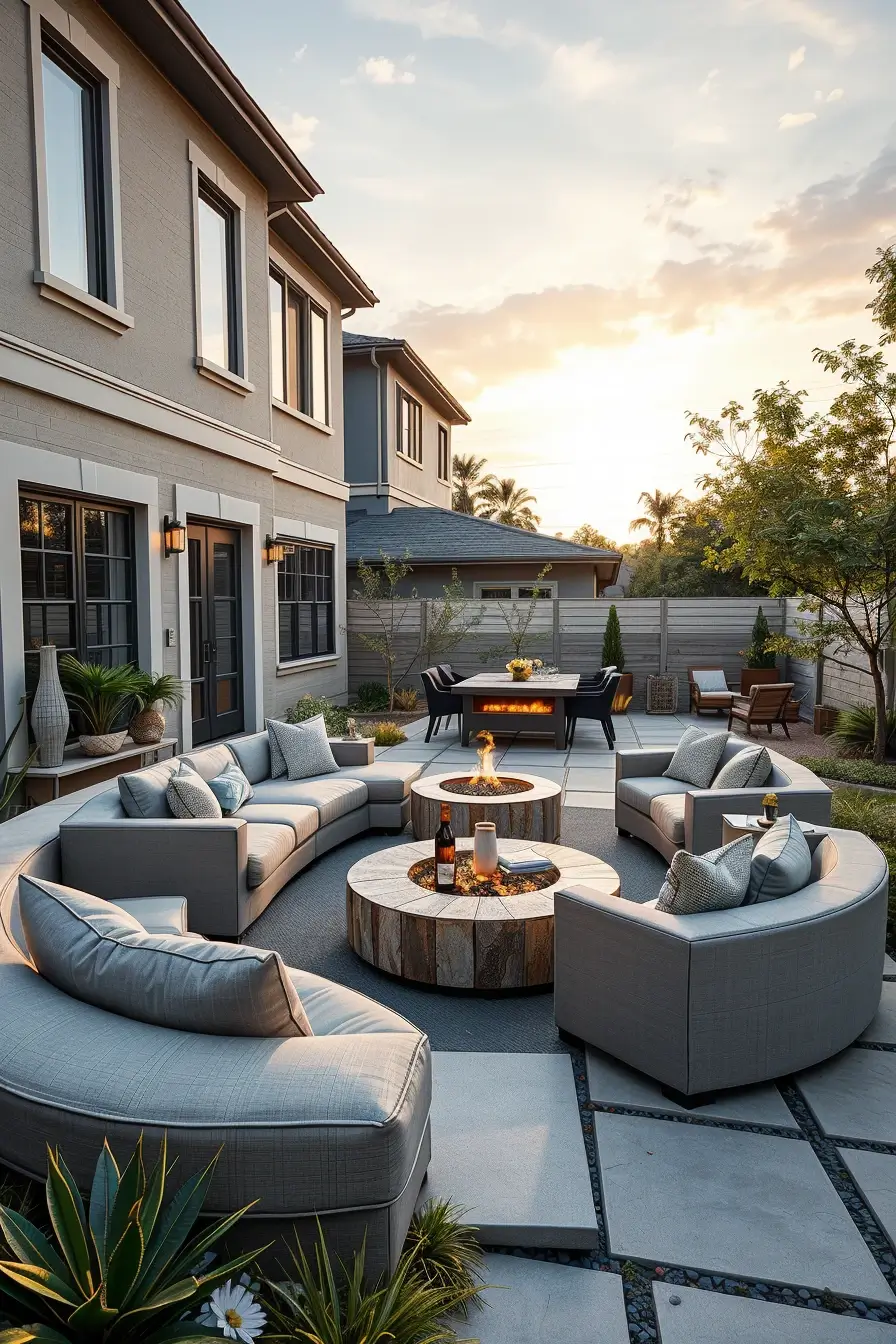
I usually include modular outdoor sofas with rounded edges, low circular coffee tables, and built-in curved benches finished in concrete, wood, or upholstered performance fabrics. These pieces work well together because they allow flexibility while maintaining a cohesive design language. I also integrate subtle fire features or oval rugs to anchor the seating zone without breaking the flow of the landscape.
From my experience, designers featured in Architectural Digest often emphasize flexibility and flow in outdoor spaces, and I fully agree. Rounded modular seating not only looks designer and modern, but it also ages better as layouts can be reconfigured over time. This approach supports long-term usability without sacrificing aesthetics.
What I would still add here is integrated side lighting or low-profile planters behind seating modules. These elements enhance depth at night and visually connect the seating area to the rest of the landscape.
12. Modern Water Features With Curved And Organic Silhouettes
I see modern water features as sculptural elements rather than decorative add-ons, especially when they follow curved and organic silhouettes. In designer landscaping ideas for 2026, water features soften large outdoor areas and introduce calming movement without dominating the space. Their shapes echo nature, making them ideal for stylish and unusual backyard concepts.
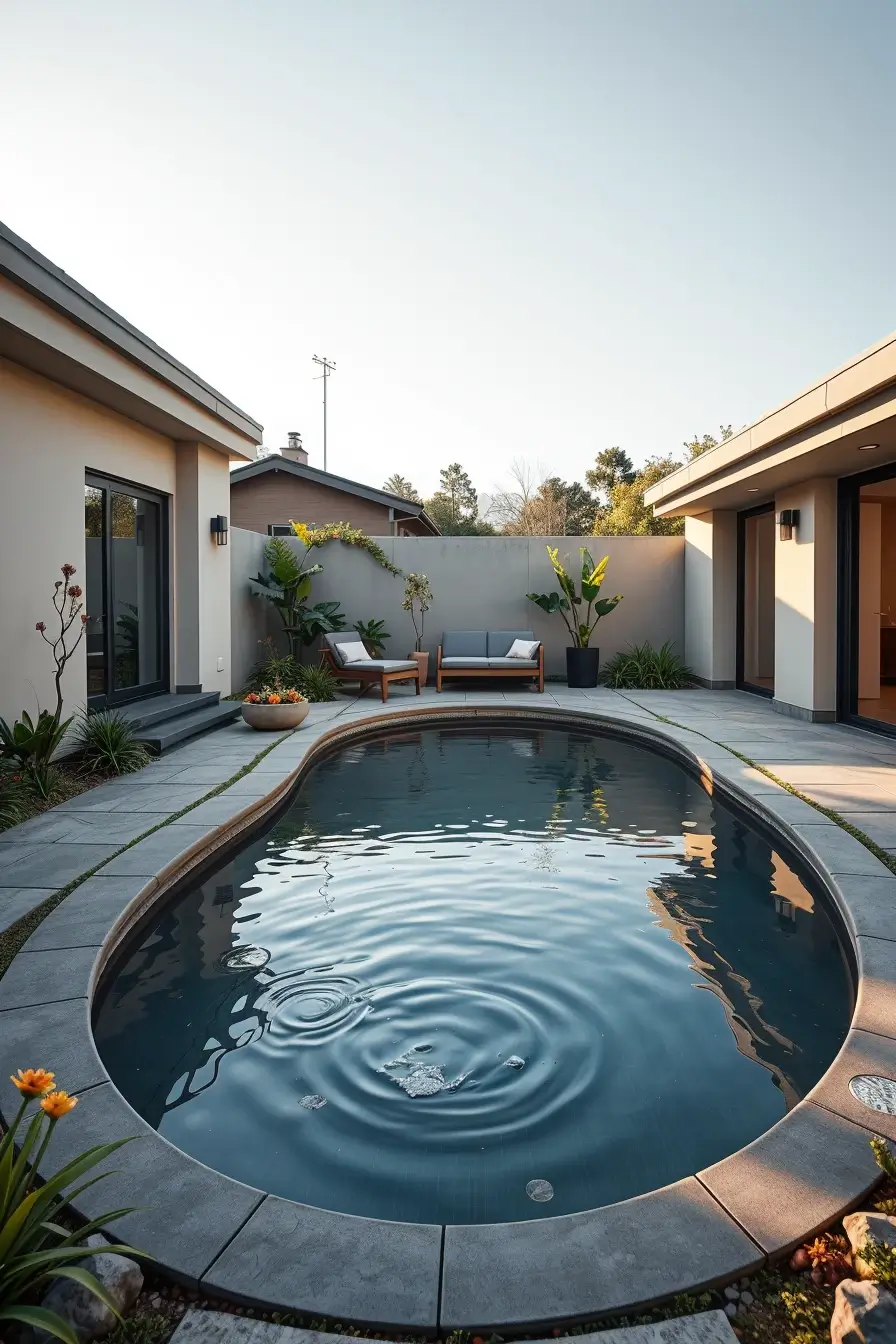
I often work with crescent-shaped reflecting pools, oval fountains, or gently winding water channels made from stone, concrete, or dark porcelain. These elements pair well with minimalist planting and smooth paving, allowing the water to become a focal point. Submerged lighting and quiet circulation systems ensure both efficiency and atmosphere.
Personally, I follow recommendations from Landscape Architecture Magazine, which frequently highlights organic water forms for contemporary outdoor spaces. I find that curved water features elevate even simple yards into designer environments while remaining easy to maintain when planned correctly.
To complete this section, I would add seating edges or stepping platforms integrated into the water feature. This increases interaction and helps the feature feel like part of daily outdoor life rather than a distant visual accent.
13. Creative Backyard Lighting That Highlights Curves And Depth
I treat lighting as a design tool that defines space after sunset, especially in backyards built around curves and layered forms. In modern 2026 landscapes, lighting emphasizes depth, guides movement, and enhances architectural lines without harsh contrasts. It is essential for highlighting creative and stylish layouts.
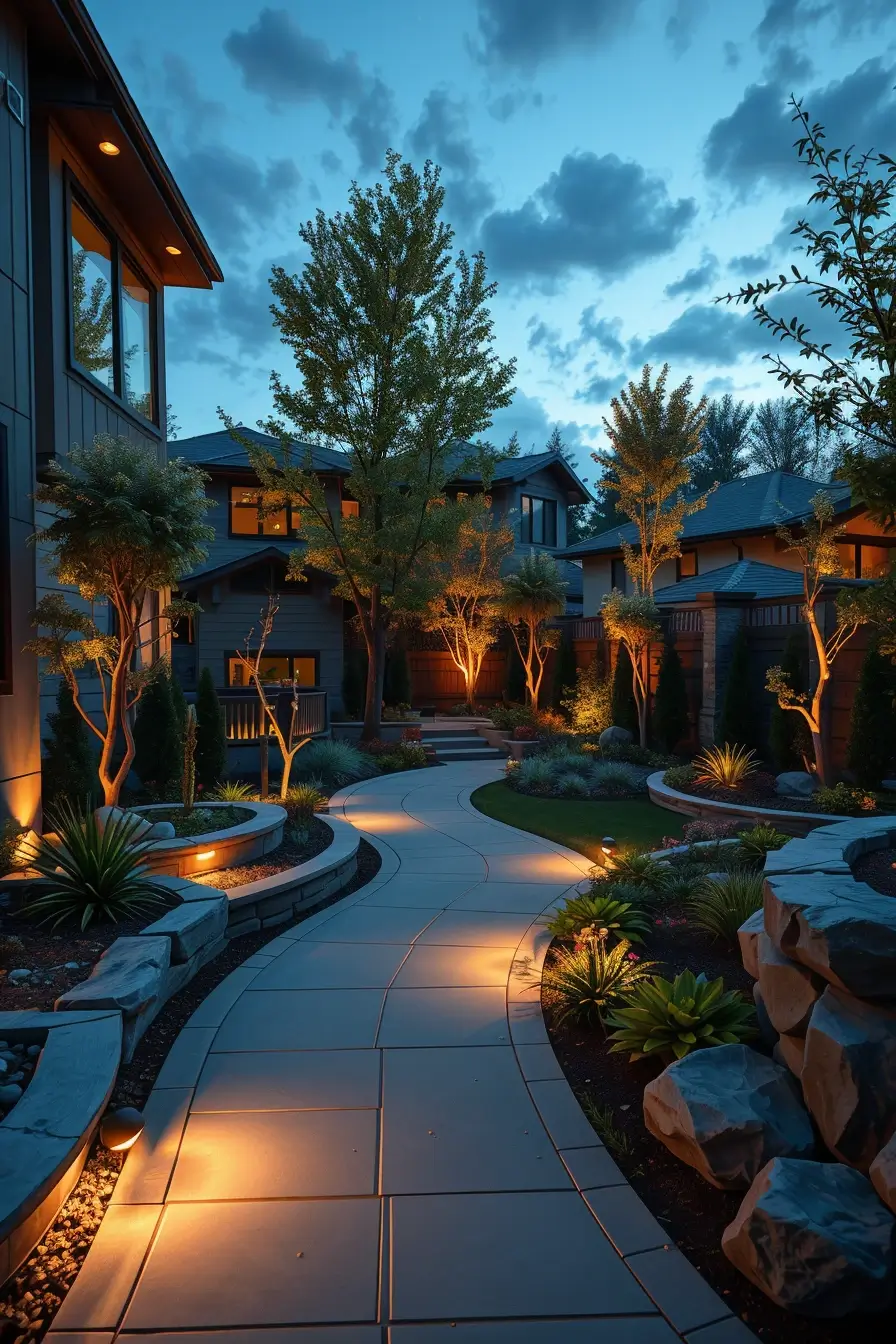
I typically use recessed pathway lights following curved walkways, hidden LED strips under seating edges, and soft uplighting for trees and sculptural elements. These fixtures are selected for warm tones and minimal housings so they blend seamlessly into the environment. Lighting placement always follows the geometry of the landscape rather than fighting it.
Based on my professional experience, designers from Dezeen often stress restraint in outdoor lighting, and I share that view. The goal is not brightness but atmosphere, allowing curved forms to emerge naturally at night. When done right, lighting makes unique backyards feel immersive and intentional.
What I would still include here is smart lighting control with zoning. This allows homeowners to adjust mood and function depending on whether the backyard is used for relaxation or entertaining.
14. Layered Landscaping Using Soft Shapes And Height Variation
I rely on layered landscaping to give depth and dimension to modern backyards, especially when using soft shapes instead of sharp boundaries. In 2026, this approach supports designer landscaping ideas by blending visual interest with practical zoning. Curved layers guide the eye and make even compact yards feel expansive.
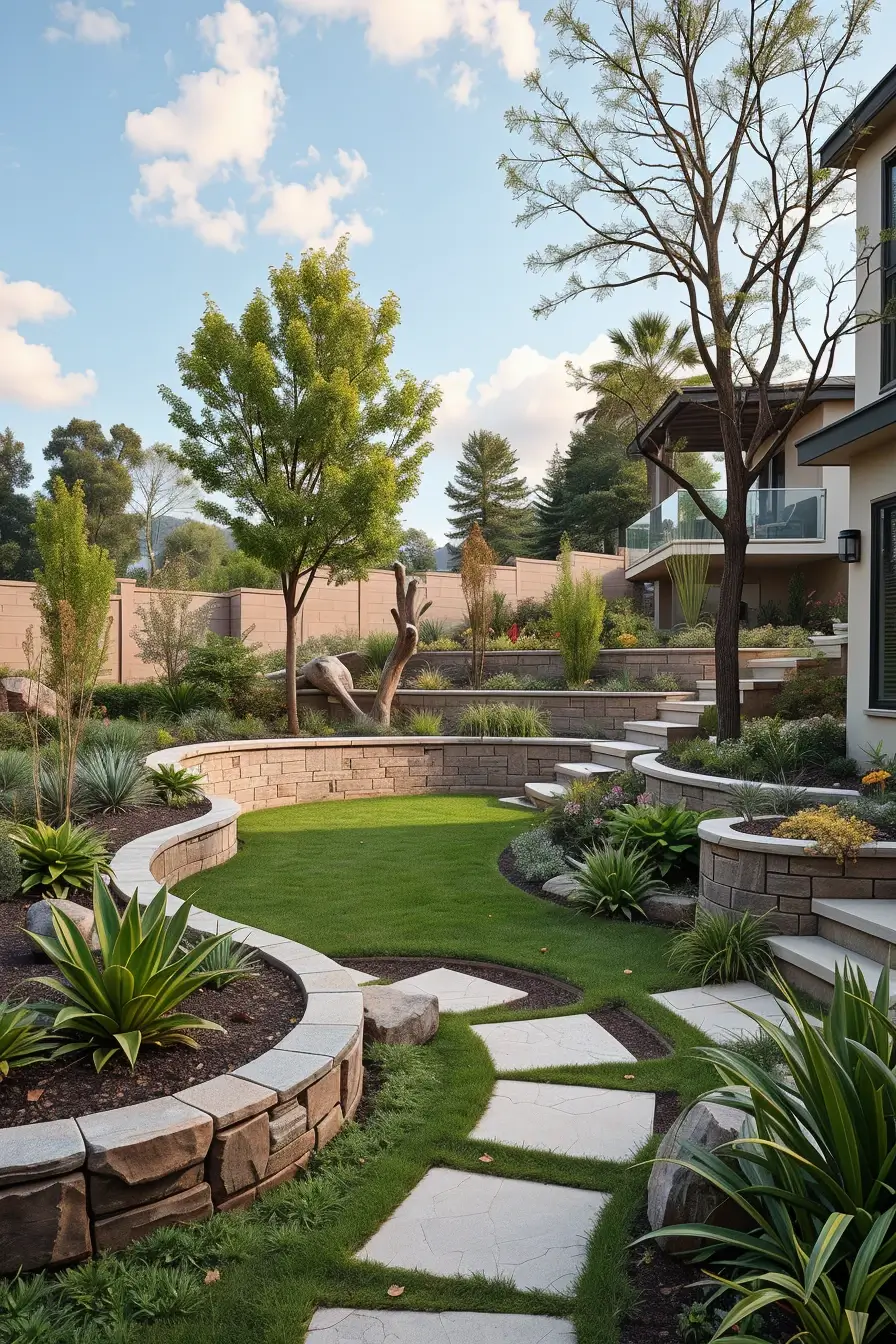
I usually combine low ground covers, mid-height shrubs, and taller ornamental trees arranged in flowing lines. Raised beds with rounded edges, terraced lawns, and gentle slopes help create height variation without hard transitions. Materials like stone, wood, and textured concrete reinforce the layered effect.
From my perspective, Better Homes and Gardens often highlights the importance of plant layering for visual balance, and I apply this principle consistently. Softly layered landscapes feel natural, adaptable, and timeless, which is essential for modern backyard design.
To enhance this section further, I would add integrated seating or stepping paths within the layers. These features encourage movement and interaction while preserving the organic layout.
15. Designer Planting Concepts With Sculpted Greenery
I approach planting as a form of outdoor architecture, especially when working with sculpted greenery in stylish and designer backyards. In 2026 trends, plants are no longer just fillers but defining elements that shape space and movement. Curved planting beds reinforce the overall geometry of the yard.
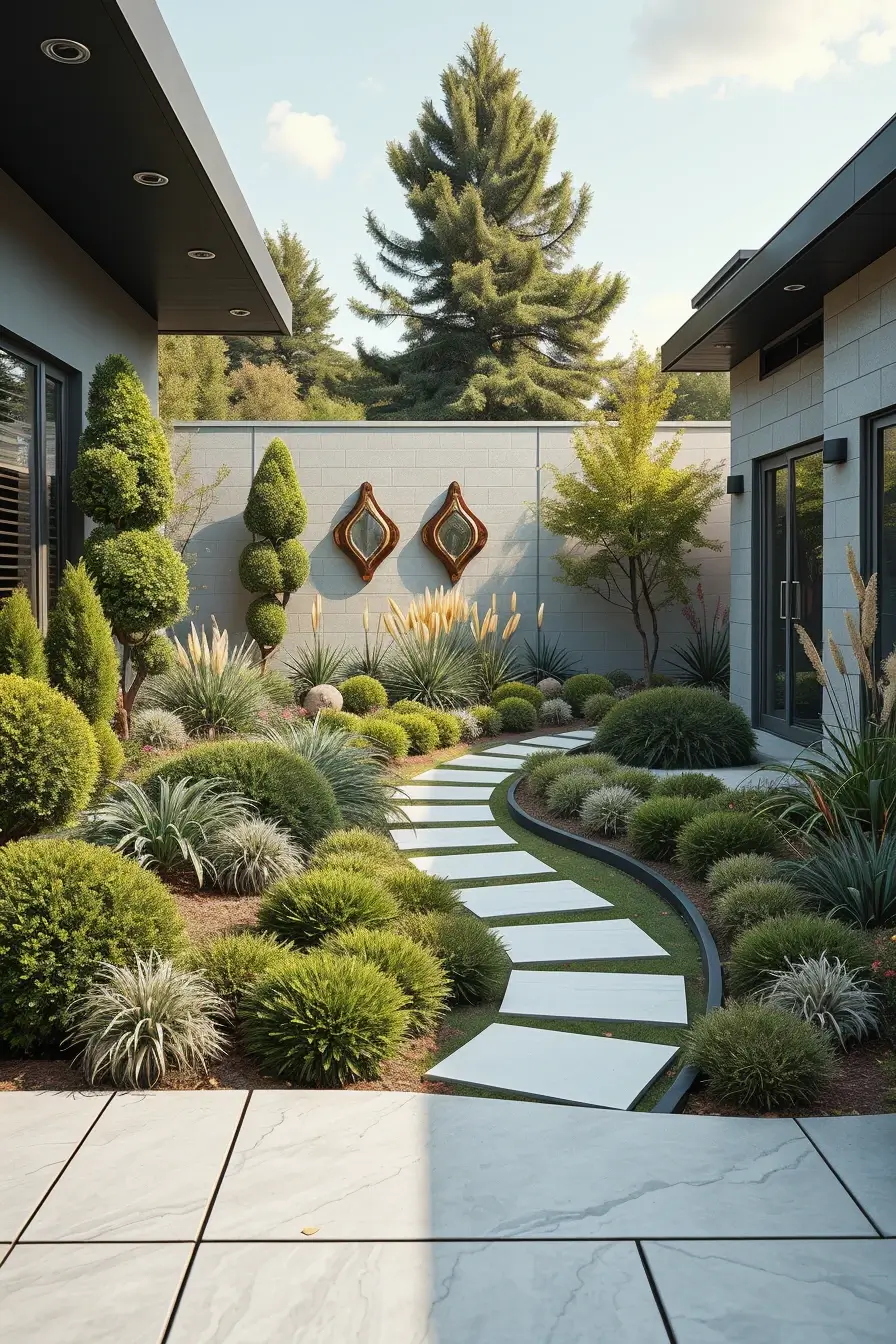
I often specify clipped hedges with rounded profiles, ornamental grasses arranged in waves, and feature trees with controlled canopies. These choices create structure while remaining visually soft. Neutral paving and minimal furniture allow the greenery to stand out without competition.
In my own work, I follow guidance from landscape designers frequently featured in The New York Times Home section, who advocate for intentional plant selection over excess variety. Sculpted greenery offers long-term clarity and reduces maintenance when planned correctly.
What I would still add here is seasonal contrast through subtle flowering accents. This ensures the sculpted planting remains dynamic throughout the year without disrupting the clean design.
16. Unusual Backyard Layouts That Break Traditional Design Rules
I design unusual backyard layouts by intentionally moving away from straight axes and symmetrical zoning, which allows the space to feel more dynamic and personal. In 2026, modern and unique backyards increasingly rely on unexpected circulation paths, diagonal views, and curved transitions that challenge traditional design rules while remaining practical. This approach helps the backyard feel larger and more engaging.
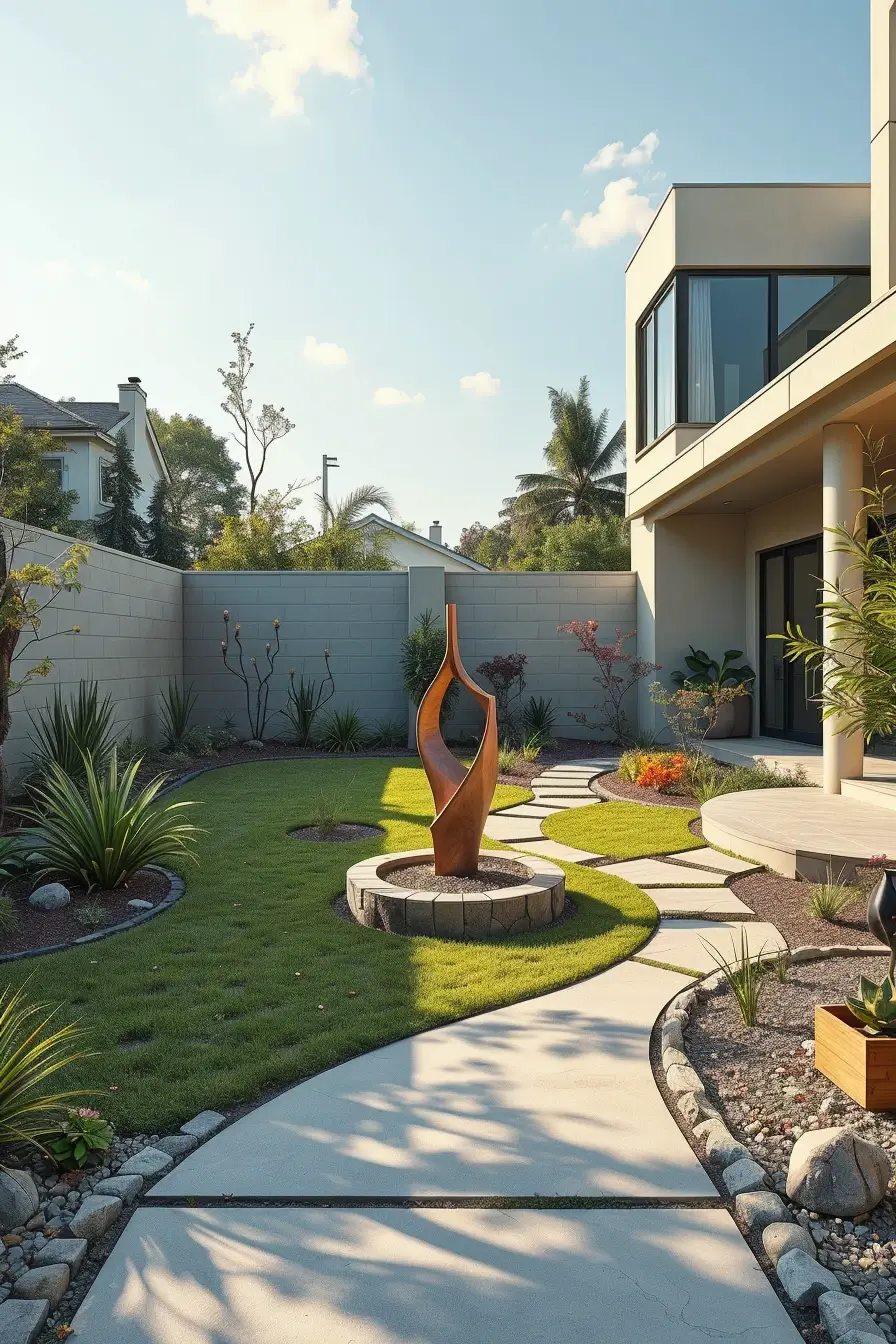
I often replace classic lawn-centered layouts with asymmetrical zones connected by flowing walkways. Curved paths, offset seating areas, and organically shaped planting beds guide movement naturally. Furniture placement follows visual lines rather than rigid grids, which creates a sense of discovery and layered functionality.
From my professional perspective, designers featured in Dezeen and Architectural Digest frequently highlight rule-breaking layouts as a key trend in contemporary outdoor spaces. I find that when done thoughtfully, these designs feel intentional rather than chaotic, offering a designer solution that adapts well to different lifestyles.
What I would still add here is a strong focal element, such as a sculptural tree or statement pavilion, to visually anchor the unconventional layout and prevent it from feeling fragmented.
17. Contemporary Outdoor Lounges With Oval And Circular Plans
I approach outdoor lounges as extensions of interior living spaces, especially when working with oval and circular plans. These shapes promote comfort, inclusivity, and smooth circulation, making them ideal for stylish and modern backyard concepts in 2026. Circular layouts naturally encourage relaxation and social interaction.
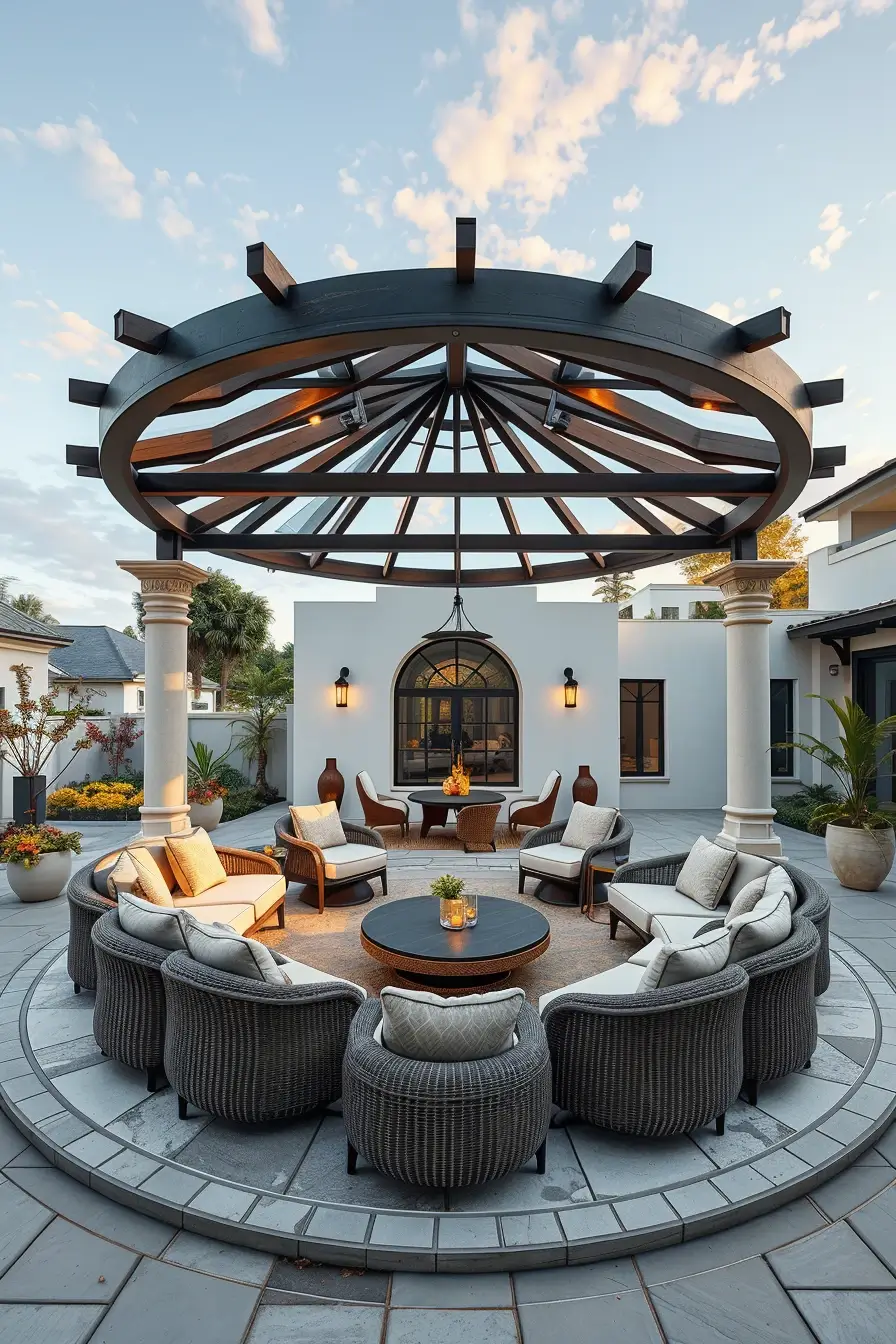
I typically include curved sectionals, round side tables, and circular pergolas or shade structures. Materials such as wood, textured concrete, and weather-resistant upholstery help balance comfort and durability. Rugs and lighting often follow the same rounded geometry to reinforce visual harmony.
Based on my experience, many US-based landscape architects recommend circular lounge layouts for maximizing usability in medium-sized yards. I agree with this approach because it eliminates dead corners and creates a cohesive, designer outdoor environment.
To complete this section, I would add integrated storage or hidden power outlets for charging devices, making the lounge space more functional for everyday use.
18. Artistic Retaining Walls With Flowing And Textured Lines
I view retaining walls as architectural features rather than purely structural elements, especially when they follow flowing and textured lines. In designer landscaping ideas for 2026, these walls help manage elevation changes while contributing to the overall aesthetic of unique backyards.
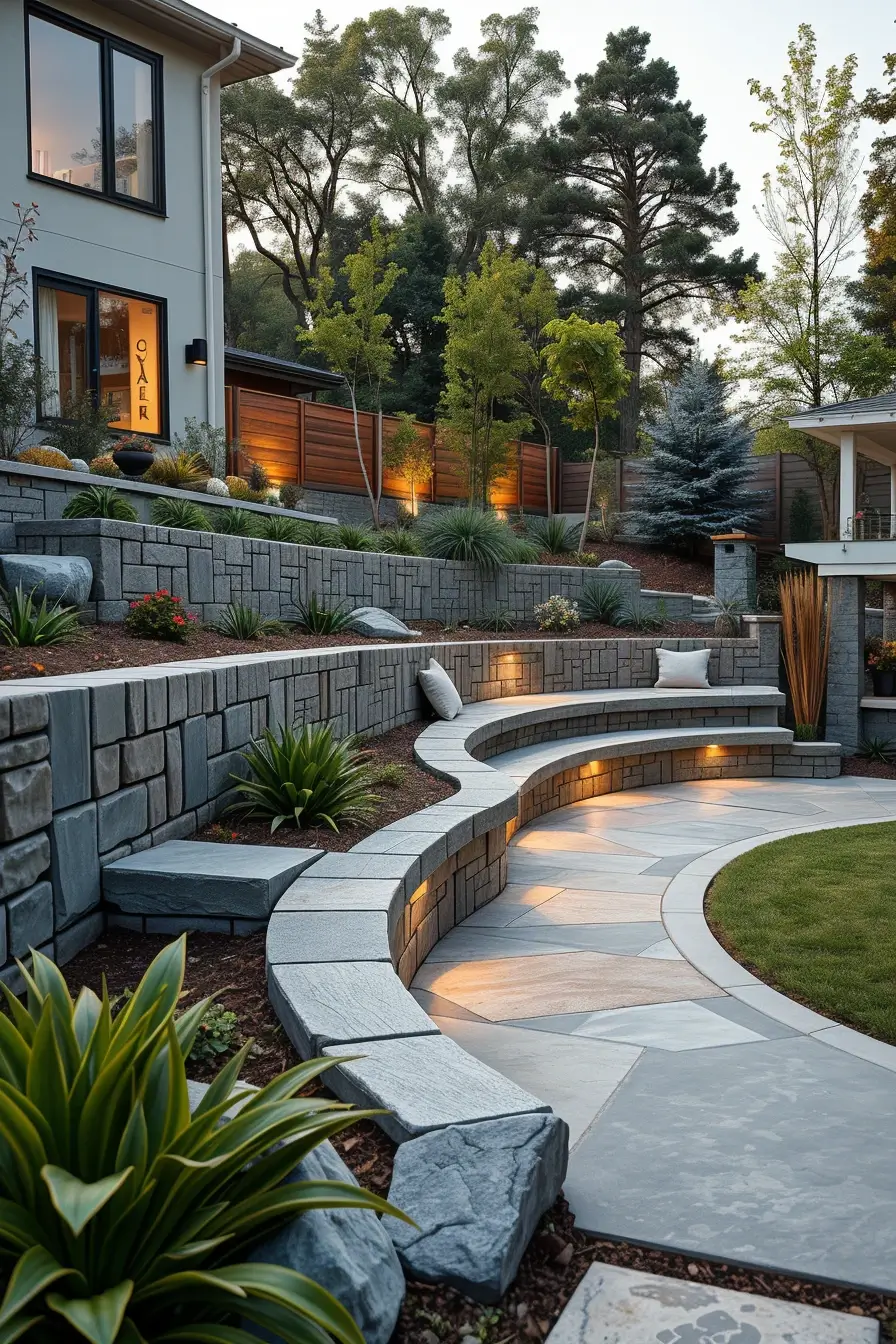
I often work with curved retaining walls finished in textured concrete, natural stone, or layered masonry. These walls can double as seating edges or planting backdrops, adding both form and function. Subtle lighting integrated along the curves enhances depth and highlights material textures.
From my professional standpoint, landscape publications like Landscape Architecture Magazine emphasize multifunctional hardscapes, and I strongly support this approach. Artistic retaining walls provide long-term structural value while elevating the visual identity of the backyard.
What I would still add here is integrated drainage and planting pockets within the wall design. These elements improve sustainability and soften the structure visually.
19. Modern Backyard Terraces Designed With Curved Transitions
I design modern backyard terraces as fluid platforms that connect indoor and outdoor living through curved transitions. In 2026, terraces are less about rigid decks and more about creative outdoor surfaces that guide movement naturally. Curved edges help terraces blend seamlessly into the surrounding landscape.
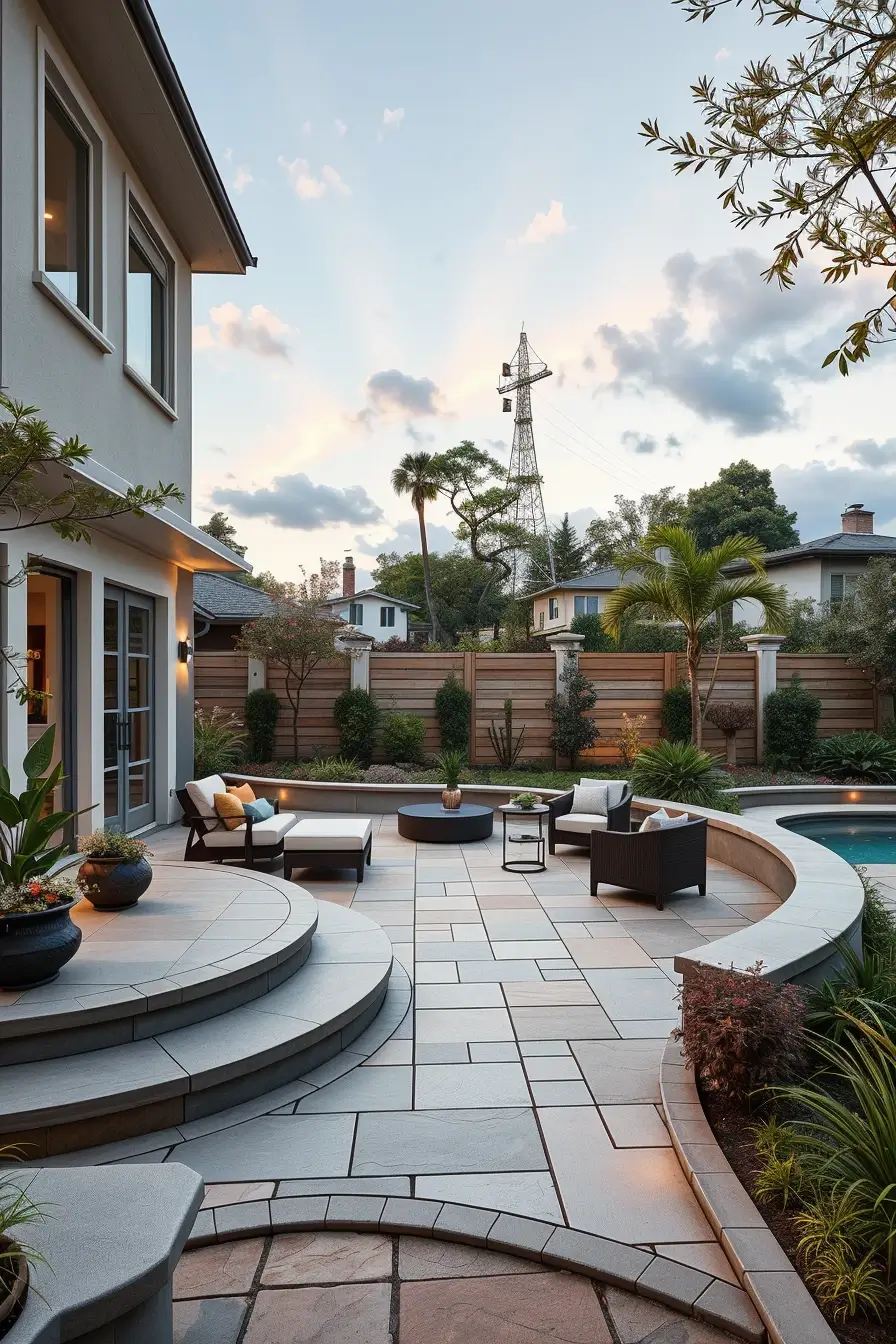
I usually incorporate multi-level terraces with rounded steps, smooth paving materials, and built-in seating. Finishes like stone, porcelain slabs, and wood composites maintain a clean, modern look while offering durability. Furniture placement follows the terrace geometry to preserve openness.
From my experience, interior and landscape designers featured in Dwell often emphasize continuity between architecture and landscape. I apply this principle by ensuring terrace curves echo both the house lines and garden forms, creating a cohesive designer result.
To enhance this section further, I would add adjustable shading solutions, such as curved pergolas or retractable canopies, to improve comfort throughout the day.
20. Unique Poolside Landscaping With Organic Shapes
I design poolside landscaping as a natural extension of the water itself, especially when using organic shapes. In stylish backyard landscaping ideas for 2026, pools are rarely rectangular; instead, they feature soft curves that integrate seamlessly with the surrounding environment.
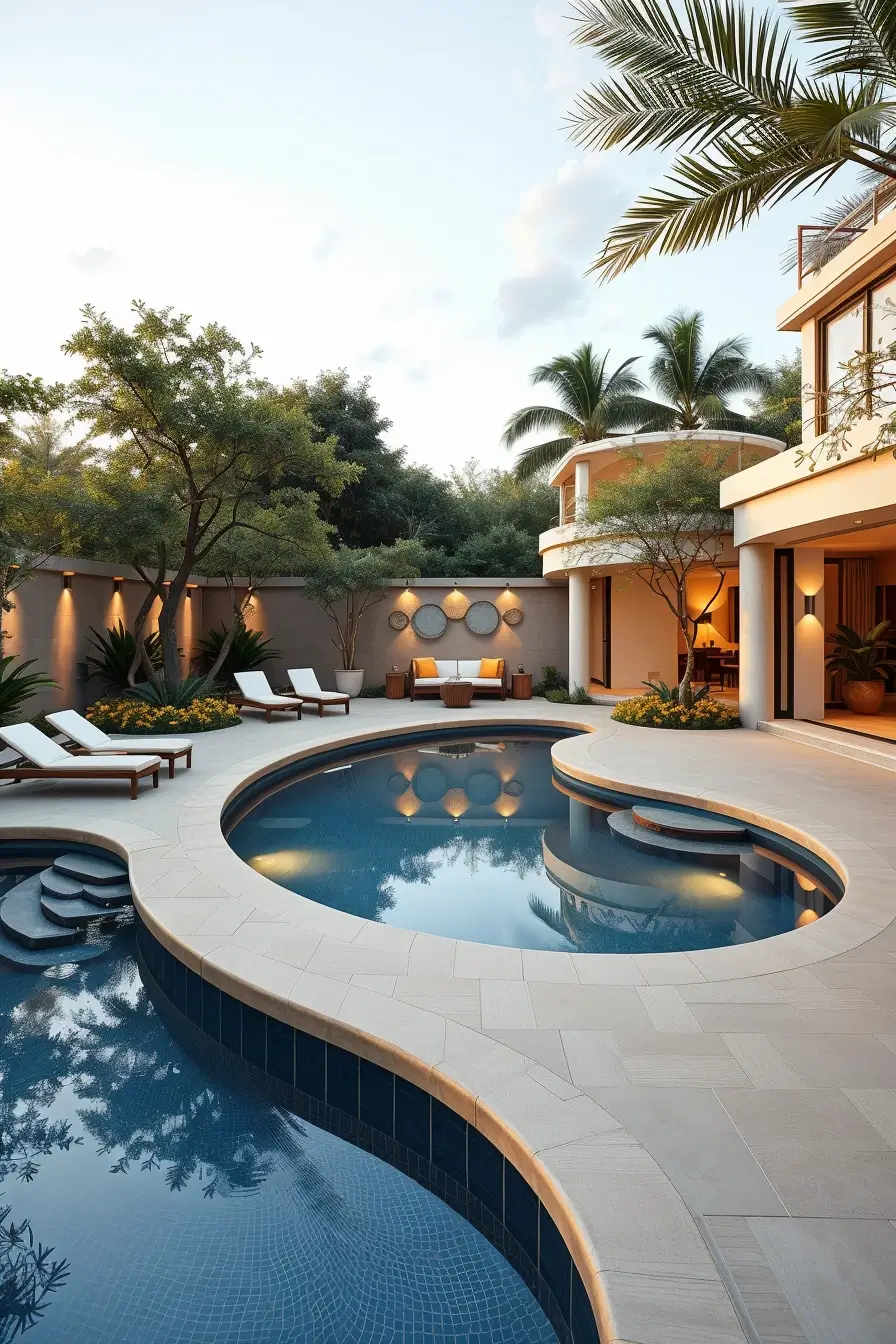
I often pair freeform pools with rounded decking, sculpted planting beds, and low-profile loungers. Materials like stone, textured concrete, and natural wood help reinforce the organic aesthetic. Shade elements and subtle lighting complete the poolside experience without overwhelming it.
Personally, I follow insights from pool designers frequently cited in Better Homes and Gardens, who emphasize comfort and flow over visual complexity. I find that organic poolside layouts create unique backyards that feel resort-like yet practical for daily use.
What I would still add here is a shallow lounging ledge or sun shelf. This feature increases usability and enhances the relaxed, contemporary poolside atmosphere.
21. Designer Fire Pit Areas With Rounded And Sculptural Forms
I see fire pit zones evolving into sculptural centerpieces rather than simple gathering spots. In 2026, designer fire pit areas are defined by soft curves, rounded platforms, and organic layouts that encourage conversation and relaxation. These spaces are not just about warmth but about spatial balance, flow, and visual harmony within the backyard. Rounded fire pits integrate naturally into lawns, stone patios, or gravel beds, creating a more inviting and less rigid environment.
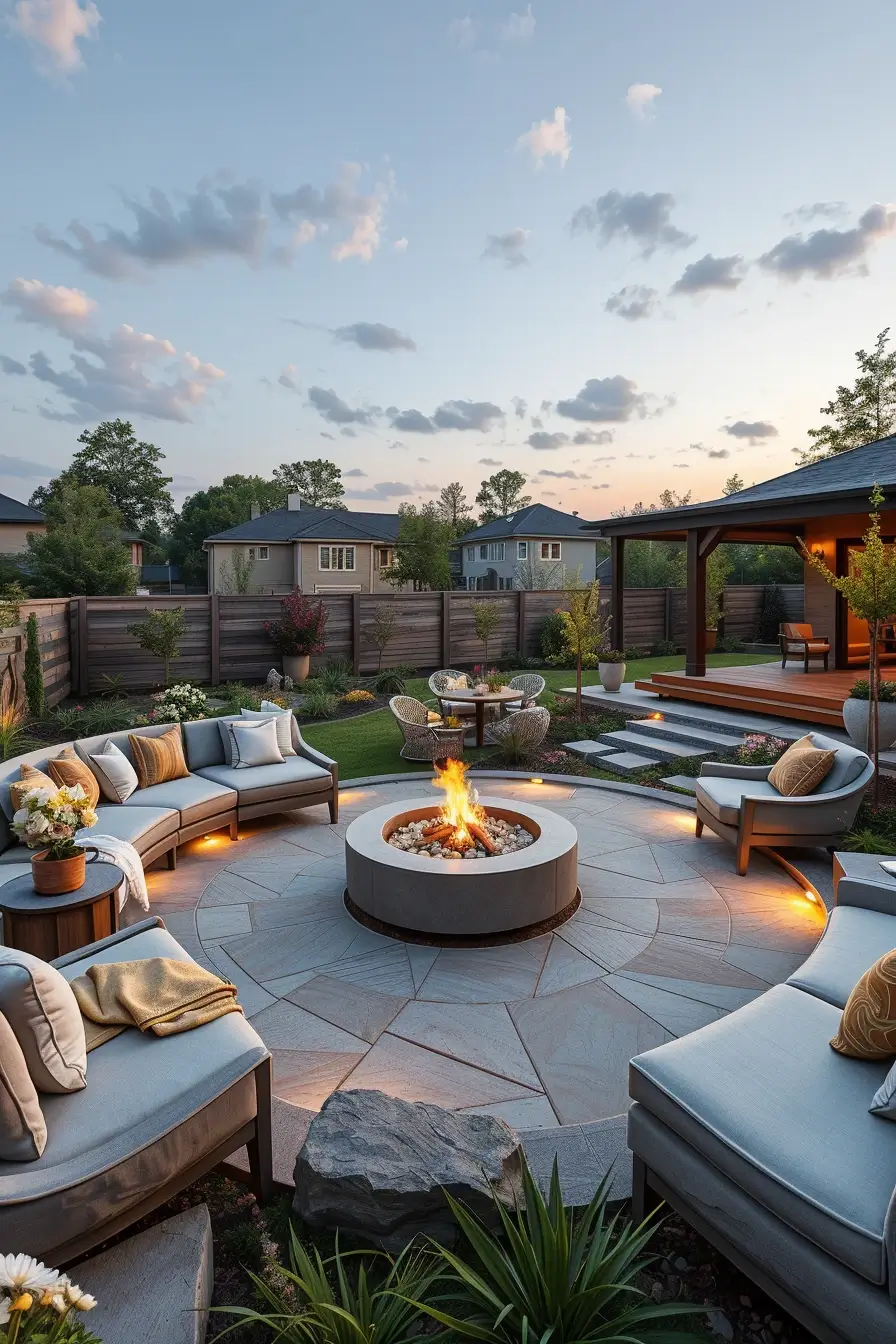
When I design or analyze these spaces, I always focus on low-profile circular seating, curved concrete or stone fire bowls, and integrated lighting that follows the same organic lines. Modular curved sofas, upholstered in weather-resistant fabrics, allow flexibility while maintaining a cohesive look. Sculptural fire bowls made of concrete, corten steel, or natural stone add a refined focal point without overpowering the landscape.
From my experience, designers such as those featured in Architectural Digest emphasize that curved seating promotes longer conversations and a sense of intimacy. I’ve noticed that homeowners respond positively to fire pit zones that feel like outdoor living rooms rather than isolated features. This approach aligns with the growing desire for experiential outdoor design that feels intentional and human-centered.
To complete this section, I would add subtle ground lighting that traces the curved forms and native ornamental grasses to soften the edges of the fire pit area. These elements enhance both safety and atmosphere while reinforcing the sculptural design language.
22. Creative Use Of Materials In Modern Backyard Landscaping
In modern backyard landscaping for 2026, I focus heavily on material contrast and tactile experience. Instead of relying on one dominant surface, designers are blending stone, wood, concrete, metal, and textured composites in thoughtful ways. This layered approach allows outdoor spaces to feel dynamic and visually rich while remaining practical and durable.
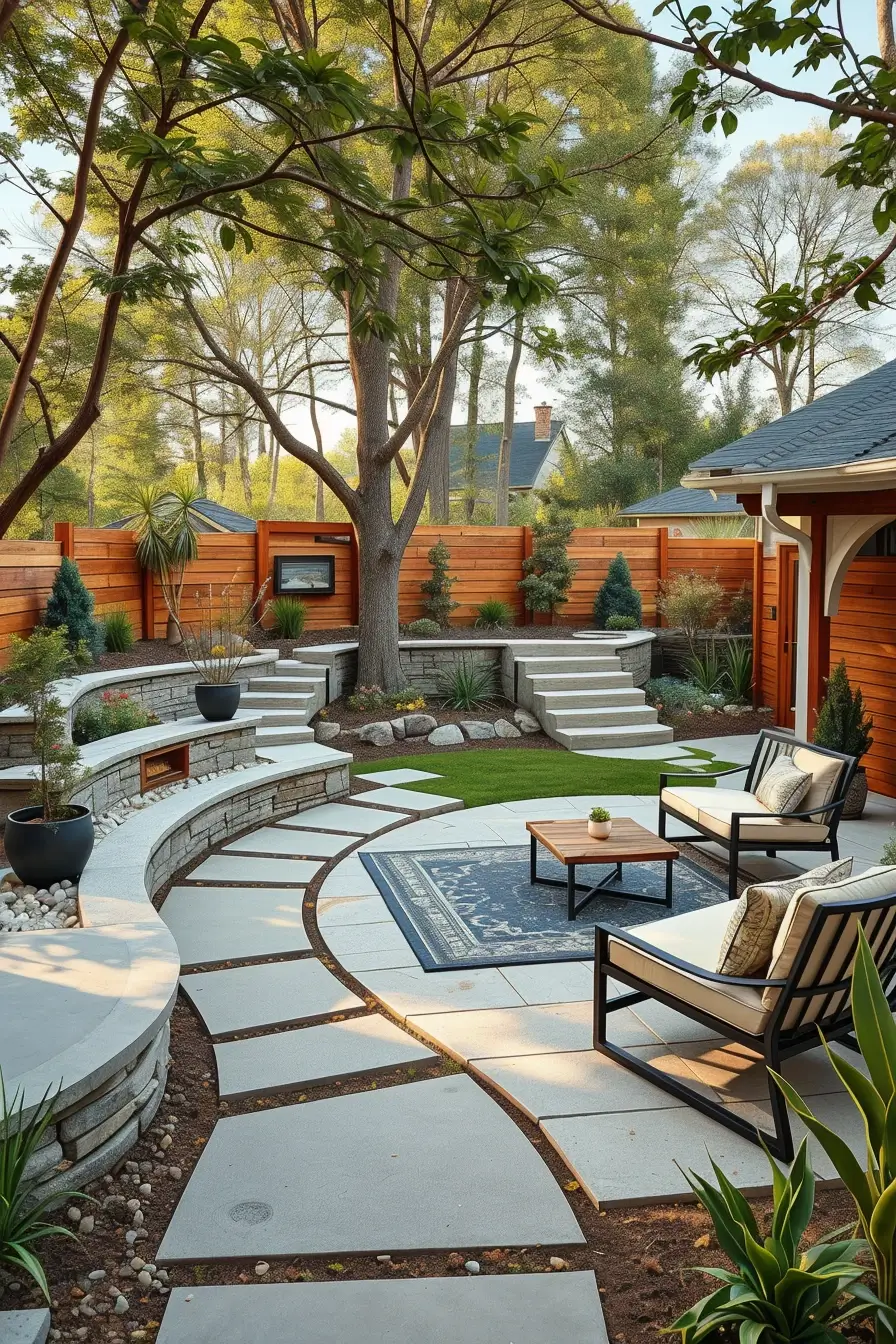
I often recommend combining smooth poured concrete walkways with textured stone seating walls or wooden deck inserts. Curved retaining walls made from stacked stone or architectural concrete create visual rhythm, while metal accents introduce a contemporary edge. Furniture finishes also matter, with matte metals, ceramic tables, and woven outdoor textiles playing key roles.
Based on industry insights from Dezeen and Dwell, material diversity is becoming essential for creating depth in outdoor environments. I’ve personally seen how mixing warm and cool textures helps prevent large backyards from feeling empty or flat. When materials are chosen intentionally, they guide movement and define zones without the need for physical barriers.
What this section still needs is an emphasis on sustainable material choices, such as recycled composites or permeable paving. These additions would strengthen both the environmental and functional value of modern backyard designs.
23. Stylish Privacy Solutions With Soft And Architectural Lines
Privacy in 2026 is no longer about tall fences or rigid walls. I approach privacy as an architectural feature that enhances design rather than hides it. Soft, curved privacy solutions create separation while maintaining openness and light. These elements are especially important in urban and suburban backyards where boundaries must feel intentional, not restrictive.
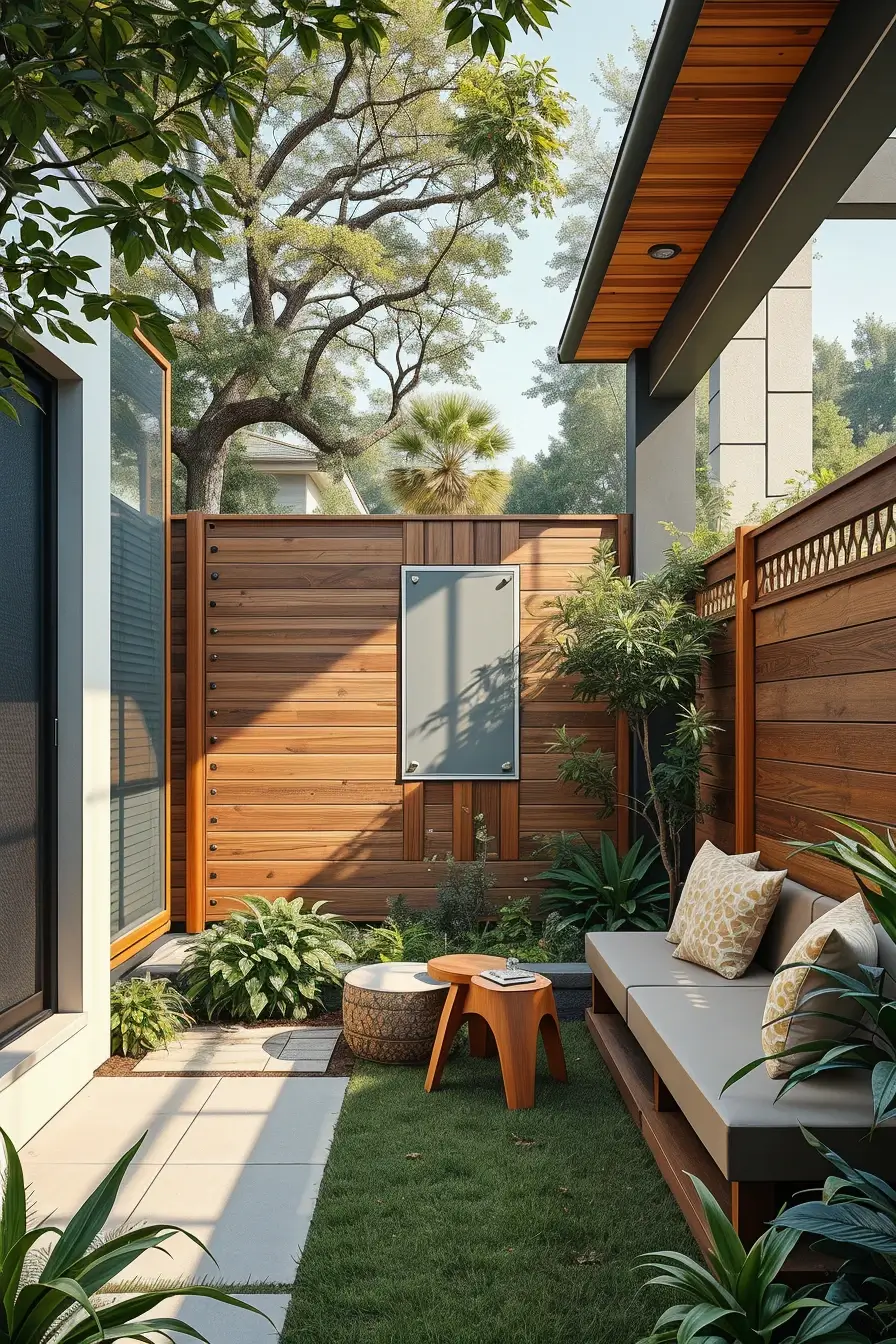
I frequently work with curved wooden screens, perforated metal panels, and layered greenery arranged in flowing patterns. Built-in benches that follow curved privacy walls serve dual purposes, while climbing plants soften vertical elements. The key is to integrate privacy structures seamlessly into the overall layout.
From my professional perspective, landscape architects in the US increasingly recommend layered privacy rather than solid barriers. Publications like Garden Design Magazine highlight how curved lines reduce visual tension and make outdoor spaces feel larger. I’ve applied this approach successfully in compact backyards, where every inch matters.
To elevate this section further, I would add integrated lighting within privacy panels and the use of semi-transparent materials. These details enhance nighttime ambiance without compromising privacy.
24. Future-Inspired Backyard Landscaping With Smart Design Features
Smart technology is becoming a defining feature of backyard landscaping in 2026. I view these advancements as tools that enhance comfort and usability rather than distractions. Smart lighting, automated irrigation, and climate-responsive shading systems allow homeowners to enjoy their outdoor spaces effortlessly.
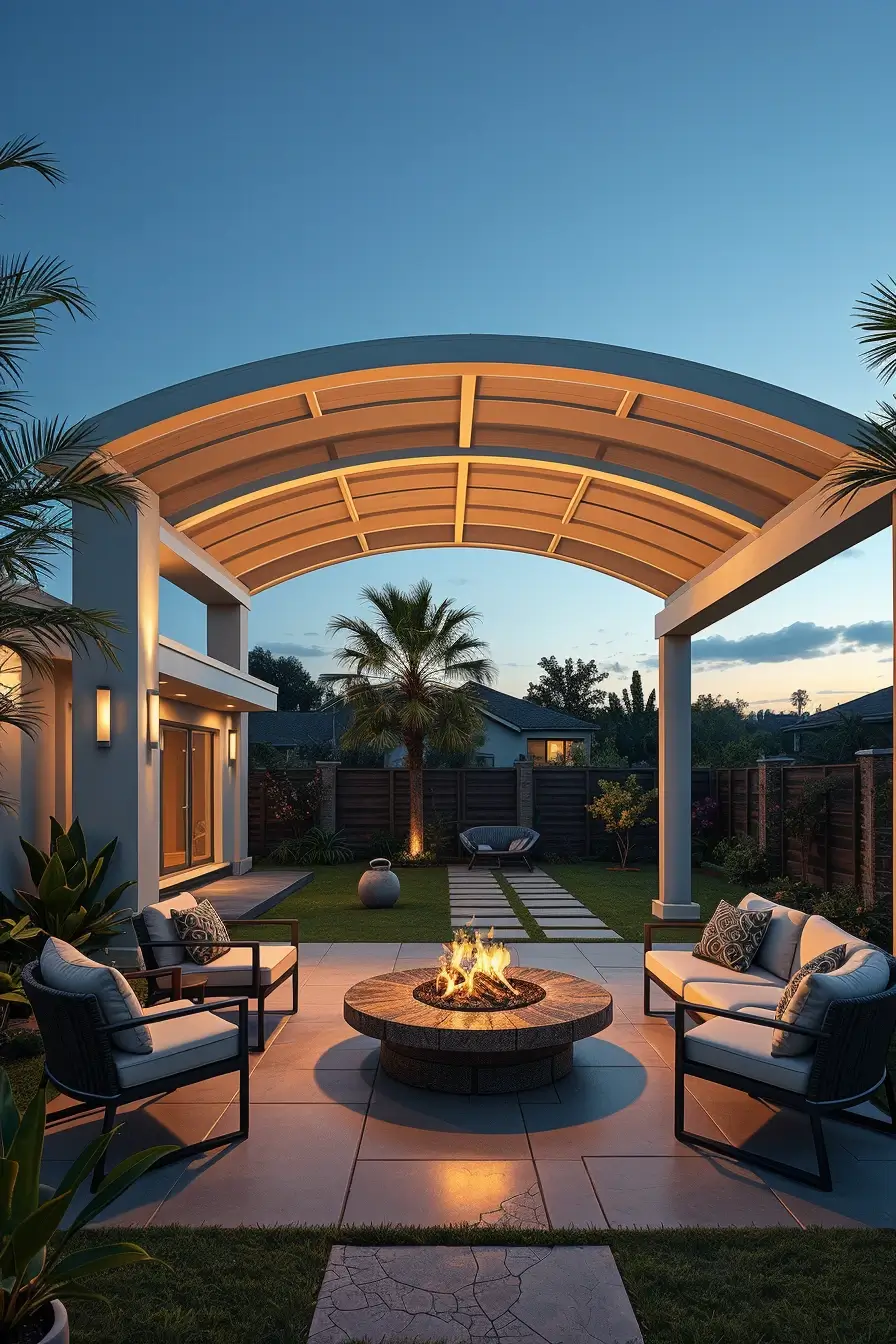
In practice, I prioritize concealed smart systems that don’t interfere with visual design. Curved pergolas with automated louvers, app-controlled fire features, and integrated sound systems are designed to blend into the landscape. Furniture with built-in charging ports and smart lighting paths further support modern lifestyles.
Industry leaders such as ASLA emphasize that smart outdoor features should enhance sustainability and user experience. From my experience, homeowners appreciate technology most when it simplifies maintenance and enhances mood rather than showcasing complexity.
This section would benefit from adding renewable energy integrations, such as solar-powered lighting and smart energy monitoring. These elements align perfectly with the future-focused mindset of 2026 backyard design.
25. Artistic Backyard Accents That Elevate The Entire Landscape
Artistic accents are essential for transforming a backyard from functional to memorable. I treat these elements as curated installations rather than decorations. In 2026, artistic backyard features focus on scale, form, and placement, often echoing the curved and organic themes of the landscape.
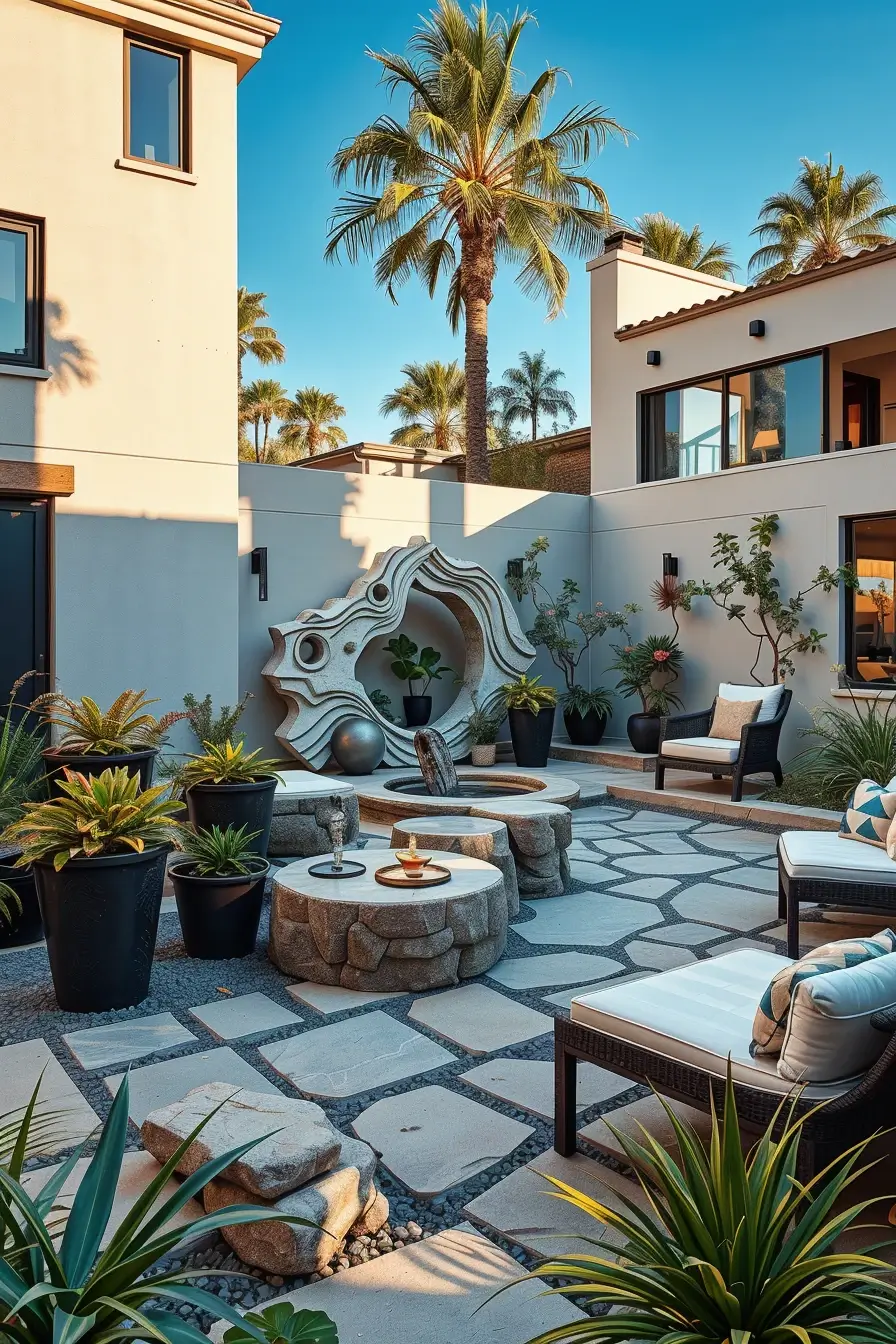
I often incorporate sculptural planters, abstract stone art, water features with rounded basins, and custom-designed seating elements. These pieces act as visual anchors that guide movement through the space. The goal is to create moments of surprise without overwhelming the environment.
From my own work and research, I’ve learned that designers featured in Elle Decor emphasize restraint when using outdoor art. One strong statement piece is often more effective than multiple smaller accents. I’ve seen how a single sculptural element can elevate the entire backyard experience.
To complete this section, I would recommend adding interactive art features, such as kinetic sculptures or water elements with gentle motion. These additions create sensory engagement while maintaining a refined aesthetic.
26. Seamless Indoor-Outdoor Transitions With Curved Design Elements
I increasingly see backyard landscaping in 2026 designed as a natural extension of the interior rather than a separate zone. Seamless indoor-outdoor transitions rely on curved architectural lines that visually connect living rooms, kitchens, and terraces with the backyard. These transitions create continuity, making outdoor spaces feel like part of the home’s core experience rather than an afterthought.
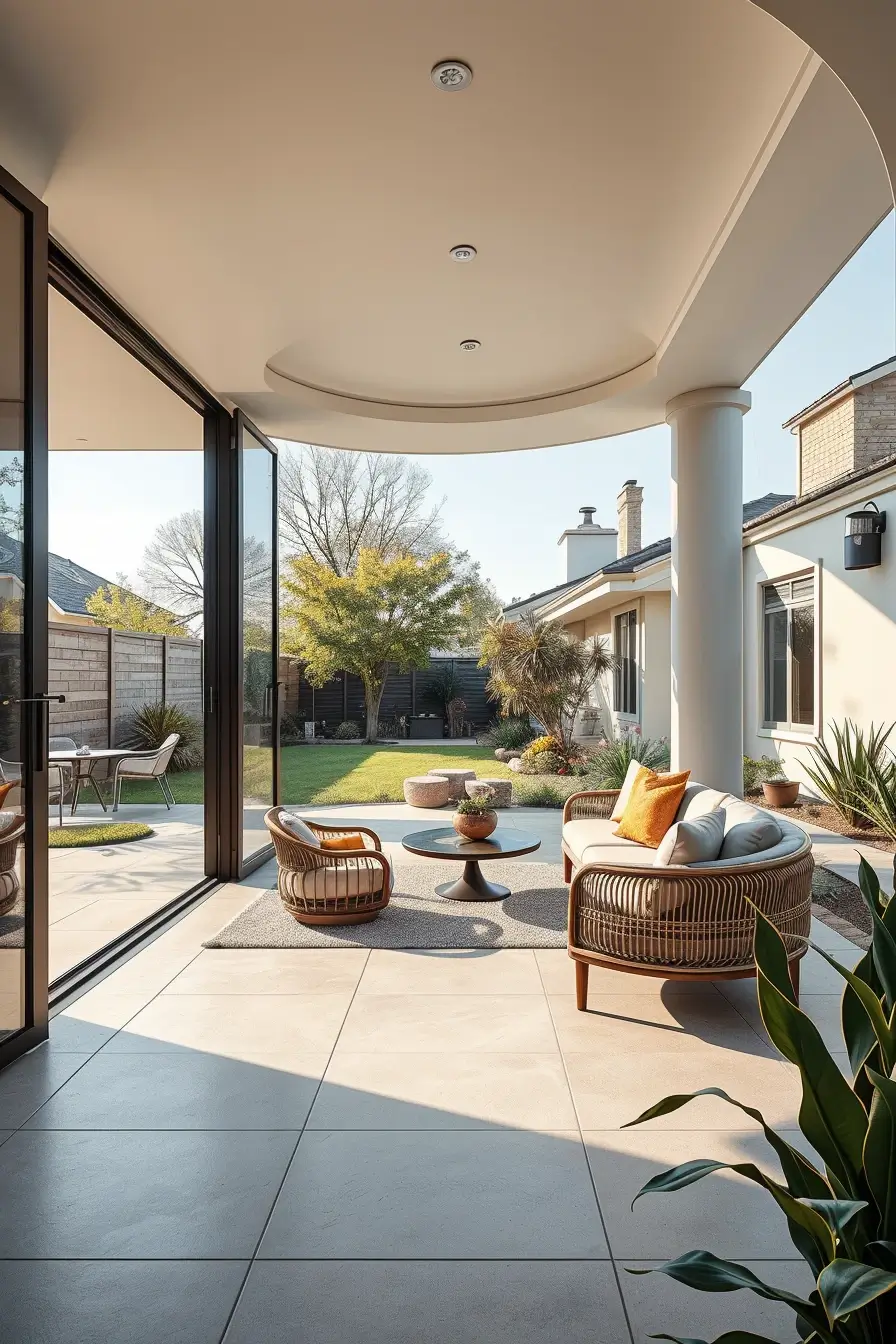
In my work, I focus on curved sliding glass doors, rounded thresholds, and continuous flooring materials that flow from inside to outside. Outdoor furniture mirrors indoor forms, such as oval dining tables or softly contoured lounge chairs. Built-in seating and planters echo interior design lines, reinforcing the sense of cohesion across spaces.
From my professional perspective, publications like Architectural Digest consistently highlight the psychological benefits of fluid transitions between indoor and outdoor environments. I’ve noticed that homeowners feel more relaxed and connected to nature when boundaries dissolve visually and physically. This approach also increases usable square footage without expanding the home itself.
To strengthen this section, I would add climate-adaptive features such as retractable glass panels and shaded curved overhangs. These elements ensure comfort while preserving the seamless visual connection.
27. Designer Backyards Focused On Experience And Atmosphere
In 2026, I approach backyard landscaping as an experiential design rather than a static composition. The focus shifts toward how the space feels at different times of day, how sound travels, and how lighting shapes mood. Designer backyards are curated to support relaxation, social interaction, and personal rituals.
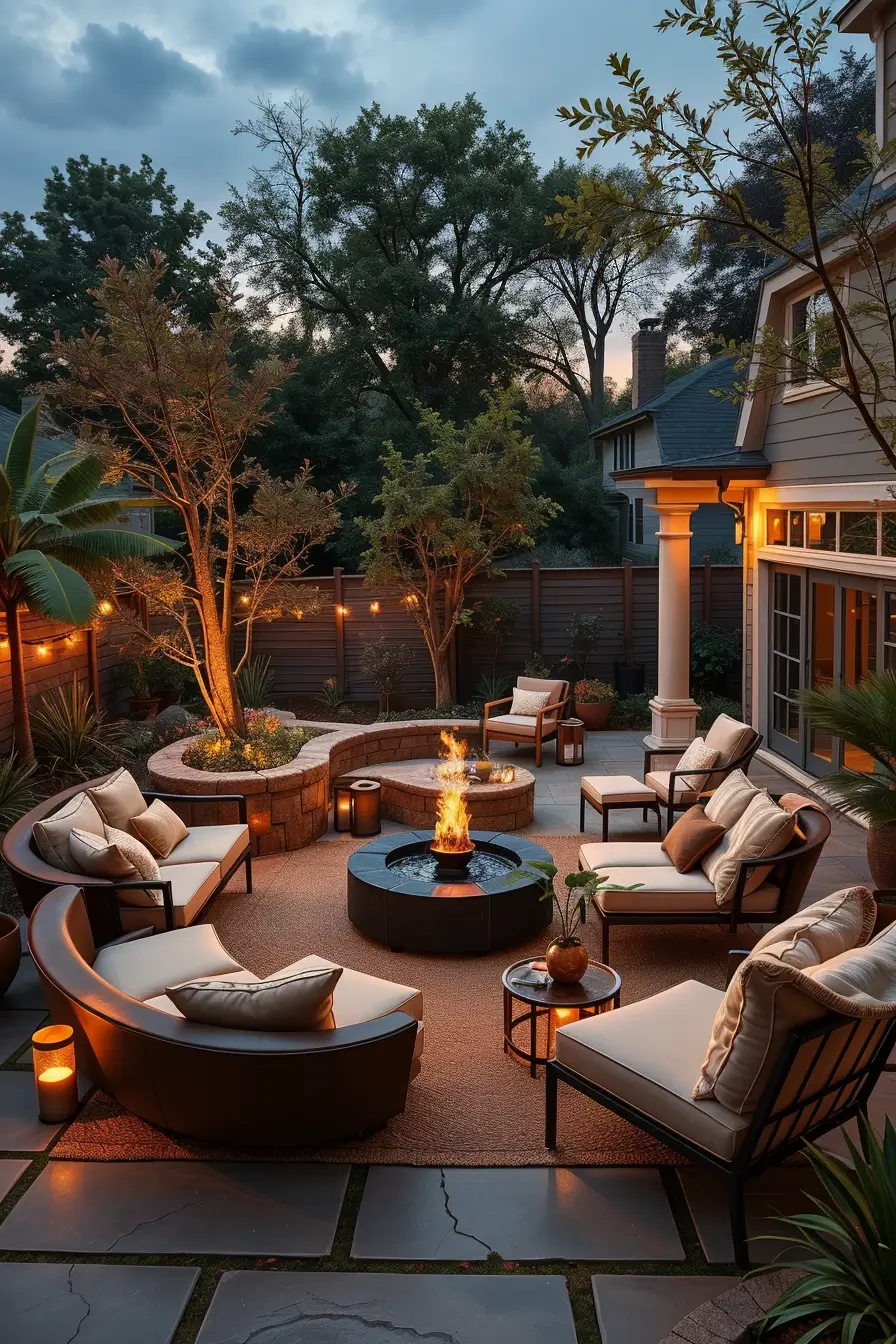
I carefully layer elements such as curved seating zones, water features with gentle movement, and lighting that transitions from functional to ambient. Furniture placement encourages natural circulation, while materials and textures contribute to sensory richness. The goal is to design a backyard that adapts to various emotional needs.
Based on my experience and insights from Dwell, designers emphasize atmosphere as a defining luxury feature. I’ve observed that clients value spaces where they can unwind without stimulation overload. A balanced atmosphere often leads to longer use and deeper emotional attachment to the backyard.
This section could be enhanced by introducing sound design elements, such as integrated speakers with nature-inspired audio or water features designed specifically for acoustic softness.
28. Unconventional Backyard Layouts For Creative Personal Expression
I see unconventional layouts becoming one of the strongest expressions of individuality in backyard landscaping for 2026. Instead of symmetrical grids, designers embrace asymmetry, curved pathways, and unexpected spatial arrangements. These layouts reflect personal lifestyles rather than traditional norms.
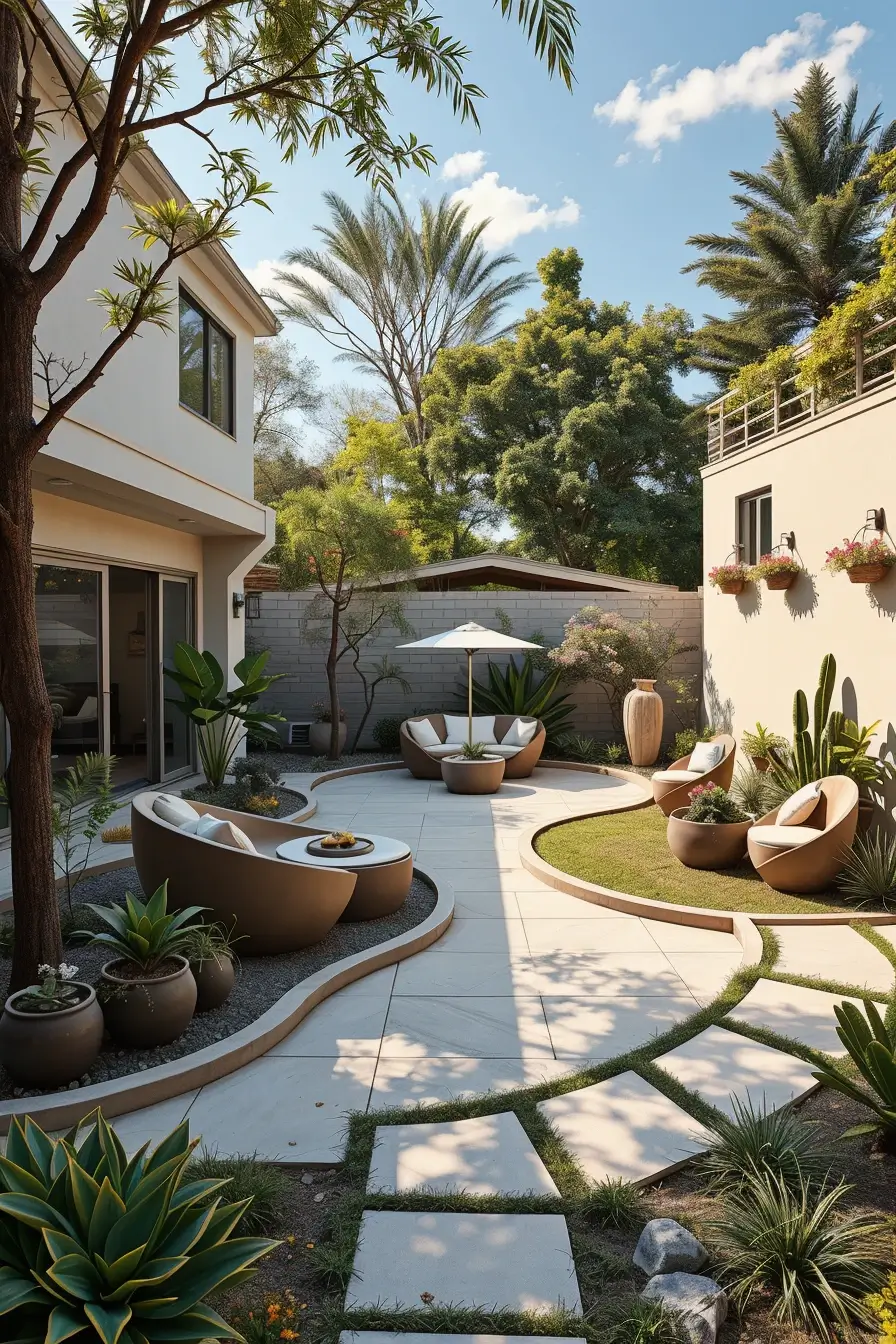
In practice, I often work with staggered platforms, oval patios, and meandering walkways that guide exploration. Furniture placement breaks away from linear alignment, allowing flexible use of space. Sculptural planters and irregular lawn shapes reinforce the sense of creative freedom.
From my professional viewpoint, landscape architects featured in Dezeen highlight that unconventional layouts encourage interaction and curiosity. I’ve noticed that homeowners feel more ownership over spaces that don’t resemble catalog designs. These backyards tell stories rather than follow templates.
To complete this section, I would add customizable zones that can evolve over time. Modular furniture and adaptable planting areas allow the layout to grow with the homeowner’s changing needs.
29. The Role Of Lighting In Modern Designer Backyard Landscaping
Lighting plays a critical role in defining modern backyards in 2026, and I treat it as an architectural tool rather than decoration. Proper lighting enhances curved forms, emphasizes textures, and extends usability well into the evening. Without thoughtful lighting, even the most beautiful landscape loses impact after sunset.
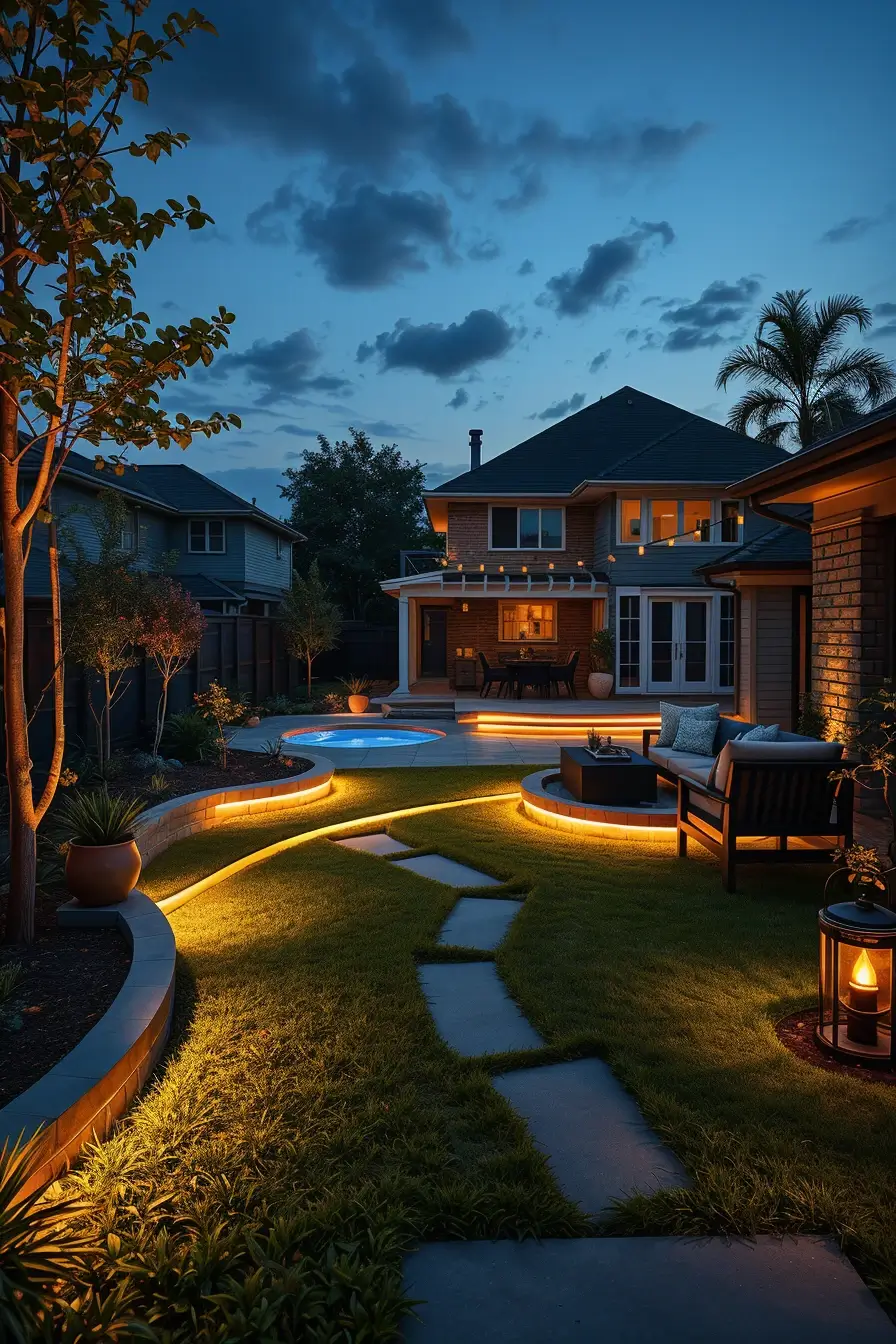
I prioritize layered lighting strategies, including recessed path lights, soft uplighting for sculptural elements, and ambient illumination around seating zones. Curved light paths guide movement subtly, while warm color temperatures create a welcoming atmosphere. Smart lighting systems allow adjustment based on mood or occasion.
According to experts cited in Garden Design Magazine, lighting should reveal rather than dominate. I’ve applied this principle repeatedly and found that restrained lighting creates elegance and depth. Overlighting, on the other hand, flattens the experience and reduces intimacy.
To elevate this section, I would incorporate lighting integrated directly into furniture and architectural elements. This approach minimizes visual clutter while enhancing functionality.
30. Organic Shapes And Flowing Pathways As A Design Language
Organic shapes define the visual language of backyard landscaping in 2026. I see flowing pathways and curved lawn edges replacing rigid geometry to create a more natural and calming experience. These forms encourage slow movement and invite exploration.
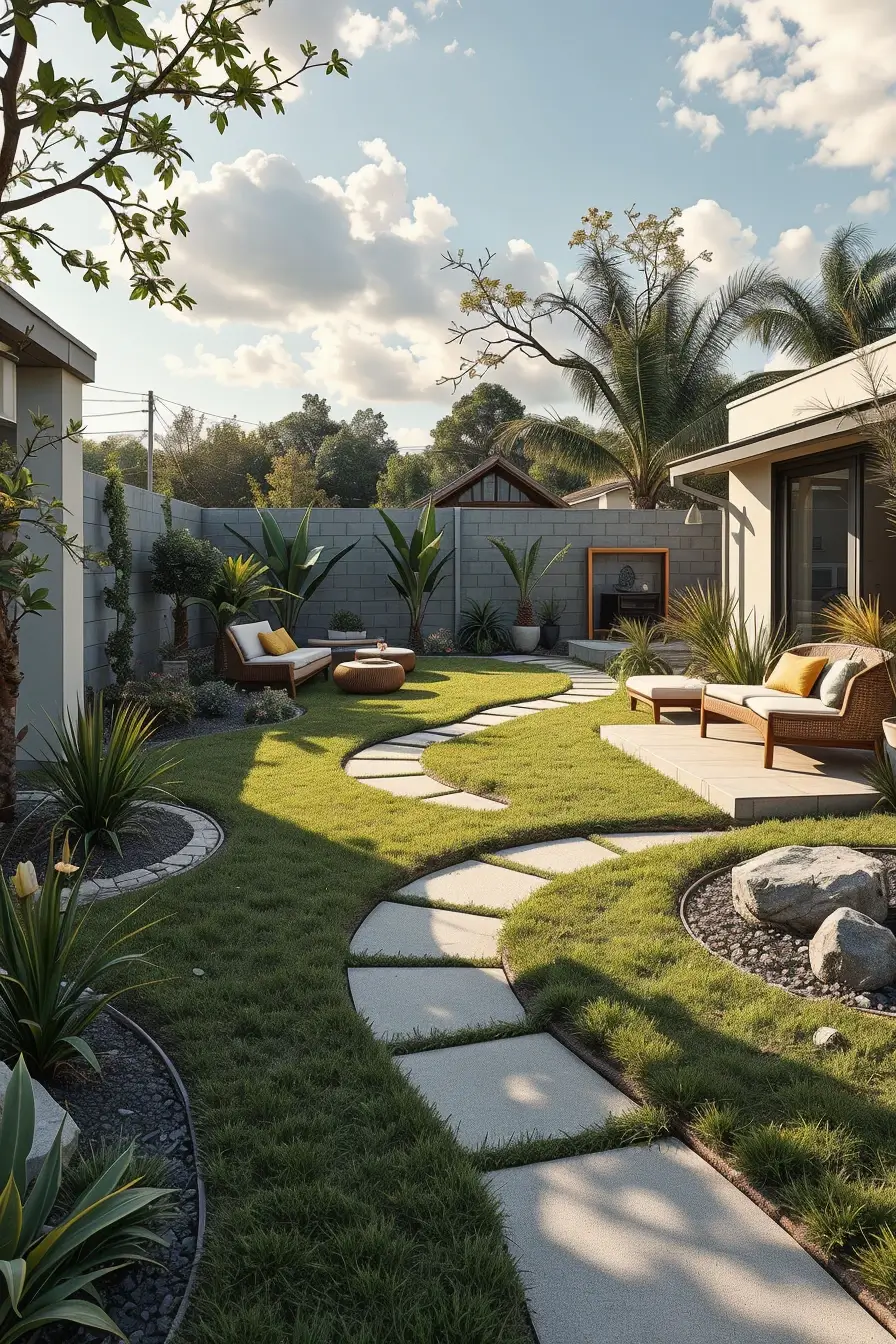
When designing pathways, I prefer gentle curves made from stone, concrete, or composite materials that follow the landscape’s natural contours. Seating areas and planting beds align with these curves, reinforcing continuity. Furniture placement respects the flow rather than interrupting it.
From my experience and supported by trends highlighted in Landscape Architecture Magazine, organic pathways reduce stress and increase perceived space. I’ve personally seen how curved circulation makes even compact backyards feel expansive and intentional.
This section would benefit from adding tactile pathway materials and subtle elevation changes. These details enhance both sensory engagement and visual interest.
Backyard landscaping ideas for 2026 highlight a clear shift toward expressive, design-driven outdoor spaces that feel as intentional as interior living areas. Curved lines, sculptural elements, and creative layouts allow backyards to become visually striking while remaining comfortable and functional. By embracing modern forms, unique materials, and thoughtful design concepts, homeowners can create outdoor environments that feel fresh, personal, and timeless. As landscaping continues to evolve, the most successful backyards will be those that balance innovation with atmosphere, turning outdoor spaces into meaningful extensions of everyday life.